Table of Contents
- Why Natural Fiber Clothing Works for Sensitive Skin
- Quick Comparison: 5 Natural Fiber Pieces for Sensitive Skin
- 1. The Goodness Tee Cotton Knit - Nights Garden: Best Organic Cotton Tee
- 2. Montaigne Merino Wool Knit Spencer: Best for Thermal Regulation
- 3. Boss Pant Organic Linen - Coastal Fern: Best for Breathability
- 4. Baby Swaddle Organic Cotton Knit: Best for Delicate Skin
- 5. Organic Fabric By The Metre: Best for Custom Sensitive Skin Pieces
- How to Style Linen Clothing for Sensitive Skin
- Frequently Asked Questions
Last Updated: October 3, 2026
Why Natural Fiber Clothing Works for Sensitive Skin
Natural fiber clothing means garments woven from plant or animal fibres, organic cotton, merino wool, linen, hemp, rather than petroleum-based synthetics such as polyester, nylon and acrylic. For reactive skin, that distinction matters more than almost any other wardrobe decision, but the reason is more specific than most guides admit.

The mechanism: moisture, friction and the skin barrier
Skin with eczema, contact dermatitis or general reactivity has a compromised barrier. When moisture sits against the skin, the outer layer softens and becomes more permeable, so irritants and friction do more damage. Synthetics are typically hydrophobic, which means they hold sweat against the body rather than moving it away.
Natural fibres behave differently. Cotton, linen and hemp are cellulose fibres that absorb moisture into the fibre structure and release it to the air.
The part most guides skip: finishing chemicals
Organic farming addresses pesticide residue in the field, but it does not automatically make a finished garment safe for sensitive skin. The bigger trigger for many people is what happens after the fibre is spun, the finishing stage. Common culprits include:
- Formaldehyde-based resins used for easy-care, wrinkle-resistant and shrink-resistant finishes. These are a well-recognised cause of contact dermatitis, and they can persist through several washes.
- Azo dyes and heavy-metal mordants, which are restricted under certified organic and OEKO-TEX standards but still appear in uncertified imports.
- Chlorine bleaching and softeners applied at the mill, which leave a residue that can provoke itching before the garment has ever been worn.
This is why fibre purity alone is not enough. A certified organic cotton tee with a formaldehyde easy-care finish will irritate more skin than an untreated conventional cotton tee. The certification on the label tells you which chemicals were restricted, not just which fibre was used.
Weave and texture matter as much as fibre
Two garments can be 100% organic cotton and feel completely different against eczema-prone skin. Weave density and surface texture determine how much friction the fabric generates as you move:
- Single jersey knits are smooth, stretchy and low-friction, the safest everyday choice for reactive skin.
- Poplin and plain weaves are tighter and crisper, which can feel abrasive on the inner arm, neck and waist.
- Terry and brushed fabrics trap more moisture and lint, which can aggravate rather than calm.
A useful rule: if you can feel the weave texture when you run the fabric across the inside of your wrist, it is likely to feel the same on reactive areas.
What to look for on the label
For sensitive skin, prioritise in this order:
- Fibre purity, 100% of a single natural fibre, no elastane or polyester blends.
- Certification, GOTS for organic fibre and processing, OEKO-TEX Standard 100 for tested chemical limits on the finished article.
- Finish disclosure, brands that state "no formaldehyde finish" or "undied" are giving you the information that matters.
- Construction, flat seams, covered elastics and soft neck bands reduce the mechanical friction that triggers flare-ups.
Australian Competition and Consumer Commission guidance on country of origin claims
Quick Comparison: 5 Natural Fiber Pieces for Sensitive Skin
| Piece | Fibre | Price | Best For |
|---|---|---|---|
| Goodness Tee Cotton Knit | Certified organic cotton | $149.00 | Everyday organic cotton tee |
| Montaigne Merino Spencer | 100% Australian Merino wool | $159.00 | Thermal regulation |
| Boss Pant Organic Linen | 100% organic linen | $299.00 | Breathability in heat |
| Baby Swaddle Organic Cotton Knit | Certified organic cotton | $88.95 | Delicate, newborn skin |
| Organic Fabric By The Metre | Organic cotton, linen, wool | From $9.50 | Custom sensitive-skin pieces |
How We Evaluated These Natural Fiber Brands
We assessed each piece on fibre purity, certification, breathability and how the fabric feels against skin. We also looked at care requirements, because a garment that survives gentle washing keeps its skin-friendly qualities longer.

Construction mattered too. Flat seams, soft neck bands and natural stretch all reduce friction, which is often what triggers irritation in the first place. Every piece below is made from natural fibres, with no synthetic blends.
1. The Goodness Tee Cotton Knit - Nights Garden: Best Organic Cotton Tee
The Goodness Tee is our top pick for sensitive skin because it is cut from certified organic cotton 180gsm single jersey knit, printed with certified eco dyes.
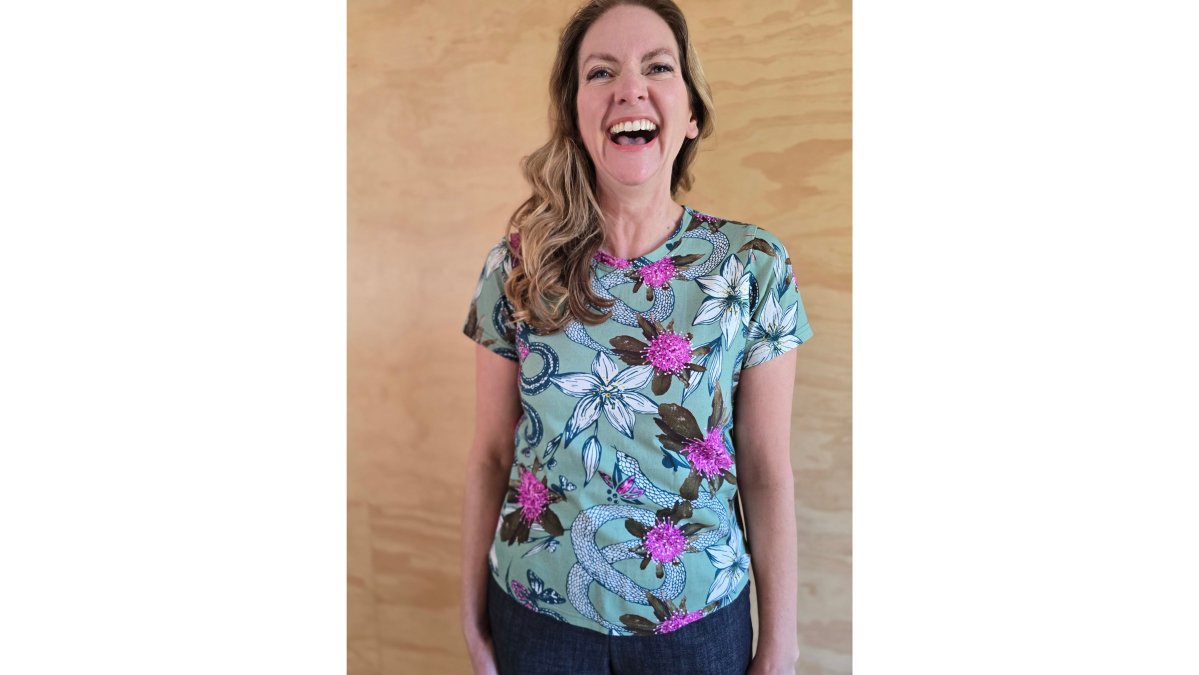
The fabric is a light single jersey, so it breathes and does not cling.
What works: it comes in short or long sleeve across sizes 6-8 to 22-24, with a matching neck band and twin needle topstitching for a smooth finish.
What doesn't: the limited-edition Nights Garden print runs for SS26/27 only, so if you love it, do not wait.
Australian Government textile and clothing sustainability guidance
2. Montaigne Merino Wool Knit Spencer: Best for Thermal Regulation
Merino wool is the best natural fibre for thermal regulation, and this Spencer proves it. Crafted from 100% Australian Merino wool, it feels gentle against skin while offering warmth without bulk.
The classic round neckline and easy fit make it a genuine transeasonal layer.
The one drawback is care. Wool needs handwashing or a wool cycle with no spin, and some pilling is natural even in high-quality yarns.
The Goodness Tee Cotton Knit - Nights Garden →
3. Boss Pant Organic Linen - Coastal Fern: Best for Breathability
Linen is the most breathable natural fibre we work with, and the Boss Pant is the piece we reach for in heat.

The balloon leg, inseam pockets and elastic waist make it an easy traveller, work or weekend pant. It suits a capsule wardrobe because it pairs with almost anything and works across seasons.
What most guides miss is that linen softens and improves with every wash.
4. Baby Swaddle Organic Cotton Knit: Best for Delicate Skin
Newborn skin is the most reactive of all, and this swaddle is made for it.
At approximately 100cm x 100cm, it works as a wrap, a feeding cover or a pram shade against harsh sun.
Made in Tasmania with zero waste and sweatshop-free production, it is the piece we recommend most often to new parents who are worried about reactivity.
5. Organic Fabric By The Metre: Best for Custom Sensitive Skin Pieces
If off-the-rack never fits quite right, sewing your own is the answer.
The range covers 100% organic cotton voile at $9.50, organic cotton poplin at $15.00, organic cotton and hemp denim at $22.50, organic felt wool at $15.00, washed linen at $12.00 and 100% pure organic linen at $19.50.
What to watch: cut fabric cannot be returned, and gentle cold washing with phosphate-free detergent keeps it kind to skin over time. Fabric arrives as one continuous length regardless of how you split your order.
Australian Radiation Protection and Nuclear Safety Agency guidance on sun protection
How to Style Linen Clothing for Sensitive Skin
Linen is one of the most breathable natural fibres available, but its crisp hand and tendency to crease mean it needs to be worn and washed differently from cotton if you have reactive skin. The styling advice below is standard; the washing advice is where most guides stop short, and it is the part that determines whether linen actually helps your skin or quietly undoes the benefit.
Styling: layer, don't press
Linen's texture can feel abrasive at first against eczema-prone areas such as the inner arm, neck and waist. The fix is not to avoid linen but to stop it sitting directly on reactive skin in high-friction zones:
- Layer a soft organic cotton tee or camisole underneath a linen shirt or pant. The cotton manages moisture and provides a smooth contact surface; the linen handles breathability and structure.
- Choose relaxed cuts that skim rather than press. Elastic waists and balloon or wide legs reduce pressure and rubbing at the waist and thighs.
- Wash before first wear. New linen carries sizing and mill finishes that soften considerably after one gentle cold wash.
The post-wash problem nobody talks about
A common pattern among people with sensitive skin is that a new natural-fibre garment feels fine for a few weeks, then starts to itch. The fibre has not changed, the residue on it has. Standard laundry products are designed for cleaning performance, not for skin compatibility, and they leave behind exactly the kinds of chemicals that provoke contact dermatitis:
- Fabric softeners coat the fibre in a waxy film of quaternary ammonium compounds. This reduces breathability, traps moisture against the skin and leaves a residue that many people react to directly.
- Optical brighteners in mainstream detergents are designed to remain on the fabric after rinsing. They are a recognised irritant for reactive skin.
- Enzymes and fragrances in biological and scented detergents can trigger flare-ups even at low residual levels.
A wash routine that protects the fibre and your skin
- Use a phosphate-free, fragrance-free, enzyme-free liquid detergent. Powder detergents often contain fillers that do not fully rinse out.
- Skip softener entirely. If linen feels stiff, a half-cup of white vinegar in the rinse cycle softens the fibre without leaving a coating.
- Wash cold on a gentle cycle and use an extra rinse if your machine has one.
- Do not tumble dry. Heat sets creases and can shrink linen; line-dry inside out in shade to prevent fading.
- Iron with steam while slightly damp, or embrace the crease, linen is designed to fade and soften over many washes, and that softening is what makes it kinder to skin over time.
- Wash new garments before first wear to remove sizing, mill finishes and any residual dye.
Building a linen capsule on a budget
You do not need a full linen wardrobe to get the benefit. Two well-chosen pieces, a relaxed linen shirt and a wide-leg linen pant, cover most warm-weather situations when layered over organic cotton basics. Buying fabric by the metre and sewing your own is often the cheapest route to a pure, untreated linen garment, because you control every finish and can skip the easy-care treatments that ready-to-wear brands apply.
Frequently Asked Questions
Which brand makes the best natural fiber clothing for sensitive skin?
There is no single best brand, but the strongest options share certain traits: certified organic cotton, Oeko-Tex or GOTS certified processing, and no harsh chemical finishes. The Spotted Quoll's Goodness Tee uses certified organic cotton with eco dyes, while their merino Spencer offers breathable warmth. Look for brands that list fibre content, weight, and certification details openly, and prioritise pieces you can wash gently without losing softness.
What is the best clothing fabric for sensitive skin?
Organic cotton, linen, and merino wool are the safest bets. Organic cotton is hypoallergenic and breathable, linen wicks moisture and regulates temperature, and merino wool is fine enough to avoid the prickle coarser wool causes. Avoid polyester and other synthetics, which trap heat and moisture against the skin. If you have contact dermatitis, choose fabrics with no chemical finishes and wash them before first wear to remove any residual processing agents.
How do I choose clothing that won't irritate sensitive skin?
Check three things: fibre content, certification, and fabric weight. Look for GOTS certified organic cotton or Oeko-Tex Standard 100 linen, which confirms no harmful substances remain after processing. Heavier weights like 180gsm cotton or 190gsm linen tend to feel smoother against the skin than very light, sheer fabrics. Also check the seams and labels, since rough stitching and stiff tags often cause more irritation than the fabric itself.
Are natural fiber clothes worth the higher price?
Natural fiber garments often cost more upfront because organic farming, ethical manufacturing, and small-batch production carry real costs. The value shows in longevity: a 190gsm organic linen pant or a 180gsm organic cotton tee holds its shape and softness through many gentle washes, while cheaper synthetic alternatives pill, stretch, and lose comfort quickly. Buying fewer, better pieces usually costs less per year of wear than replacing fast-fashion items every season.
How should I wash natural fiber clothing for sensitive skin?
Use cold water on a gentle cycle with a phosphate-free detergent, and add a laundry bag for extra protection. Skip fabric softeners and tumble drying, which break down fibres and leave residue that can irritate skin. Dry flat or hang inside out in the shade, then steam iron on the reverse. For wool, air it out between wears and only wash when necessary, since over-washing shortens the garment's life and softness.