


Table of Contents
- Why Synthetic Home Decor Is Worth Replacing
- Natural Materials for Home Decor: What Actually Works
- Eco-Friendly Alternatives to Plastic Decor and Accessories
- Timber, Reclaimed Wood and Stone for Lasting Pieces
- Eco-Friendly Home Decor Ideas That Suit Real Budgets
- Durability and Care: Natural vs Synthetic Compared
- How to Make Home Decor More Sustainable Without Starting Over
- Verifying Certifications and Avoiding Greenwashing
- Frequently Asked Questions
Last Updated: October 5, 2026
Why Synthetic Home Decor Is Worth Replacing
Most homes are quietly furnished with plastic: polyester cushion covers, acrylic throws, resin ornaments, nylon rugs. At The Spotted Quoll, we work with natural fibres daily in our Tasmanian studio, and the shift away from synthetics is the most common question we get.
The case for switching is practical before it is ethical. Synthetic textiles shed microplastics with every wash, and plastic decor items are rarely repairable, so they end up in landfill within a few years.
The Materials You Are Probably Living With Right Now
Polyester, acrylic, polypropylene, PVC and resin account for most decorative items in a typical home. They are cheap, colour-fast and easy to wipe clean, that is the appeal. The trade-offs: synthetic fabrics are petroleum-derived, do not breathe, and shed fibres during washing, while rigid plastic decor cannot be repaired when it cracks. Replace thoughtfully as things wear out rather than all at once.
Natural Materials for Home Decor: What Actually Works
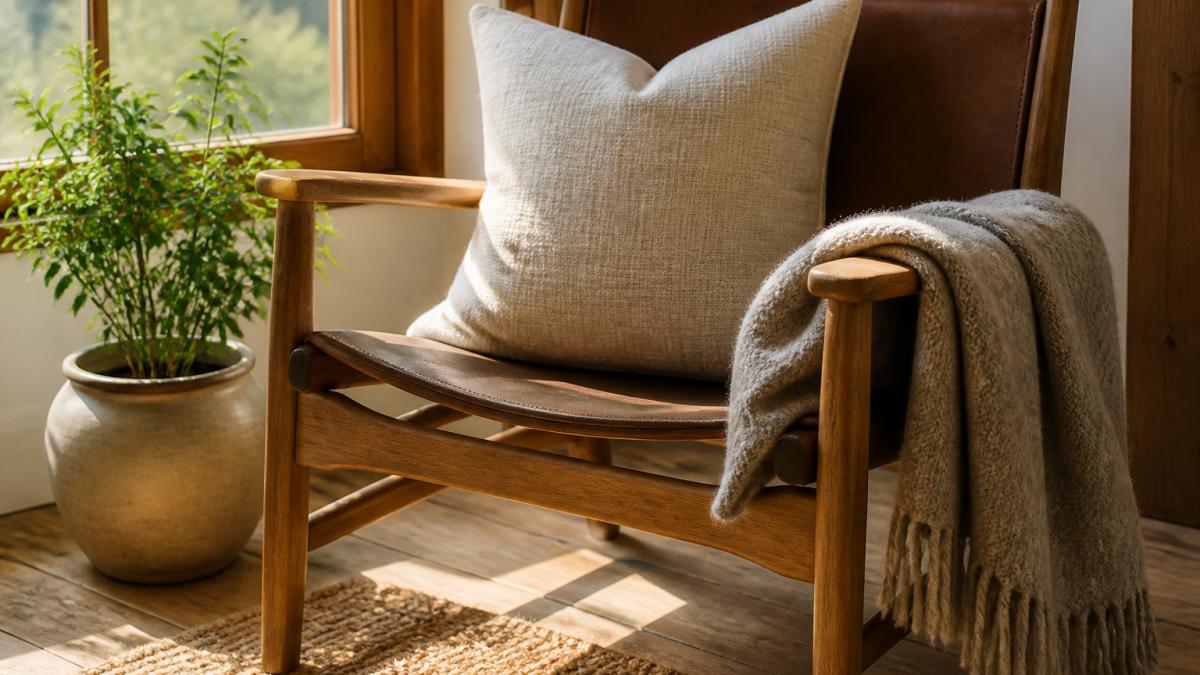
Natural materials for home decor are fabrics and finishes derived from plants, animals or minerals rather than petrochemicals. The practical winners are organic cotton, linen, hemp, wool, jute and sisal for textiles, and timber, stone and reclaimed wood for hard pieces.
Organic Cotton, Linen and Hemp for Soft Furnishings
These three cover almost every soft furnishing need: cushions, curtains, throws and upholstery.
- Organic cotton is soft, breathable and washes well, the easiest natural fibre to live with.
- Linen is stronger wet than dry, softens with every wash, and hides creasing well.
- Hemp is the most durable of the three and needs less water to grow.
Our Organic Linen/Hemp Cushion Seed Pods ($59.00) use a 220gsm organic linen and hemp blend on the front with a natural cotton canvas back, printed with an exclusive design and finished with an envelope opening instead of a zipper. If you are replacing polyester cushion covers, this is the direct swap: same function, natural fibre, made in Tasmania.

Wool, Jute and Sisal: Rugs, Throws and Floor Coverings
Wool is the standout for warmth and longevity: it resists crushing, regulates temperature, and a well-made piece can last decades with basic care.
Our Organic Wool Felt Throw ($199.00) is 100% organic wool felt, 150cm by 200cm, made in our Launceston studio with a blanket-stitch finish.

For cushions, the Cradle Mountain Organic Wool Felt Cushions ($99.00) are certified organic wool felt with natural cotton blanket stitch and an invisible zipper so the cover can be removed.

| Material | Best For | Care Level | Lifespan With Care |
|---|---|---|---|
| Organic cotton | Cushions, curtains | Machine washable | Several years |
| Linen | Cushions, throws, upholstery | Machine washable, softens over time | Many years |
| Hemp | High-wear soft furnishings | Machine washable, very durable | Many years |
| Wool felt | Throws, cushions | Hand wash or dry clean | Many years |
| Jute / sisal | Rugs, floor accents | Spot clean, keep dry | Moderate |
Eco-Friendly Alternatives to Plastic Decor and Accessories
Candles are an easy starting point. Paraffin is a petroleum by-product; beeswax is not. Our Wilderness Beeswax Candles ($89.00) are pure organic beeswax, 7.5cm wide by 12cm tall, with an approximate 90-hour burn time when lit in four-hour sessions.
For plants, the Mr Kitly Self-watering Pots ($15.00) are BPA-free and made in Melbourne. Pair it with a Macrame Plant Hanger ($39.95) in natural or charcoal, Fair Trade made, with a 1m drop suited to pots between 10cm and 20cm.
Timber, Reclaimed Wood and Stone for Lasting Pieces
Timber and stone are the longest-lasting category here, and often the cheapest per year of use.
Tasmanian timber is genuinely distinctive here. Our Wooden Bud Vases ($79.00) and Wooden Vases ($115.00) are handcrafted by Parkinson Wood Co. from Huon Pine, Myrtle or Blackwood, each piece showing its own grain.
The Wooden Propagation Station ($69.00) takes the same timbers and adds a glass vial for rooting cuttings, a practical way to grow your plant collection instead of buying new ones.
For something more sculptural, the Wilderness Log Vases ($99.00) are sculpted from responsibly sourced local Black Wattle and finished with Yakisugi, a traditional Japanese charring method that forms a protective carbon layer against water, pests and fire.
Organic Linen/Hemp Cushion Seed Pods - Flat Pack →
Eco-Friendly Home Decor Ideas That Suit Real Budgets
Eco-friendly home decor ideas do not require a full refit, and the biggest barrier for most households is cost rather than intent. Rank every purchase by cost per year of use, not sticker price, and replace one category at a time starting with whatever is already worn out. Prioritise in three tiers:
- Highest impact, lowest cost: cushion covers, throws, candles and plant hangers, the pieces you see and touch daily, and the cheapest to swap.
- Mid-tier: rugs, floor coverings and lighting. Higher upfront cost, but long lifespan keeps annual cost low.
- Lowest urgency: large upholstered furniture and structural pieces. Replace only when the existing item has genuinely failed.
What Natural Decor Actually Costs
Natural materials cost more upfront, but the gap narrows once you divide by years of use. Rough guide for the Australian market:
- Cushion covers in organic cotton, linen or hemp: roughly $40 to $120 per cover. A polyester cover at $15 to $30 typically loses shape or pills within one to two years; a linen or hemp cover usually runs five to ten years with normal washing.
- Wool throws: roughly $150 to $350. A synthetic acrylic throw at $30 to $60 is often replaced every two to three years, so the wool piece can work out cheaper annually from around year five onward.
- Jute or sisal rugs: roughly $150 to $600 depending on size. Not soft underfoot, but they tolerate high traffic and do not shed like deep synthetic pile.
These are indicative ranges, not fixed prices; freight, size and maker location move them significantly, and regional areas usually pay more.
Sourcing Options, Cheapest First
- What you already own. Reuse inserts, frames, vases and hardware, covers and inserts are sold separately so you can keep the insert and change only the outer.
- Op shops and charity stores. Solid timber, ceramic and glass turn up cheaply. Check for cracks, water damage and loose joints.
- Online marketplaces and local buy-swap groups. Best for rugs, throws and larger furniture that is expensive to ship new.
- Maker markets and small studios. Often the same price as retail with a traceable supply chain, and you can ask about offcuts and repairs directly.
- New retail. Reserve for pieces you intend to keep a decade or more.
How to Spread the Cost
- Buy one category per season. Four swaps a year is realistic for most budgets and avoids a wasteful wholesale clear-out.
- Buy covers unfilled. Reusing existing inserts typically halves the cost of switching cushion covers.
- Choose one statement piece per room. One well-made vase or lamp does more visual work than five small plastic accents.
Durability and Care: Natural vs Synthetic Compared
Natural materials generally outlast synthetics in home decor, but they ask more in care, and the differences matter most in high-traffic, damp or sun-exposed areas. The table below sets out what to expect material by material, followed by the failure modes to watch for.
| Material | Typical Lifespan With Care | Cleaning Method | Repairability | Suitability |
|---|---|---|---|---|
| Organic cotton | 5-10 years for covers | Machine wash cool, line dry | High, seams re-stitch easily | General use; not ideal for damp rooms |
| Linen | 10+ years | Machine wash cool, tumble low or line dry | High | General use; softens with age |
| Hemp | 10-15 years | Machine wash cool, line dry | High | High-traffic soft furnishings |
| Wool felt | 10-20 years | Hand wash cool or dry clean | Moderate, felting is hard to reverse | Warm, dry rooms; avoid damp |
| Jute / sisal | 5-10 years | Spot clean, vacuum, keep dry | Low, cannot be rewoven easily | Dry, high-traffic floors only |
| Timber | 15+ years | Dust, occasional oil, avoid standing water | High, sand and refinish | All rooms except constantly wet areas |
| Stone | Decades | Wipe, reseal porous types periodically | High, chips can be filled | All rooms; heavy for shelves |
| Beeswax | Consumable | Trim wick, keep away from draughts | Not applicable | Dry, stable surfaces |
| Ceramic / glass | Decades if handled | Hand wash | Low, cracks are usually terminal | All rooms; keep away from shelf edges |
Where Synthetics Still Win
Synthetics are not universally worse. They hold colour in direct sun better than many natural dyes, resist mould in genuinely damp rooms such as laundries and bathrooms, and wipe clean with no special care. In a humid, poorly ventilated space, a durable synthetic or sealed material is often the more sensible choice. Replace synthetics where natural materials perform better, do not remove them everywhere.
The Failure Modes to Watch For
- Wool and hot water. Wool felt shrinks and mats permanently in a hot wash; cool hand washing or dry cleaning is the only safe route.
- Timber and standing water. Soaking a timber vase or bowl moves the grain, cracking the piece or loosening an inner glass vial. Wipe rather than soak.
- Jute and moisture. Jute and sisal wick water and can develop mould if left damp, so keep them in dry rooms, not bathrooms or laundries.
Care Routines That Extend Lifespan
- Rotate. Move cushions, throws and rugs periodically so wear and fading are even.
- Wash less, air more. Most natural fibres benefit from airing between washes rather than frequent machine cycles.
- Repair early. A loose seam or small split is a five-minute fix; left alone it becomes a replacement.
How to Make Home Decor More Sustainable Without Starting Over
Making home decor more sustainable starts with what you already own: keep synthetic pieces that are still functional and replace them only as they fail. That rule prevents the waste of a wholesale clear-out. Then work through the rooms in order of impact:
- Replace worn cushion covers with organic cotton, linen or hemp
- Swap paraffin candles for beeswax
- Replace cracked plastic planters with durable pots and natural hangers
Upcycling existing textiles is the highest-value step. Re-covering a cushion, re-hemming a curtain or repairing a seam costs little and keeps material in use. The Australian Packaging Covenant Organisation publishes guidance on material recovery that applies to household goods as much as packaging.
Verifying Certifications and Avoiding Greenwashing
Greenwashing is common in home decor because "natural" and "eco" are not regulated terms on their own. A certification is only useful if you can check it, so verify the claim against the certifying body's own register rather than trusting a label or website badge. What to look for:
- Organic fibre claims: check for a recognised organic certification and confirm the certificate number.
- Wool claims: "certified organic wool" should be traceable to a specific standard.
- Timber claims: responsibly sourced timber should be verifiable through the supplier.
Ask suppliers directly. A maker who knows their supply chain will answer specific questions about fibre origin, where the piece was made, and what happens to production offcuts. Vague answers are the clearest signal. Our own answer is simple: everything is designed and made in Tasmania, and offcuts go back into recycled wool production rather than to waste.
Frequently Asked Questions
Which natural materials are best for sustainable home decor?
It depends on the room and how much wear the piece gets. For soft furnishings, organic cotton, linen and hemp handle daily use and wash well. Wool felt suits cushions and throws in cooler rooms. Jute and sisal work for floor coverings in low-traffic areas. Timber, stone and reclaimed wood suit furniture and decorative accents because they last for decades. Match the material to the job rather than choosing one fibre for everything.
How can I tell whether home decor is made from synthetic materials?
Check the label or product listing for fibre names. Polyester, acrylic, nylon, polypropylene and PVC are synthetic. Words like cotton, linen, hemp, wool, jute, sisal, timber and stone indicate natural materials. If a listing does not name the material at all, treat that as a warning sign. Reputable makers usually state the fibre, its weight and where the piece was made.
Are natural home decor materials more durable than synthetic ones?
Not automatically, but they often age better. Wool felt cushions and linen and hemp covers can be washed or dry cleaned and keep their structure. Timber vases and reclaimed wood pieces can be re-oiled or refinished rather than thrown out. Synthetics resist stains initially but tend to pill, crack or lose shape, and they usually cannot be repaired. Care instructions decide how long any piece lasts.
How can I make my home decor more sustainable without replacing everything?
Start with the pieces you touch most: cushions, throws and rugs. Replace one synthetic item at a time with a natural alternative, then repair or re-cover what you already own. Reuse jars, baskets and textiles as storage or planters. When you do buy, choose items you can clean and repair, and plan where they go at end of life, whether that is composting natural fibres or passing timber pieces on.
Replacing synthetic decor is not about throwing everything out. It is about choosing natural fibres and honest materials one piece at a time, and buying things that last. The Spotted Quoll makes cushions, throws, timber vases and homewares from natural fibres and Tasmanian timbers in our Launceston studio, with zero-waste production and small-batch runs. Shop our homewares collection and start with a single cushion cover or bud vase.