


Table of Contents
- What Makes a Gift Truly Ethical?
- How to Identify Ethical Brands Before You Buy
- Australian Social Enterprise Gifts That Support Communities
- 1. Zero-Waste Tasmanian Oak Earrings
- 2. Eco Bead Necklace with Tagua Seeds
- 3. Organic Cotton Thylacine Scarf
- 4. Fair Trade Organic Cashmere Pashmina
- 5. Small-Batch Tasmanian Jam Gift Pack
- Frequently Asked Questions
Last Updated: September 4, 2026
Finding presents that align with your values shouldn't feel like a compromise between style and sustainability. When you buy ethically made Australian gifts, you're not just selecting an object; you're casting a vote for the kind of world you want to support. At The Spotted Quoll, we believe a gift should carry meaning, and that meaning often starts with how it was made, who made it, and the impact it leaves behind.
The challenge for many conscious consumers is cutting through the noise. Terms like sustainability and fair trade are everywhere, yet supply chains remain opaque. The good news is that a growing number of Australian makers and social enterprises are proving that beautiful, functional items can also be kind to people and the planet. Below, we'll show you exactly how to spot the genuine article and introduce you to a curated selection of gifts that make a real difference.
What Makes a Gift Truly Ethical?
An ethical gift is one where the positive impact is woven into its very creation, from the sourcing of raw materials to the hands that craft the final piece. It's a product that supports fair wages, safe working conditions, and environmentally responsible production methods. This goes beyond just a "green" label; it involves a commitment to supply chain transparency and a conscious effort to reduce harm.
Authentically ethical gifting considers the entire lifecycle of an item. This means favouring natural materials, recycled packaging, and designs built to last rather than disposable trends. It also means supporting businesses that prioritise waste reduction and circular economy principles, ensuring that what you give doesn't end up as landfill next season. Ultimately, an ethical gift tells a story of respect: respect for the artisan, the community, and the earth.
How to Identify Ethical Brands Before You Buy
Navigating ethical claims requires more than a quick scan of a website's 'About Us' page. The term 'ethical' is not legally defined in Australia, which means brands can use it loosely (accc.gov.au). To cut through the marketing, you need a practical verification toolkit. Here is how to assess a brand's claims with confidence.
Start with the Three-Part Test
A genuinely ethical product should pass three checks:
- Material provenance: Can the brand name the farm, region, or supplier of its raw materials? Vague terms like 'sustainably sourced' without a named origin are a red flag.
- Maker visibility: Does the brand name its artisans, workshops, or production partners? If a product is 'handmade', who made it, and under what conditions?
- Environmental footprint: What happens to the product and its packaging at the end of its life? Is it compostable, recyclable, or designed for decades of use?
Look for Specific Certifications, Not Just Claims
While no single certification covers every aspect of 'ethical', several recognised schemes provide verifiable benchmarks:
- Fair Trade Certified: This label guarantees minimum prices and premiums for farmers and workers in developing nations. Look for the official Fairtrade Australia & New Zealand mark.
- Australian Made (AMCL): This logo confirms the product was made in Australia, but it does not verify ethical labour or environmental practices. Use it as a starting point, not a guarantee.
- Organic Certifications: For textiles and food, look for Australian Certified Organic (ACO) or similar bodies. These verify that no synthetic pesticides or genetically modified organisms were used.
- B Corp: While not a product-level label, B Corp certification audits a company's entire social and environmental performance. It is a strong signal of overall commitment.
Watch for Greenwashing Red Flags
Under Australian Consumer Law, businesses must not make misleading claims about their environmental or social credentials (legislation.gov.au). The Australian Competition and Consumer Commission (ACCC) has specifically warned against vague terms like 'eco-friendly' without substantiation (accc.gov.au). Be wary of:
- Unverifiable absolutes: Claims like '100% sustainable' without a breakdown of what that means.
- Missing supply chain detail: A brand that cannot name its factories or farming partners is likely hiding something.
- Stock photos over real people: Brands that use generic imagery instead of showing their actual makers are often less transparent.
The 'Three Questions' Test You Can Use Today
Before you purchase, email the brand or check its FAQ page for these three questions:
- "Where are your raw materials sourced, and can you name the specific farm or region?"
- "Who makes your products, and what are their working conditions?"
- "What is your packaging made of, and how should I dispose of it?"
Brands that answer with specific names, locations, and processes are demonstrating genuine transparency. Brands that respond with generic corporate language or fail to respond at all are not worth your money. This verification process is the difference between buying a product that merely claims to be ethical and one that is demonstrably so.
Australian Social Enterprise Gifts That Support Communities
Social enterprises are businesses that exist to solve a social or environmental problem, reinvesting their profits into their mission rather than distributing them to shareholders. When you buy from one, your purchase directly funds employment for marginalised groups, preserves traditional crafts, or supports rural communities. But not all social enterprises are created equal, and understanding the model helps you choose where your money has the most impact.
How Social Enterprise Models Work in Practice
In Australia, social enterprises operate across a spectrum. Some are registered charities with a trading arm, while others are for-profit companies with a binding social mission. Certification bodies like Social Traders provide a verification framework, but many small enterprises operate without formal certification due to cost. The key question is not whether they are certified, but whether their mission is genuine and their impact measurable.
The Impact of Your Purchase: A Real-World Example
Consider the difference between buying a mass-produced scarf and one made by a social enterprise. With the former, your money goes to a factory owner, a logistics company, and a retailer. With the latter, a significant portion flows directly to the artisan, their cooperative, and community programs like education or healthcare. This is not charity; it is dignified trade that builds long-term economic resilience.
Budget-Conscious Ethical Gifting: Under $50 Options
A common misconception is that ethical gifts are always premium-priced. In reality, many social enterprises offer beautiful, functional items under $50. Here are the types of gifts to look for:
- Small-batch pantry items: Jams, honey, olive oil, and spice blends from regional producers often fall in the $15-$40 range and directly support farmers and small-batch makers.
- Handmade soap and skincare: Many social enterprises employ women in vulnerable situations to craft soap, balms, and candles from natural ingredients. These typically retail between $10 and $35.
- Recycled accessories: Items made from upcycled materials, like the Tasmanian oak earrings featured in this guide, often sit under $30 because the raw material cost is minimal.
- Stationery and paper goods: Seed paper cards, handmade journals, and recycled notebooks are thoughtful, low-cost gifts that support small workshops.
How to Verify a Social Enterprise's Claims
Just as with any ethical claim, you should apply scrutiny. Look for:

- A clear mission statement: The enterprise should state the problem it addresses and how profits are used.
- Impact reporting: Do they publish annual reports or case studies showing how many people they employ or what programs they fund?
- Transparent pricing: Can they explain why the product costs what it does, and what portion goes to the maker?
The Spotted Quoll's Approach
Our own range reflects this philosophy. We partner with makers who can name their artisans and their regions, and we prioritise products that support women-led cooperatives and traditional crafts. For example, our eco bead necklace with Tagua seeds is collected by women in rural South American communities, providing them with income while protecting the rainforest. Our small-batch Tasmanian jam gift pack supports local growers in Invermay. These are not just products; they are economic lifelines for communities that might otherwise be overlooked. When you choose a social enterprise gift, you are choosing to fund a solution, not just buy an object.
1. Zero-Waste Tasmanian Oak Earrings
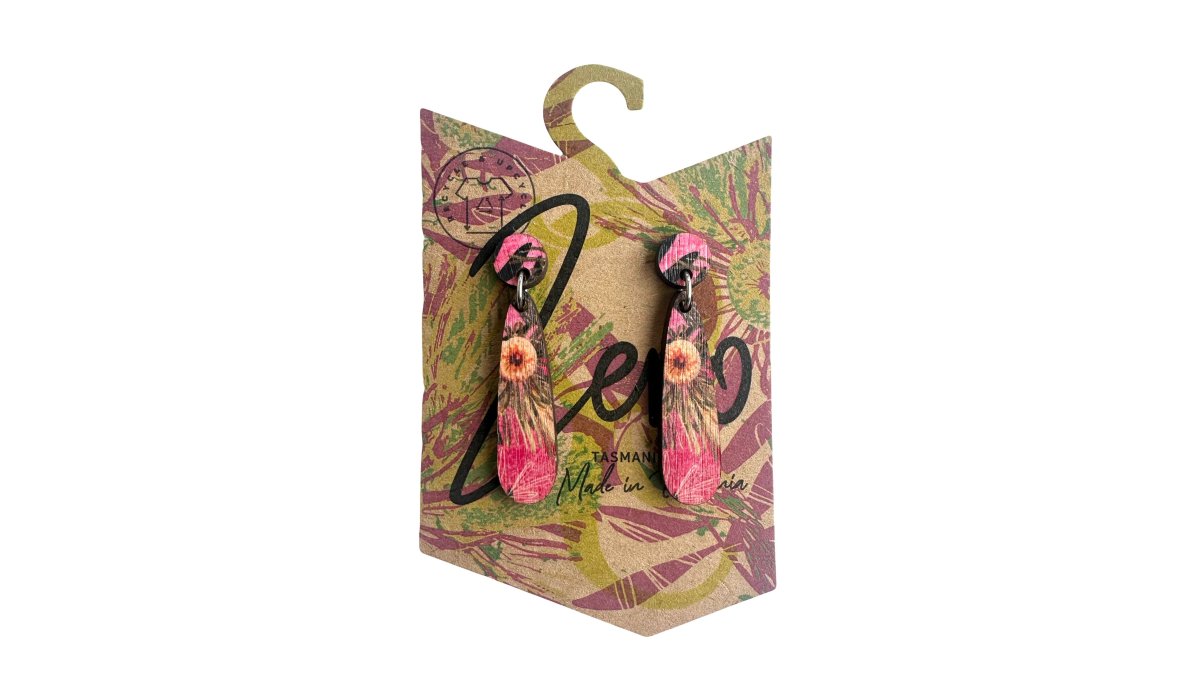
These earrings are a perfect example of thoughtful design turning waste into wearable art. Made from Tasmanian Oak off-cuts that would otherwise be destined for landfill, they are a tangible commitment to waste reduction and circular economy principles. Each pair is a unique piece, delighting in the natural grain and charm of the timber.
The zero-waste philosophy extends to the entire production process, which is designed and executed in The Spotted Quoll's Launceston studio. The earrings feature non-allergic surgical steel findings, ensuring comfort for sensitive ears. They are a fantastic choice for someone who appreciates unique, handcrafted details and wants to wear their values with pride.
2. Eco Bead Necklace with Tagua Seeds
This necklace is a vibrant celebration of natural materials and global community. The collection features Australian specialty timber off-cuts collected from craftspeople and artisans, transformed into beautiful, tactile beads. These are paired with colourful Tagua seeds, also known as vegetable ivory, which are collected by women in rural South American communities, providing them with a vital source of income while protecting the rainforest.

Each necklace is strung on natural hemp cord and is fully adjustable, making it a versatile statement piece. Because the beads are natural, each necklace is wonderfully unique, promising that no two are exactly alike. It's a gift that supports sustainable fashion and ethical sourcing across the globe, all while adding a pop of colour to any outfit.
3. Organic Cotton Thylacine Scarf
Celebrating our unique natural heritage, this scarf features an exclusive print of the Lost Thylacine, a tribute to the extinct Tasmanian Tiger. The design is printed on 100% organic, super soft double muslin cotton using eco-friendly, water-based inks, making it a dreamy and breathable accessory for any season. It's a piece of wearable art that sparks conversation about conservation and our connection to the wild.
The commitment to ethical production is complete, from the organic cotton to the zero-waste manufacturing process and even the packaging, which is made right here in Tasmania using recycled content. This scarf is a thoughtful gift for nature enthusiasts who appreciate exclusive prints and want to support local, sustainable production. It's a beautiful blend of art, ethics, and Australian identity.

4. Fair Trade Organic Cashmere Pashmina
For a gift of pure luxury with a profound ethical impact, this pashmina is unmatched. Hand-loomed by master weavers in Kashmir, a region where this craft is often the sole source of income, this wrap directly supports traditional artisans. By cutting out the middleman, a significant portion of the profits goes back to the weavers, helping to sustain their communities and ancient skills.
The pashmina is made from certified organic cashmere, known for its incredible softness, warmth, and elegance. It is a versatile piece that can be worn as a shawl or scarf, adding a touch of sophistication to any wardrobe. This is more than a scarf; it's a gesture of solidarity and an investment in the preservation of a centuries-old art form, making it one of the most meaningful ethically made Australian gifts you can find.
5. Small-Batch Tasmanian Jam Gift Pack
Sometimes the most heartfelt gifts are the edible ones, and this collection of small-batch jams captures the essence of Tasmania. Handcrafted in Invermay, these jams are made with ingredients sourced from local growers and vendors, ensuring pure, natural flavour with minimal additives. It's a taste of authentic, local produce that supports rural small business and the community.
Each gift pack brings together a selection of popular flavours, making it the perfect present for a foodie or a thoughtful treat for yourself. The jams are made with no shortcuts, just a passion for celebrating the best of the region. This is a wonderfully authentic souvenir that supports local craftsmanship and delivers pure, homegrown goodness.
| Gift Idea | Price | Key Material | Ethical Highlight |
|---|---|---|---|
| Zero-Waste Tas Oak Earrings | $24.95 | Tasmanian Oak | Made from landfill-bound off-cuts |
| Eco Bead Necklace | $69.00 | Timber & Tagua Seeds | Supports women-led rural communities |
| Organic Cotton Thylacine Scarf | $98.95 | Organic Cotton | Zero-waste, Tasmanian-made packaging |
| Organic Cashmere Pashmina | $99.00 | Organic Cashmere | 85% of profits support Kashmiri weavers |
| Joanna's Jams Gift Pack | $39.95 | Local Produce | Supports local growers & small-batch makers |
Choosing to buy ethically made Australian gifts is a powerful act of conscious consumerism. It's a way to celebrate special occasions while supporting a more sustainable and equitable world. As you consider your options, think about the story you want your gift to tell and the community impact you want to foster.
We invite you to explore our full collection at The Spotted Quoll, where every piece is designed and made with a commitment to ethical practices, natural fibres, and timeless style. From our exclusive nature-inspired prints to our support for global artisan communities, we're here to help you find gifts that are kind to both people and the earth. Get started with The Spotted Quoll and make your next gift a force for good.
Frequently Asked Questions
What defines an ethically made gift in the Australian market?
An ethically made gift is produced with fair wages, safe working conditions, and minimal environmental harm. In Australia, this means looking for locally sourced materials, transparent supply chains, and makers who avoid exploitative labour. Brands that use recycled or natural materials, support rural communities, and minimise packaging waste also meet the standard. When you buy ethically made Australian gifts, you are choosing products that respect both people and planet, from the first stitch to the final delivery.
How can I verify if a gift is truly Australian-made?
Look for clear statements about where the item was designed, made, and by whom. Reputable brands share details about their production process, the materials they source, and the people behind the work. Check if the brand names their makers, shows photos of their studio, or mentions certifications like organic cotton or fair trade partnerships. You can also ask questions directly before purchasing; ethical brands are usually happy to explain their supply chain and production values.
What are some eco-friendly Australian gift brands to support?
The Spotted Quoll is one example of an Australian brand creating eco-friendly gifts from natural and recycled materials. Their zero-waste earrings use Tasmanian oak off-cuts, and their scarves are printed on organic cotton with eco-friendly inks. Supporting small local studios means your gift has a lower carbon footprint than mass-produced imports. Look for brands that prioritise plastic-free packaging, use renewable materials, and openly discuss their waste reduction efforts.
Why choose Australian social enterprise gifts for special occasions?
Social enterprise gifts direct your spending toward businesses that reinvest in their communities. When you buy from a social enterprise, your purchase may support rural artisans, provide fair wages to weavers, or fund environmental projects. These gifts carry a story of positive impact beyond the product itself, making them more meaningful for the recipient. You are not just giving an object; you are giving the recipient the knowledge that their present helped someone else thrive.