Table of Contents
- Why Australian Made Clothing for Women Is Worth the Investment
- Quick Comparison: Australian Made Women's Pieces
- Ethical Clothing Brands Australia: How to Spot Real Transparency
- Natural Fibres That Keep You Cool in the Australian Climate
- Building an Australian Made Capsule Wardrobe That Lasts
- Sustainable Fashion for Women: Care, Repair and Longevity
- Size Inclusivity and Fit: Finding Your Right Measurements
- Frequently Asked Questions
Last Updated: September 15, 2026
Why Australian Made Clothing for Women Is Worth the Investment
Australian made clothing for women costs more than a high street alternative, and that gap is the whole point. A locally made garment is cut, sewn and finished in small runs by people paid properly, using natural fibres chosen for how they wear rather than how cheaply they can be sourced. The price reflects labour and material honesty, not a logo.
At The Spotted Quoll, every piece is designed and made in a working studio in Tasmania, one of the last of its kind still operating here. That proximity changes what you buy. You can trace the fabric, meet the print designer, and ask the maker directly what a garment is made of.
Below, we break down how to spot genuine ethical production, which natural fibres actually suit the climate, and how to build a capsule wardrobe that lasts years rather than seasons.
The Australian fashion and textile sector contributes billions to the national economy and employs tens of thousands of people, according to the Australian Fashion Council's industry reporting. Buying locally keeps that money and those skills inside the country.
Quick Comparison: Australian Made Women's Pieces
Here is what a genuinely local, natural-fibre wardrobe looks like in practice, with real prices from The Spotted Quoll.
| Piece | Fabric | Price | Best For |
|---|---|---|---|
| Wonderland Dress - Sawtooth Banksia | 100% organic cotton poplin | $298.00 | Warm-weather events, garden weddings |
| Lady Jane Linen Blouse - Coastal Fern | 100% organic linen | $249.00 | Workwear layering, tucking or wearing loose |
| Cocoon Dress - Coastal Fern | Organic cotton muslin or linen | $298.00 | Everyday wear across seasons |
| Adjustable Hanky Hem Skirt - Organic Denim | 55% hemp, 45% organic cotton | $229.00 | Adjustable fit, desk-to-dinner |
The Cocoon cut alone has sold over 1,100 units across its prints and fabrics.

Ethical Clothing Brands Australia: How to Spot Real Transparency
Real transparency means a brand can name where a garment was cut and sewn, not just where the fabric was milled. If a label says "designed in Australia" but can't tell you who made it, that's a design credit, not a manufacturing one.
A common mistake is accepting a certification logo as proof of everything. Certifications cover specific claims, such as organic fibre content or fair labour conditions, and they don't automatically mean a garment was made locally. Ask three questions instead:
- Where was this cut and sewn?
- What fibre is it, and who grew or milled it?
- Can I see the garment measurements before I buy?
What a genuine supply chain disclosure actually looks like
Most brands stop at the first tier, the factory that sews the garment. A useful disclosure goes further and names the cut-make-trim (CMT) unit, the fabric mill, and where the raw fibre was grown. In a local manufacturing model, those three tiers often sit within a few hundred kilometres of each other, which is why the answers come back quickly and specifically rather than as a generic "our partners overseas".
When you ask, listen for these markers:
- A named CMT unit, not just "our manufacturer". A studio that cuts and sews in-house can tell you the street address and the number of machinists.
- A named mill or grower for the fibre. Organic cotton and linen supply chains are traceable if the brand has done the work.
- A stated wage model. The honest answer is usually an hourly rate above the relevant award, not a vague promise about "fair pay".
- A willingness to answer in writing. Email trails are harder to fudge than a marketing page.
Wage transparency: the question almost no one asks
Ethical sourcing conversations tend to focus on fibre and factory audits, and skip the part that matters most to the people making the clothes: what they are paid. In an Australian context, the floor is set by the Fair Work Act 2009 and the relevant modern award, most commonly the Textile, Clothing, Footwear and Associated Industries Award. A legitimate local maker can tell you which award applies and confirm that workers are engaged as employees rather than as independent contractors paid per piece.
Per-piece payment is the quiet problem in garment manufacturing. It rewards speed over care and can push effective hourly earnings below the award rate. A studio that pays by the hour, superannuation included, is structurally different from one that pays per garment, and you can ask which model applies.
A practical test: ask whether the brand's makers are covered by workers' compensation insurance and superannuation. Both are legal obligations for employees under Australian workplace law. A brand that cannot answer is either using contractors or has not thought about it.
The audit and certification layer, and its limits
Certifications are useful but narrow. Ethical Clothing Australia accreditation, for example, is specific to local supply chains and covers labour standards for Australian-based workers (Accreditation). Global certifications such as GOTS cover organic fibre processing, and Fairtrade covers specific commodity supply chains. None of them is a blanket guarantee that a garment was made locally or that every worker in the chain was paid well.
Use certifications as a starting filter, then go one level deeper with the questions above. The brands worth your money are the ones that answer without hesitation.
Traceability gets easier when the manufacturing radius is small. A studio that designs, samples and sews in one place can answer these questions in a single email, and often will, because the person replying is the person who made the garment.
Natural Fibres That Keep You Cool in the Australian Climate
Natural fibres regulate heat better than synthetics because they breathe and wick moisture rather than trapping it against the skin. Polyester blends cling and hold warmth, which is exactly what you don't want on a hot day.
The fibres worth prioritising:
- Organic cotton: soft, breathable, easy to wash and wear. Poplin and double muslin both work well in heat.
- Organic linen: a drier hand feel with a more structured drape, and it softens with every wash.
- Hemp blends: durable and hard-wearing, often blended with organic cotton for denim-weight pieces.
The Lady Jane blouse is made from 100% organic linen, and the fabric choice isn't only about sustainability.

Building an Australian Made Capsule Wardrobe That Lasts
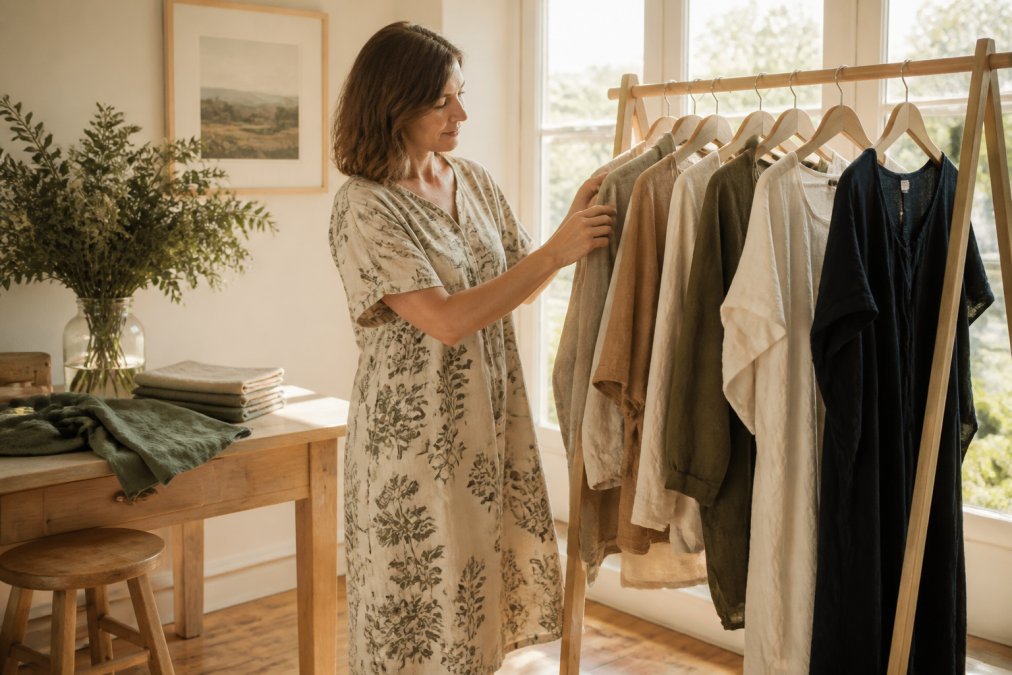
Start with four anchors:
Sustainable Fashion for Women: Care, Repair and Longevity
The environmental case, in numbers you can use
A care routine that actually extends garment life
Repair before you replace
Common fixes and how to approach them:
The circular layer: resale, alterations and end-of-life
Size Inclusivity and Fit: Finding Your Right Measurements
Sizes run from XXS through 3XL across the range.
Frequently Asked Questions
How can I verify if a clothing brand is truly Australian made?
Check the label for 'Made in Australia' rather than 'Designed in Australia', which only means the concept originated here. The Australian Competition and Consumer Commission (ACCC) requires businesses to prove country-of-origin claims, and the Australian Made logo is a registered certification trademark. For ethical labour standards, look for Ethical Clothing Australia accreditation, which audits local supply chains. If a brand cannot name its manufacturer or studio, treat the claim with caution.
What is the difference between 'designed in' and 'made in' Australia?
Designed in Australia means the creative work and patterns were developed here, but the garment could be manufactured anywhere, often overseas. Made in Australia means the garment was actually cut, sewn and finished locally, usually in a registered studio or factory. The distinction matters for ethical clothing brands Australia wide, because local manufacturing makes it far easier to verify fair wages, working conditions and supply chain transparency.
What natural fibres work best for women's clothing in the Australian climate?
Breathable cotton, organic linen and hemp blends handle heat well because they allow airflow and absorb moisture. Organic cotton double muslin is soft and travels without ironing, while pure linen has a structured drape that suits warmer days. Hemp blended with organic cotton, as used in organic denim, adds durability without trapping heat. Avoid synthetic-heavy fabrics, which cling and retain warmth, especially during menopause.
How do I build an Australian made capsule wardrobe on a budget?
Start with three or four versatile pieces that work across seasons, such as a loose-fit dress, a linen blouse and an adjustable skirt. An Australian made capsule wardrobe works best when each item pairs with at least three others you own. Expect to pay $229 to $298 per piece from studios like The Spotted Quoll, which is higher than high street pricing but spreads over years of wear. Buy well, buy once is a practical rule.
How long does Australian made clothing typically last compared to fast fashion?
Garments made locally in small batches with natural fibres generally outlast fast fashion because of stronger stitching, quality fabric and replaceable components like buttons and ties. A well-cared-for organic linen or hemp blend dress can stay in rotation for years with cold washing and air drying. Fast fashion pieces often lose shape after a few washes because of thin fabric and synthetic blends, which shortens garment longevity considerably.
Buying locally made clothing asks you to spend more upfront and think harder about what you actually need. The Spotted Quoll exists for women who want exactly that: natural-fibre pieces designed and made in Tasmania, cut for real bodies and built to be worn for years rather than a season. Explore the exclusive botanical prints, the size-inclusive Cocoon cut and the transeasonal capsule pieces, then shop now and build a wardrobe that earns its place.