


Table of Contents
- Why Move Away From Fast Fashion
- Understanding Greenwashing and How to Spot It
- Best Sustainable Fashion for Women: What to Look For
- How to Build a Capsule Wardrobe With Ethical Pieces
- Affordable Ethical Clothing Brands: Cost-Per-Wear Analysis
- Extending Garment Life: Repair, Care, and Circular Fashion
- Frequently Asked Questions
Last Updated: September 23, 2026
Why Move Away From Fast Fashion
Fast fashion's business model thrives on speed, volume, and constant consumption. But this comes at a hidden cost: textile waste in landfills, water depletion, chemical pollution, and exploitative labour practices.
Consumers are increasingly asking where clothes come from and who made them, realising that buying less and choosing better actually costs less over time. This guide covers alternatives to fast fashion brands in Australia, showing you how to shift toward ethical, sustainable choices without sacrificing style or budget.
Understanding Greenwashing and How to Spot It
Greenwashing occurs when brands use environmental language and imagery to appear ethical without making real changes, using words like "eco-friendly" or "sustainable" while their supply chain remains unchanged.
Genuine ethical brands answer specific questions with evidence: Can you trace where the garment was made? Do they name suppliers by location and facility? Are certifications from independent third-party bodies? Do they publish environmental impact reports, wage data, or audit results?

Red Flags to Spot Greenwashing
Vague language is the first warning sign. Phrases like "eco-friendly," "natural," or "sustainable" mean nothing without specifics. Genuine brands use precise terminology: "100% organic cotton," "Fair Trade certified," "carbon neutral shipping," or "zero-waste packaging."
If a brand cannot name the country, region, or specific factory where garments are made, they're hiding something. Ethical brands publish supplier lists and allow third-party audits.
Unverified certifications or self-awarded badges are common greenwashing tactics. A brand might create its own "eco-certified" label or use a certification that sounds official but has no independent oversight. Legitimate certifications come from established, independent organisations with strict standards and regular audits.
Certifications Worth Trusting
GOTS (Global Organic Textile Standard) verifies organic cotton grown without synthetic pesticides and audits labour practices throughout the supply chain.
Fair Trade Certified means workers earned fair wages, worked safe hours, and had the right to organise. Fair Trade International audits supply chains and verifies wages meet living wage standards.
Cradle to Cradle Certified Gold or Silver indicates a product can be recycled or composted at end of life without toxic residue, verified through independent testing.
OEKO-TEX Standard 100 certifies textiles contain no harmful chemicals and are safe for skin, though it doesn't verify labour or environmental practices.
How to Verify Claims
Ask the brand directly for specific information: country and facility name, certifications, wage data, and environmental metrics. Transparent brands respond quickly with details; those that deflect are likely greenwashing.
Check the brand's website for a dedicated sustainability page with detailed reports, supplier names, audit results, and manufacturing process. Absence of this is a warning sign.
Look for third-party verification through organisations like Fair Work Foundation or B Lab (B Corp certification). Self-reported data is less reliable than independently verified data.
Best Sustainable Fashion for Women: What to Look For
A sustainable wardrobe depends on three elements: ethical materials, supply chain transparency, and fair labour practices.
Sustainable Materials and Natural Fibres
Organic cotton, linen, and hemp biodegrade at end of life. Synthetic fibres like polyester shed microplastics when washed and persist for decades.
Organic cotton reduces water pollution and protects farm workers. Linen requires minimal inputs. Hemp needs no pesticides, regenerates soil, and produces more fibre per acre than cotton.
Recycled polyester and deadstock fabric give waste a second life, but still shed microplastics. Combine natural fibres as your base with recycled options for specific pieces.
Organic Denim Peasant Dress - Staple →
Supply Chain Transparency and Ethical Labour
Ethical manufacturing means workers earn living wages, work safe hours, and have the right to organise. Committed brands publish supplier lists and allow third-party audits.
A living wage covers food, housing, healthcare, and education. Many fast fashion factories pay far less. Ethical brands ensure fair wages.
The Spotted Quoll designs and manufactures every piece in Tasmania, eliminating supply chain opacity. You know exactly where your garment was made and support local makers. This costs more upfront but builds genuine accountability.
How to Build a Capsule Wardrobe With Ethical Pieces
A capsule wardrobe solves fast fashion's problem of too many unworn clothes. Instead, build a collection of versatile, high-quality pieces that mix and match.
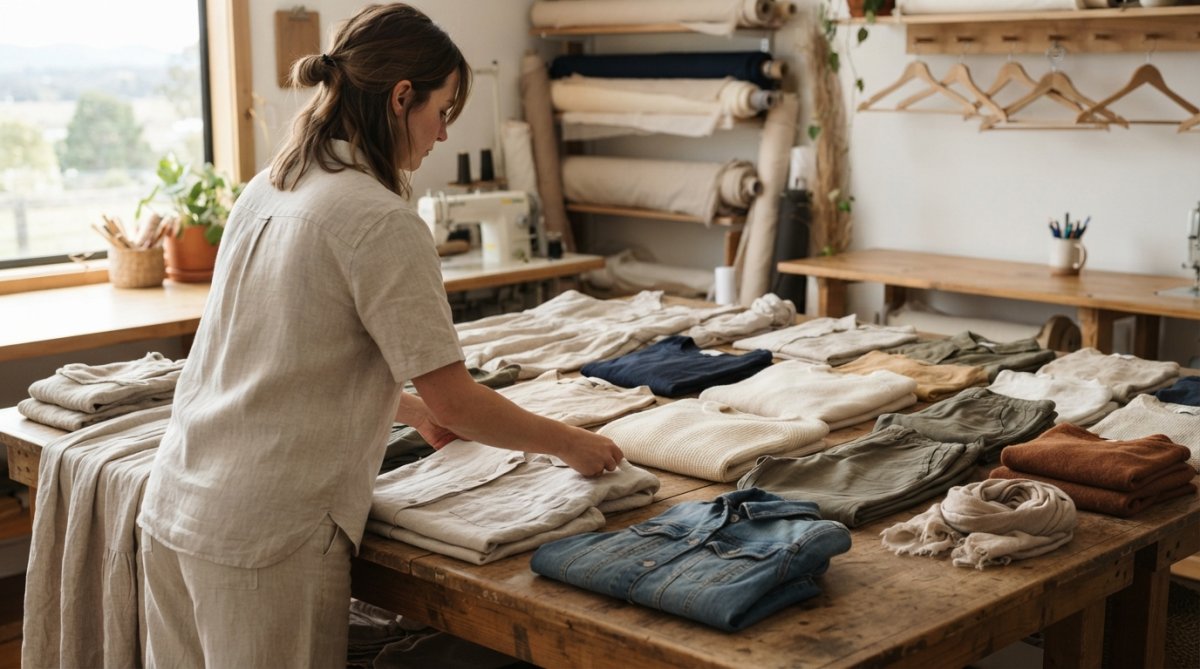
Choose a colour palette: neutrals like black, white, cream, and denim, plus two accent colours. This forces intentional choices and makes everything work together.
Invest in transeasonal basics: well-fitting jeans, neutral tops, simple dresses.
Affordable Ethical Clothing Brands: Cost-Per-Wear Analysis
Ethical fashion costs more upfront, but cost-per-wear often favours it. A $200 dress worn 200 times costs $1 per wear; a $40 dress worn 10 times costs $4 per wear.
| Product | Price | Estimated Wears | Cost Per Wear | Best For |
|---|---|---|---|---|
| Organic Denim Peasant Dress | $298 | 150+ | $2 | Year-round versatility, pockets, all sizes |
| Peasant Dress Organic Linen | $288 | 150+ | $2 | Warm months, lightweight, multiple colours |
| Peasant Dress Linen Slub | $199 | 150+ | $1.30 | Budget-conscious, nature prints, durable blend |
| Linen Mini Pleat Top | $198 | 120+ | $1.65 | Hot weather, size inclusive, exclusive prints |
| Boss Pant Organic Linen | $299 | 150+ | $2 | Work and casual, elastic waist, all seasons |
| Lottie Culotte | $298 | 150+ | $2 | Shorter frames, versatile, 7/8 length |
| Wren A-Line Skirt | $149 | 100+ | $1.50 | Capsule staple, stretch denim, all sizes |
Extending Garment Life: Repair, Care, and Circular Fashion
The most sustainable garment is one you already own. Extending its life through proper care, repair, and responsible disposal keeps it out of landfill and reduces demand for new production. This is the ultimate alternative to fast fashion.

Proper Care Extends Life Significantly
Cold water washing (below 30°C) preserves fabric structure, colour, and elasticity. Hot water weakens fibres, causes dyes to bleed, and accelerates wear. Use a gentle cycle or hand wash delicate pieces.
Finding and Using Local Repair Services
Local tailors can extend garment life by decades. A broken zip, loose seam, or small hole shouldn't mean discarding the piece. Professional repairs are affordable.
Second-Hand and Vintage Shopping
Buying second-hand extends garment life and keeps money from fast fashion. Thrift stores, online resale platforms, and clothing swaps offer quality pieces at a fraction of retail price.
End-of-Life Garment Disposal and Textile Recycling
When a piece truly reaches the end of its wearable life, responsible disposal completes the circular economy. Never bin clothing that could have a second life.
The Cost-Per-Wear Advantage of Longevity
Proper care and repair dramatically improve cost-per-wear. A $300 dress worn 200 times costs $1.50 per wear. If you extend its life through repair and careful washing, wearing it 300 times, the cost drops to $1 per wear. A $50 fast fashion dress worn 5 times costs $10 per wear, and cannot be repaired because it was never made to last.
Frequently Asked Questions
What are the main differences between slow fashion and fast fashion?
Slow fashion prioritises quality, durability, and ethical production over rapid trend cycles. Fast fashion relies on cheap materials, quick turnover, and often poor labour conditions. Slow fashion brands typically use natural fibres like organic cotton and linen, pay fair wages, and design pieces meant to last years rather than seasons. The environmental impact differs dramatically: fast fashion generates massive textile waste, while slow fashion emphasises garment longevity and circular economy principles.
How can I identify if a clothing brand is truly sustainable and not greenwashing?
Look for specific certifications like Fair Trade, GOTS (Global Organic Textile Standard), or equivalent standards. Request information about supply chain transparency, manufacturing locations, and labour practices. Genuine ethical brands share details about their suppliers and production methods. Avoid vague claims like 'eco-friendly' without backing evidence. Check whether the brand uses natural fibres, discloses material sourcing, and operates with accountability. Brands designed and made locally in Australia often provide greater transparency than overseas manufacturers.
What materials should I look for when building a sustainable wardrobe?
Prioritise natural fibres: organic cotton, pure linen, hemp, and linen-hemp blends. These breathe well, feel comfortable, and biodegrade at end-of-life. Organic cotton avoids synthetic pesticides, while linen requires minimal processing. Look for certified organic labels to ensure standards compliance. Avoid synthetic polyester, which sheds microplastics and takes decades to decompose. Recycled fibres are also valuable if transparently sourced. Natural fabrics improve with age and washing, making them ideal for capsule wardrobes designed to last.
How do I calculate cost-per-wear to justify ethical fashion prices?
Divide the garment's cost by the number of times you'll wear it. A $298 dress worn 100 times costs $2.98 per wear; a $50 fast-fashion item worn 5 times costs $10 per wear. Ethical pieces designed as versatile capsule staples accumulate more wears over years. Consider durability: natural-fibre pieces from ethical makers often outlast cheaper alternatives by years, lowering true cost. Factor in reduced replacement purchases and the environmental cost saved by avoiding disposable fashion. This reveals that ethical pieces often offer better value long-term.
What should I do with clothing I no longer wear?
Explore circular economy options before disposal. Repair or tailor pieces to extend life and refresh your wardrobe. Donate to local charities or clothing swaps within your community. Sell secondhand through online platforms to give pieces new life. Some natural-fibre garments can be upcycled into home goods or accessories. As a last resort, check whether local textile recycling programs accept worn clothing. Avoiding landfill keeps textile waste out of the environment and supports the circular fashion model that ethical brands champion.