Table of Contents
- What Makes Natural Fiber Clothing Actually Durable
- Quick Comparison: The Spotted Quoll Natural Fiber Pieces
- 1. Boss Pant Organic 100% Linen (Coastal Fern) - Best for All-Season Wear
- 2. The Goodness Tee Cotton Knit - Best Everyday Organic Cotton Tee
- 3. Lady Jane Organic 100% Linen Blouse - Best for Work and Occasions
- 4. Linen Mini Pleat Top - Best Boxy Fit for Hot Climates
- How to Style Linen Clothing for a Capsule Wardrobe
- How to Care for Natural Fiber Garments So They Last
- Frequently Asked Questions
Last Updated: September 22, 2026
What Makes Natural Fiber Clothing Actually Durable
Durable natural fiber clothing lasts because of three measurable specs: fibre length, weave density and fabric weight in grams per square metre. Get those right and a garment survives years of washing. Get them wrong and even expensive linen wears thin at the seams within a season.
Most shopping guides skip this, listing brands and photos without explaining why one linen shirt outlasts another at twice the price. At The Spotted Quoll, we work with 190gsm organic linen and 180gsm organic cotton knit, so we know which numbers matter.

Fibre length, weave and GSM: the three specs that decide longevity
Long-staple fibres create stronger yarn because fewer fibre ends break the surface. Short-staple cotton pills and sheds. Long-staple cotton, European flax linen and quality merino wool hold their structure through repeated washing.
Weave matters too: a tight plain weave resists abrasion better than a loose open weave.
Organic vs conventional cotton: why it matters for wear
Organic cotton is grown without synthetic pesticides and processed without the harsh chemical finishes that weaken cotton fibres over time. That processing difference shows up in how the garment ages.
Quick Comparison: The Spotted Quoll Natural Fiber Pieces
Every piece below is designed and made in Tasmania from certified organic fibres, printed with low-impact eco dyes and built for a capsule wardrobe.
| Piece | Fabric & Weight | Price | Best For |
|---|---|---|---|
| Boss Pant | 190gsm organic linen | $299 | All-season wear, travel |
| The Goodness Tee | 180gsm organic cotton knit | $149 | Everyday layering |
| Lady Jane Blouse | 100% organic linen | $249 | Work and occasions |
| Linen Mini Pleat Top | 190gsm organic linen | $198 | Hot climates, boxy fit |
1. Boss Pant Organic 100% Linen (Coastal Fern) - Best for All-Season Wear
The Boss Pant is the piece that converts sceptics: 190gsm organic pure linen with an elastic waist, inseam pockets and a balloon leg engineered into the pattern. That weight is why it holds its shape instead of collapsing after a few wears.

2. The Goodness Tee Cotton Knit - Best Everyday Organic Cotton Tee
Certified organic cotton at 180gsm single jersey is why this tee survives what kills cheaper knits. It has sold over 350 units in two seasons from a small Tasmanian studio.
Benefits of organic cotton clothing for sensitive skin and hot days
Organic cotton breathes, wicks moisture and does not cling the way polyester does. Polyester traps heat against the skin, exactly what you do not want on a 38-degree day or during a hot flush. Natural fibre moves air and moisture away instead.

3. Lady Jane Organic 100% Linen Blouse - Best for Work and Occasions
The Lady Jane has sold over 973 units, making it the studio's most proven cut, and a blouse that keeps selling keeps holding up.
4. Linen Mini Pleat Top - Best Boxy Fit for Hot Climates
This top exists because customers asked for it, made in two sizes, S/M (8-12) and L/XL (14-18), for a boxy shape that sits off the body rather than clinging.
How to Style Linen Clothing for a Capsule Wardrobe
A capsule wardrobe built on natural fiber clothing works when every piece pairs with at least three others, but the deeper test is whether each piece survives long enough to justify its place. Most capsule guides stop at colour and silhouette; the version that saves money adds a durability filter to every purchase.
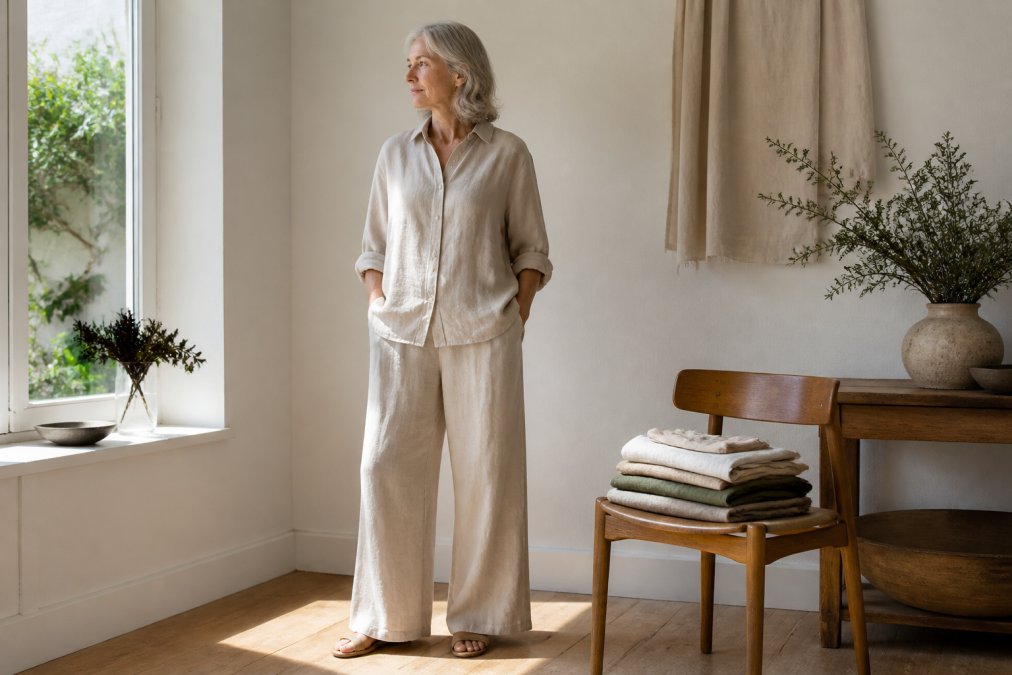
The practical formula:
- One linen pant in a print that reads as a neutral, like the Boss Pant
- Two tops in different weights: a 190gsm linen top for heat, a 180gsm cotton knit for layering
- One blouse with a sleeve you can change, for work and occasions
- Stick to two or three colours across all four pieces so everything mixes
The cost-per-wear filter that changes what you buy
Cost-per-wear is the most useful number a capsule shopper can calculate, and almost no brand-led guide explains it. The formula: purchase price divided by the number of times you realistically wear the garment.
A few practical rules when you run the numbers:
- Estimate wears honestly. If you wear a piece once a month, the cost-per-wear stays high no matter how good the fabric is.
- Factor in care. A garment that needs dry cleaning every second wear carries a hidden cost that a cold-wash linen piece does not.
- Treat repairs as extending the denominator. A $20 alteration that adds two years of wear is almost always worth it.
- Compare like with like. A 190gsm linen pant and a 110gsm linen pant are not the same product, even if the label says linen on both.
Why fibre weight belongs in the styling decision
Styling and durability are not separate conversations. A 190gsm linen top holds a boxy silhouette and an inverted pleat because the fabric has enough body to resist sagging; a 110gsm linen top in the same cut collapses after a few wears, the quiet reason lightweight linen ends up at the back of the wardrobe.
How to Care for Natural Fiber Garments So They Last
Cold washing is the single biggest lever on garment longevity. Hot water shrinks linen, fades eco dyes and stresses cotton knit fibres. Cold water, gentle cycle, and half the detergent you think you need.
How to test a fabric's durability before you buy
Care advice only matters if the garment was built to last. A few checks separate a durable natural fibre piece from one that will fail at the seams.
Repair, resell and end-of-life: the part most guides skip
Durability does not end at the last wear. Natural fibres have an end-of-life advantage synthetics cannot match: linen and cotton are biodegradable, so a worn-out garment returns to the soil rather than sitting in landfill for centuries.
A few practical habits extend the useful life of a piece before that point:
- Repair early. A small darn on a thinning elbow or a re-stitched hem takes minutes and adds years. Waiting until the fabric tears turns a repair into a replacement.
- Keep spare buttons and offcuts. A maker who supplies a repair kit is signalling that the garment is meant to be mended, not discarded.
- Resell or pass on. A well-made 190gsm linen piece holds value on resale platforms because the fabric still has structure. A pilled fast-fashion knit rarely does.
- Compost what cannot be worn. Pure linen and untreated cotton can be cut up for rags and eventually composted. Blended fabrics cannot, which is one more reason to check the fibre content before buying.
Frequently Asked Questions
Which brand makes the best natural fiber clothing?
There is no single best brand, but the strongest options share three traits: certified organic or pure natural fibres, transparency about where the garment is made, and construction details like twin needle topstitching and deep hems. The Spotted Quoll, for example, makes 100% organic linen pants at 190gsm and certified organic cotton tees at 180gsm, designed and made in Tasmania. Check the fibre content, the weight in GSM, and whether the brand names its makers before you buy.
Are natural fibers more durable than synthetic blends?
It depends on the fibre and the weave, not the category. Long-staple linen and hemp resist abrasion well and get softer with washing, while cheap short-staple cotton pills quickly. Synthetics can be strong but tend to hold odour and lose shape with heat. A 190gsm organic linen pant or a 180gsm organic cotton jersey knit will generally outlast a thin polyester blend, especially if you cold wash and air dry.
How do I identify high-quality natural fiber garments?
Start with the label: look for 100% organic linen, organic cotton, hemp or merino wool rather than vague terms like 'cotton blend'. Then check the fabric weight, since 180gsm to 190gsm signals a substantial cloth that holds its shape. Look at the finishing too, including twin needle topstitching, bound necklines, deep hems and matched prints. Finally, ask where it was made. A named studio with ethical labour practices is a stronger signal than an unlabelled offshore supply chain.
What's the healthiest fabric to wear?
Breathable natural fibres such as linen, organic cotton, hemp and merino wool suit most people because they allow airflow and manage moisture without trapping heat. This matters if you run hot or experience menopause symptoms, since polyester clings and increases heat retention. Natural fibres are also less likely to irritate sensitive skin. If you have a known allergy, patch test any new fabric and favour hypoallergenic options like linen and organic cotton over treated synthetics.
How should I wash natural fiber garments to keep them durable?
Cold wash is the single biggest factor. Heat shrinks linen and cotton and breaks down fibres over time. Use a gentle cycle, wash similar colours together, and skip the dryer in favour of line drying in shade. Linen actually improves with repeated washing, so a 190gsm organic linen piece will soften rather than wear out. For organic cotton tees, turn them inside out before washing to protect the print and reduce surface friction.
Building a wardrobe that lasts is a decision about what you refuse to buy, not just what you do buy. The Spotted Quoll designs and makes every piece in Tasmania from certified organic linen and cotton, with exclusive nature-inspired prints and sizing from XXS to 3XL. Buy well, buy once. SHOP NOW and build a capsule wardrobe that works for every shape and season.