
Table of Contents
- What Makes a Fiber Natural?
- Benefits of Natural Fibers for Clothing: Skin Health and Allergies
- Breathability, Moisture Management, and Temperature Regulation
- Benefits of Organic Cotton vs Synthetic: Environmental Impact
- Durability and Longevity: The Cost-Per-Wear of Natural Fibers
- How to Care for Natural Fiber Garments
- How to Style Linen Clothing for a Capsule Wardrobe
- Conclusion
- Frequently Asked Questions
Last Updated: September 7, 2026
What Makes a Fiber Natural?
Natural fibers come directly from plants, animals, or minerals rather than being synthesised in a laboratory. Cotton, linen, hemp, wool, and silk are harvested from renewable resources and processed into yarn without the complex chemical reactions that create synthetic polymers like polyester and nylon. The source material determines how a fabric behaves against your skin, how it ages, and what happens at the end of its useful life.

In this guide, we break down the benefits of natural fibers for clothing so you can make informed choices for your wardrobe. Natural fibers are biodegradable, breathable, and often gentler for sensitive skin. Most garments made from natural cellulose or protein fibers decompose within months to a few years in the right conditions, whereas synthetics can persist for decades.
Benefits of Natural Fibers for Clothing: Skin Health and Allergies
For anyone who has dealt with skin irritation, eczema, or contact allergies, the benefits of natural fibers for clothing become immediately obvious. Synthetic fabrics trap heat and moisture against the skin, worsening irritation and encouraging bacterial growth. Natural fibers allow the skin to breathe and typically lack the harsh chemical residues found in many manufactured textiles. But not all natural fibers are equal for specific skin conditions. Here is a practical guide to choosing the right fibre.
For eczema and atopic dermatitis: Organic cotton is the safest starting point. Its smooth, short fibres do not scratch or irritate, and it is grown without the pesticides and synthetic fertilisers used in conventional farming, so fewer chemical residues remain in the finished fabric. 100% organic cotton is often recommended for direct contact with affected areas, especially for children. Silk is another option, but only the smooth, non-textured varieties; raw or noil silk can feel rough. Merino wool is increasingly recommended for eczema sufferers, despite the old advice to avoid wool entirely. The key is fibre diameter: fine merino (under 19.5 microns) bends away from the skin rather than scratching it, and its natural antimicrobial properties help control odour.

For contact dermatitis and chemical sensitivity: The issue is often not the fibre itself but what has been added to it. Synthetic fabrics are frequently treated with formaldehyde-based resins, optical brighteners, and permanent-press chemicals that can leach into the skin. Natural fibers are less likely to carry these residues, but only if you choose certified organic or OEKO-TEX certified options. Linen and hemp are also well tolerated by most people, provided they have been washed to soften the fibres. A first wash in cool water with a gentle, fragrance-free detergent can help remove residual processing chemicals.
For dust mite allergies: Those prone to allergies should also consider how fabrics interact with dust mites. Natural fibers with good moisture management stay drier, creating an environment that is less hospitable to the microscopic creatures that trigger many skin and respiratory reactions. Wool and silk are naturally moisture-wicking and dry quickly, which makes them a better choice than cotton for bedding and sleepwear if dust mites are a concern. Cotton, while breathable, retains moisture longer and can become a breeding ground if not dried thoroughly.
For heat rash and prickly heat: Linen is the standout choice. Its hollow structure promotes airflow, and its moisture regain means it can absorb up to 20 percent of its weight in moisture while still feeling dry to the touch. This keeps the skin cool and dry, reducing the friction and moisture that cause heat rash. Hemp behaves similarly but is slightly rougher against the skin until it has been washed several times.
Natural fibers are not a single solution but a family of options. Matching the fibre to your specific skin condition transforms a general health claim into a targeted skincare strategy.
Breathability, Moisture Management, and Temperature Regulation
The standout quality of natural fibers is their ability to regulate temperature through breathability and moisture-wicking. Natural cellulose fibres like cotton, linen, and hemp absorb moisture into their structure rather than trapping it between the fabric and your skin, which is why a cotton shirt feels cooler than a polyester one on a hot day.
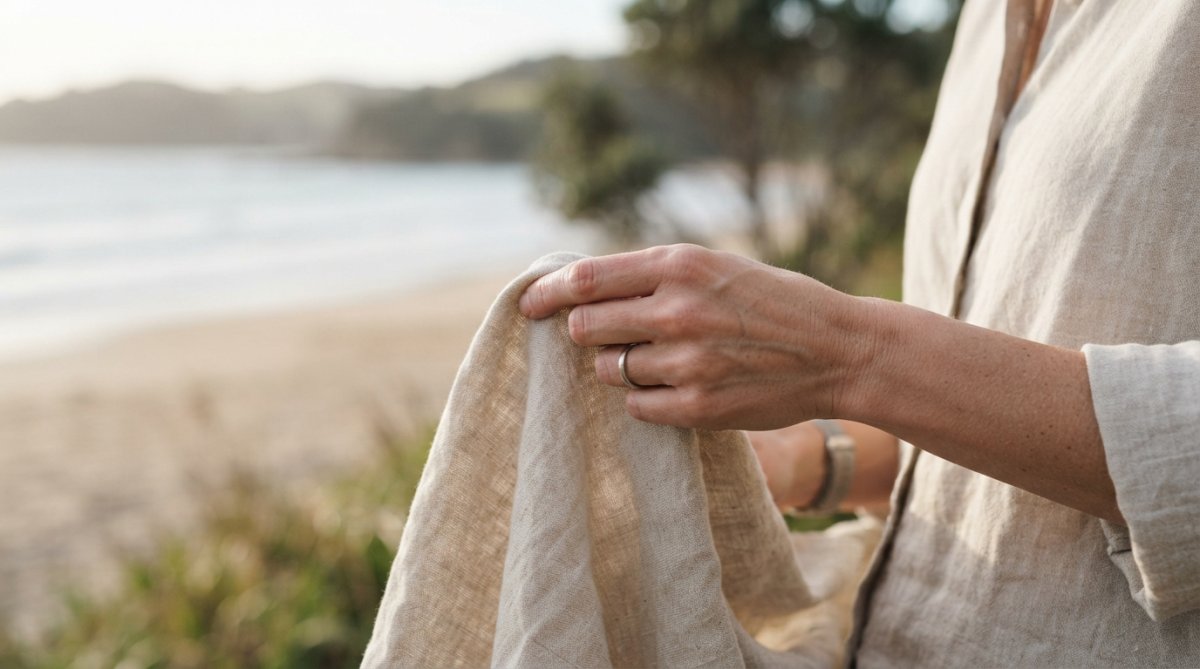
Linen excels in warm weather because its hollow structure promotes airflow and its moisture regain means it can absorb up to 20 percent of its weight in moisture while still feeling dry to the touch. Merino wool, somewhat counterintuitively, performs the same trick in cold weather: it traps insulating air when dry and continues to insulate even when damp. This thermal conductivity is why wool has been a staple for outdoor clothing for centuries.
The practical effect is a fabric that adapts to your body rather than fighting it, keeping you comfortable across a wider range of temperatures, exactly what you want from transeasonal pieces that work from spring through autumn.
Benefits of Organic Cotton vs Synthetic: Environmental Impact
When comparing the environmental impact of organic cotton versus synthetic fabrics, the differences start at the source and continue through disposal. Synthetic fibres are derived from fossil fuels, and every wash can release tiny plastic particles known as microplastics into waterways. Research on microplastic pollution from textile washing has documented these fibres in marine environments worldwide, where they persist for hundreds of years.
A single synthetic garment can shed hundreds of thousands of microfibres per wash, depending on the weave, detergent, and washing machine's agitation (peer-reviewed research). These fibres are too small to be captured by standard wastewater treatment filters, so they flow into rivers and oceans, where they are ingested by marine life and enter the food chain. Natural fibers like organic cotton and linen, by contrast, break down into cellulose, a natural component of soil and water ecosystems.
Organic cotton is grown from renewable resources using methods that build soil health rather than depleting it. The resulting fabric is biodegradable, so at the end of its life it can return to the earth instead of accumulating in landfill or the ocean. Its carbon footprint is generally lower than synthetics because the raw material captures carbon as it grows. However, the full picture is more nuanced:
- Water use: Conventional cotton is water-intensive, but organic farming practices that improve soil water retention can reduce irrigation needs by up to 30%.
- Land use: Natural fibers require agricultural land, whereas synthetics do not. This trade-off matters in regions where arable land is scarce.
- Processing: The dyeing and finishing of natural fabrics can still involve harsh chemicals unless you choose low-impact or certified organic processing.
The fast fashion industry has built its model on cheap synthetic fabrics because they are inexpensive to produce at scale. Choosing natural fibers means opting out of that cycle and supporting a slower, more sustainable approach to clothing. But it also means being an informed consumer: not all natural fiber production is equally sustainable, and the most significant environmental difference is what happens at the end of a garment's life. A synthetic shirt becomes a long-term waste problem; a natural fiber shirt can compost back into soil within a year. washing delicate natural fibers.
Durability and Longevity: The Cost-Per-Wear of Natural Fibers
Natural fibers often cost more upfront than synthetics, but the cost-per-wear calculation usually favours the natural option. A well-made linen or hemp garment can last for years, even decades, with proper care. The key metric is not the price tag but how many times you will wear the piece before it wears out.
| Fiber | Typical Lifespan | Best Use | Care Level |
|---|---|---|---|
| Organic cotton | 2-5 years | Everyday basics, tees | Easy, machine washable |
| Linen | 5-10+ years | Summer dresses, shirts | Moderate, gentle wash |
| Hemp | 10+ years | Jackets, trousers | Easy, softens over time |
| Merino wool | 3-7 years | Knits, base layers | Gentle, cold wash |
| Polyester | 1-3 years | Activewear | Easy but sheds microplastics |
The durability of natural fibers comes down to tensile strength. Hemp is among the strongest textile fibers known, while linen is roughly twice as strong as cotton. Both soften with washing and wear rather than degrading, so your favourite pieces often become more comfortable over time.
A common mistake is judging durability by thickness alone. A dense synthetic knit can feel substantial yet lose its shape after a few washes, while a lighter natural fabric retains its structure through proper care.
How to Care for Natural Fiber Garments
Caring for natural fiber garments is simpler than most people expect. The most important rule is to respect the fibre's sensitivity to heat and agitation, the two main causes of premature wear.
- Wash natural fibers in cool or lukewarm water using a gentle detergent
- Hand wash delicates like merino and silk, or use a wool cycle if your machine has one
- Avoid the tumble dryer: line drying is gentler and prevents shrinkage
- Store knits folded rather than hung to prevent stretching
- Iron linen and cotton while slightly damp for the best finish
Linen and hemp improve with washing, becoming softer and more supple. Organic cotton jersey behaves much like conventional cotton but benefits from being washed inside out to protect printed designs. Merino wool needs the least washing of all: it resists odour naturally, so airing it between wears is often sufficient.
How to Style Linen Clothing for a Capsule Wardrobe
Building a capsule wardrobe around linen clothing is one of the smartest styling decisions you can make, because linen transitions effortlessly across seasons and occasions. The secret is choosing pieces in neutral or nature-inspired tones that coordinate with everything else you own.
Start with a relaxed linen shirt or tunic in a versatile shade. It pairs with tailored trousers for the office, denim for weekends, and layered under a merino cardigan when the temperature drops. A linen dress works alone in summer and gains a second life in cooler months with a knit over the top and boots underneath.
The natural texture of linen means it does not need to be perfectly pressed; the relaxed, lived-in look is part of its appeal. This forgiving quality makes linen ideal for the transeasonal dressing that capsule wardrobes demand. If you are handy with a sewing machine, printed natural fabrics by the metre allow you to create custom pieces that match your personal style.
Exclusive prints inspired by nature add longevity to a capsule wardrobe because they carry a timeless quality that seasonal trends lack. When every piece works together, getting dressed becomes simpler and your clothing lasts longer because each item is worn more frequently.
Conclusion
The benefits of natural fibers for clothing are clear: they are kinder to sensitive skin, more comfortable across temperatures, and far gentler on the environment than synthetic alternatives. While the upfront cost can be higher, the durability of natural fibers and their timeless style make them the smarter investment for a sustainable wardrobe.
At The Spotted Quoll, we design our collections around these principles, crafting transeasonal pieces from organic cotton, linen, and hemp that are designed and made in Tasmania. Our exclusive nature-inspired prints and small-batch production mean you are investing in garments built to last.
SHOP NOW
Frequently Asked Questions
Are natural fibers better for sensitive skin?
Yes, natural fibers are generally better for sensitive skin. Unlike synthetics, they are breathable and have moisture-wicking properties, which helps prevent irritation. Natural fibers like organic cotton and linen are also hypoallergenic and free from the harsh chemical residues often found in synthetic polymers. This reduces the risk of skin irritation and allergic reactions, making them a comfortable choice for those with conditions like eczema.
How do natural fibers compare to synthetic materials in terms of durability?
With proper care, natural fibers can be very durable. Linen and hemp are exceptionally strong, with high tensile strength that often outlasts cheaper synthetic fabrics. While synthetics like polyester may resist abrasion, they can degrade and pill over time. Natural fibers are also biodegradable, so at the end of their long life, they break down naturally without leaving harmful microplastics in the environment.
What is the best way to wash linen clothing?
To keep linen looking its best, wash it gently in cool or lukewarm water with a mild detergent. Avoid wringing it out, as this can crease the fibers. It is best to line dry linen in the shade to preserve its color and prevent shrinkage. If you prefer a softer feel, tumble dry on a low setting briefly, but remove it while still slightly damp. A warm iron on the reverse side will smooth out any stubborn wrinkles.
Why is organic cotton better than regular cotton or polyester?
Organic cotton is grown without the toxic pesticides and synthetic fertilizers used in conventional cotton farming, making it a more sustainable choice. Compared to polyester, which is made from non-renewable petroleum and sheds microplastics, organic cotton is a renewable resource that is biodegradable. It feels softer against the skin, offers superior breathability, and has a lower carbon footprint, making it a healthier choice for both you and the planet.