


Table of Contents
- Why Nature-Inspired Prints Work in Professional Settings
- Styling Botanical Patterns for Professional Settings
- How to Mix Prints for the Office Without Losing Cohesion
- Building a Sustainable Workwear Capsule Wardrobe Around Nature-Inspired Prints
Last Updated: August 28, 2026
Why Nature-Inspired Prints Work in Professional Settings
Nature-inspired prints have become professional staples. Biophilic design, the principle that humans are instinctively drawn to natural elements, links nature-inspired environments to improved focus, reduced stress, and greater creativity. According to the Australian Psychological Society's resources on workplace well-being, environments incorporating organic elements consistently support better mood and cognitive performance. Botanical prints also carry quiet authority, signalling thoughtfulness rather than trend-chasing in settings where so much looks identical.
Styling Botanical Patterns for Professional Settings
Styling botanical patterns comes down to three decisions: scale, palette, and pairing.
Scale: Smaller, intricate prints read as more formal; larger, bolder prints work in creative industries or as single statement pieces anchored by neutrals. Palette: Colour palettes grounded in natural tones, deep khaki, duck egg blue, warm berry, and soft mono, translate easily into professional contexts. Pairing: Pair one botanical piece with a clean neutral. A botanical blouse with well-cut organic linen trousers is complete; add a tonal corduroy pant for depth without competing.
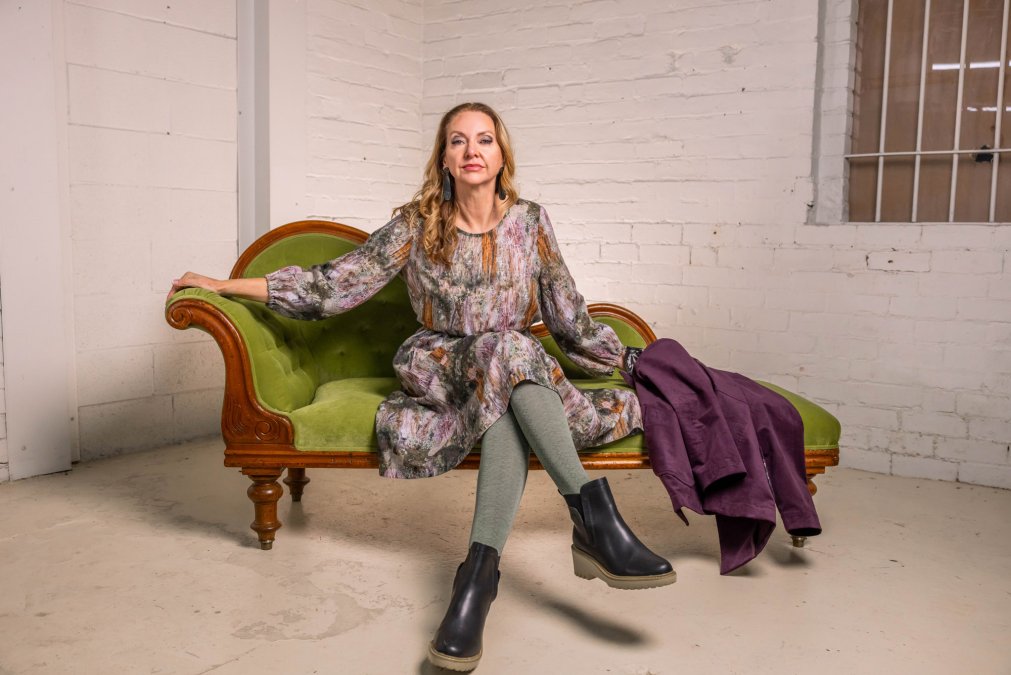
A woman in a flowing botanical-print linen blouse seated at a minimal timber desk, warm natural light coming through a tall window beside her, papers and a ceramic cup on the desk, calm and professional atmosphere
The Lady Jane Organic Cotton DM Blouse in Forest Floor exemplifies this principle. Pair it with the Boss Pant in Staple Black Linen for a cohesive, considered look. According to the Australian Fashion Council's guidance on sustainable workwear, garments made from certified organic fibres are increasingly prioritised by workplaces with environmental procurement policies.
How to Mix Prints for the Office Without Losing Cohesion
Mixing prints for the office requires structure. The common mistake isn't mixing too boldly; it's mixing without system.
- Anchor with a dominant print. Choose one nature-inspired print as the centrepiece; everything else supports it.
- Use tone as your connector. If your botanical print contains khaki and berry, pull one of those tones into your second piece as a solid or subtle texture.
- Keep scale contrast intentional. A large-scale botanical pairs well with fine-grain texture like corduroy. Two large prints compete.
- Limit the palette to three tones. Aesthetic cohesion comes down to colour discipline.
- Let natural textures do the work. Organic linen, cotton corduroy, and double muslin carry their own quiet visual texture, adding depth without pattern.
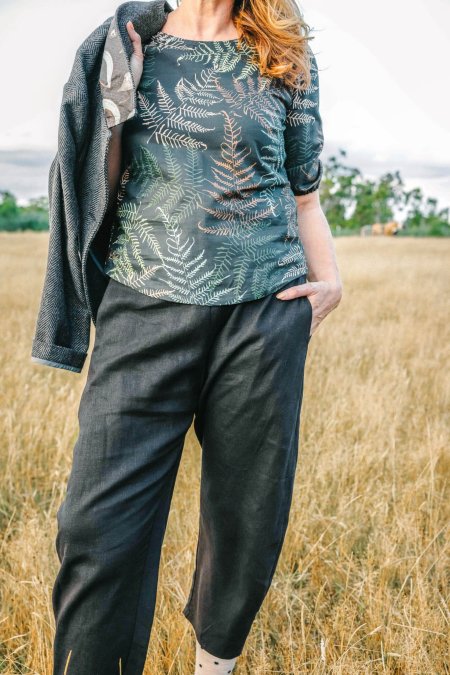
The Boss Pant Organic Linen/Hemp in Bushcraft is designed for this layering, with tones that work with many blouse options.

Boss Pant Organic Linen/Hemp - Bushcraft
Outfit Element |
Role in the Look |
What to Avoid |
|---|---|---|
Botanical print blouse |
Dominant statement piece |
Pairing with another large print |
Tonal solid trouser |
Grounds and anchors |
Introducing a third unrelated colour |
Natural texture (linen, cord) |
Adds depth without pattern |
Synthetic fabrics that flatten the palette |
Simple accessories |
Completes without competing |
Busy or logo-heavy pieces |
Building a Sustainable Workwear Capsule Wardrobe Around Nature-Inspired Prints
A sustainable workwear capsule wardrobe built around nature-inspired prints is a long-term investment. Nature-inspired prints in natural, transeasonal palettes don't date the way trend-driven prints do. Start with one botanical print blouse in a neutral-friendly palette, one nature-inspired print trouser that anchors multiple combinations, two to three solid-colour pieces in tones drawn from your prints, and natural fibre basics in linen, organic cotton, or hemp.
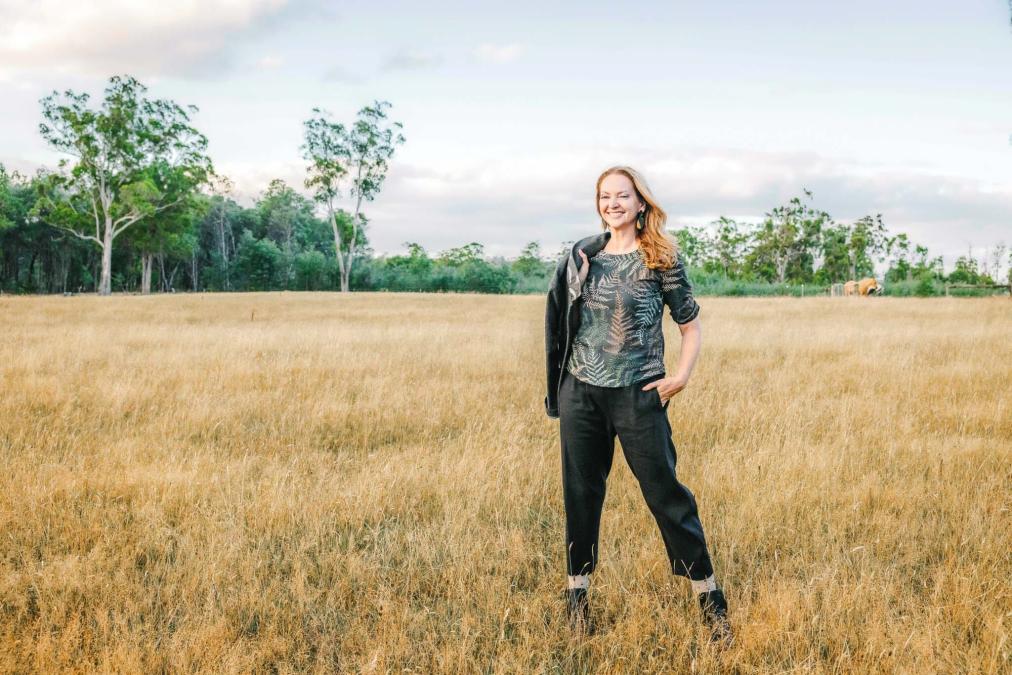
The Lady Jane Organic 100% Linen Blouse in Coastal Fern is a strong capsule anchor. Its bishop sleeve can be worn full-length or pushed up, and it works tucked or untucked, giving genuine versatility across professional and casual contexts. So many gentle colours to survive the boring office and pairs beautifully with a earthy green, grey or black staple bottoms like picture below organic dyed linen Boss pant.
Print quality determines everything. A low-quality print fades or bleeds after a few washes, defeating the capsule approach. According to the Ethical Clothing Australia accreditation programme, garments produced under transparent, ethical supply chains demonstrate greater longevity than mass-produced equivalents, making them more economical over a three-to-five year horizon.
Styling nature-inspired prints for work is a commitment to dressing with intention. A capsule wardrobe built around this approach doesn't just look good, it holds together over time in every sense that matters.
Frequently Asked Questions
Q: Are nature-inspired prints appropriate for formal business settings?
A: Yes, with the right approach. Smaller-scale botanical or seed-pod motifs on quality natural fabrics read as refined rather than casual. Pair a print blouse with tailored trousers in a tonal neutral and the overall look stays professional. The key is fabric quality and fit: an organic linen or double-muslin piece in a considered print carries far more authority than a synthetic equivalent, regardless of the pattern.
Q: How do I choose sustainable fabrics for my work wardrobe?
A: Prioritise certified organic fibres such as organic linen, organic cotton, and hemp blends. These materials breathe well, hold their shape across seasons, and soften beautifully with washing rather than deteriorating. Look for brands that are transparent about their supply chain and production location. Pieces made in small-batch studios can offer careful cuts, which may contribute to longevity and reduce the cost-per-wear over time.
Q: How can I balance statement prints with neutral staples for work?
A: Follow a rough 70/30 ratio: roughly 70 per cent of your outfit in a neutral or solid, with the print occupying the remaining 30 per cent. A botanical-print blouse tucked into straight-leg linen trousers is a reliable formula. Alternatively, anchor a bolder print pant with a plain top in one of the print's background tones. This keeps the look intentional rather than busy, and lets the print be a focal point without overwhelming the professional setting.
This article was written using GrandRanker