Table of Contents
- What Makes Sustainable Fashion for Women Truly Ethical
-
Capsule Wardrobe Essentials: The Sustainable Women's Edit
- 1. Organic Denim Peasant Dress - Staple ($298)
- 2. Peasant Dress Linen Slub - Camel ($199)
- 3. Peasant Dress Organic Dyed Linen - Eucalyptus ($288)
- 4. Lady Jane Organic Cotton DM Blouse - Lost Thylacine ($228)
- 5. Linen Mini Pleat Top - Pink Summer Bouquet ($198)
- 6. The Goodness Tee Cotton Knit - Pink Summer Bouquet ($145)
- 7. Boss Pant Organic Denim - Organic Denim ($288)
- 8. Adjustable Hanky Hem Skirt - Organic Denim ($229)
- 9. Frankie Shirred Skirt - Pink Summer Bouquet ($69)
- 10. Zippy Bomber Corduroy - Fuschia ($228)
- Why Natural Fibres Matter in Sustainable Fashion
- How to Build a Sustainable Wardrobe That Actually Lasts
- Size Inclusivity in Sustainable Fashion
- End-of-Life Garment Management and the Circular Economy
- Conclusion
Last Updated: August 26, 2026
Conscious consumerism is reshaping how women shop. Textile waste is one of the most significant contributors to landfill globally, and the fast fashion model driving it is finally losing ground. At The Spotted Quoll, we've spent years building an alternative: timeless, small-batch pieces made from natural fibres in a working Tasmanian studio. This guide covers what sustainable fashion actually means, how to spot greenwashing, and which pieces deserve a place in your wardrobe.
The difference between a genuinely ethical garment and a cleverly marketed one comes down to traceability. Below, we'll show you how to read between the labels, build a capsule wardrobe that lasts a decade, and calculate the real cost of what you wear.
Quick Picks:
- Best Everyday Dress: Organic Denim Peasant Dress - Staple ($298)
- Best Summer Tee: The Goodness Tee - Collection of exclusive prints ($149), certified organic cotton, made in Tasmania
- Best Menopause Friendly Top: Lady Jane Blouse - Collection of exclusive prints ($228), certified organic cotton double muslin, made in Tasmania
What Makes Sustainable Fashion for Women Truly Ethical
Sustainable fashion is clothing produced with deliberate attention to environmental impact, fair labour practices, and long-term garment longevity, not just a marketing claim on a hangtag.

A truly ethical garment traces its supply chain from fibre to finished product, pays fair wages at every stage, uses natural or recycled materials, and is designed to last years rather than seasons. Three pillars define genuinely ethical clothing:
- Environmental: Natural fibres, eco-friendly dyes, low carbon footprint, minimal textile waste, and sustainable sourcing of raw materials
- Social: Fair trade principles, verified labour rights, sweatshop-free production, and transparent supply chain practices because we are made in Tasmania, Australia. You can visit our factory.
- Longevity: Timeless design, quality construction, and garments built for a circular economy rather than disposal
Certifications and Supply Chain Transparency to Look For
Supply chain transparency is the clearest signal of genuine commitment. Brands that publish manufacturing locations, name fabric suppliers, and hold third-party certifications are doing the work. Certifications worth recognising include GOTS (Global Organic Textile Standard) for organic cotton and linen, OEKO-TEX for chemical safety in textiles, and Fair Trade certification for verified labour rights. The GOTS certification standards for organic textiles outlines exactly what qualifies a fabric as genuinely organic, covering everything from agricultural inputs to processing chemicals to worker protections.
How to Spot Greenwashing Before You Buy
Greenwashing is making vague or misleading environmental claims to attract conscious consumers without making genuine production changes. Watch for these red flags:
- Vague language without evidence: "Eco-conscious," "green," or "planet-friendly" with no certification or specifics
- Single-ingredient focus: Highlighting one organic fabric while ignoring labour practices or synthetic dyes
- No traceability: No mention of where garments are cut, sewn, or finished (Tasmania)
- Fast fashion volumes: Releasing dozens of new styles weekly is incompatible with slow fashion principles
- No end-of-life guidance: Genuinely sustainable brands think about what happens to a garment after it's worn out
The Australian Competition and Consumer Commission guidance on environmental claims provides clear standards for what constitutes a misleading environmental claim under Australian Consumer Law.
Capsule Wardrobe Essentials: The Sustainable Women's Edit
A capsule wardrobe built from ethical clothing is about owning the right things, pieces that work across seasons, body shapes, and occasions, made from natural fibres that improve with every wash.
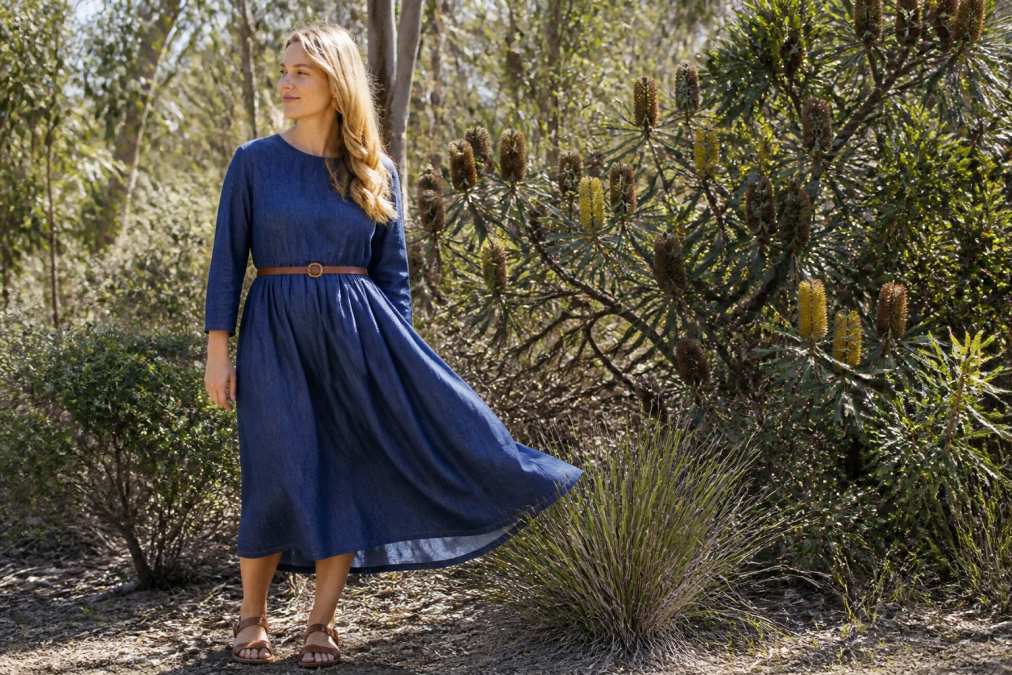
The Spotted Quoll's current collection offers ten pieces that form the backbone of a genuinely transeasonal wardrobe. Each is designed and made in Tasmania, made from natural fibres, and produced in small batches to minimise waste.
1. Organic Denim Peasant Dress - Staple ($298)
The best-selling piece, engineered to work dawn to dusk, season to season. Fabric: 55% hemp, 45% organic cotton denim (mid/light weight). Sizes: XXS to 3XL. The hemp-cotton blend is one of the most environmentally friendly fabric combinations available: hemp requires minimal water and no pesticides, while organic cotton eliminates synthetic chemical inputs. The fabric softens and improves with age.
Shop the Organic Denim Peasant Dress
2. Peasant Dress Linen Slub - Camel ($199)
Made from Korean mid-weight linen slub (55% linen, 45% cotton, 227gsm), this version has a beautiful natural texture that improves with washing. Linen is one of the most biodegradable and environmentally friendly fibres available, derived from flax, which grows without irrigation in most climates and produces no textile waste during processing.
Shop the Peasant Dress Linen Slub - Camel

3. Peasant Dress Organic Dyed Linen - Eucalyptus ($288)
From the "Golden Fields" A/W 2026 collection, this version uses 100% organic linen dyed in eucalyptus tone using organic methods that avoid harsh synthetic chemicals. Eco-friendly dyes are essential for genuinely sustainable fashion, as conventional textile dyeing is one of the largest sources of industrial water pollution globally.
Shop the Peasant Dress Organic Dyed Linen - Eucalyptus
4. Lady Jane Organic Cotton DM Blouse - Lost Thylacine ($228)
This blouse solves a real problem: a top that works for every shape, climate, and occasion without synthetic fibres. Fabric: 100% organic cotton double muslin. Sizes: XXS to 3XL. The Lost Thylacine print is a limited edition design by local painter Sarah Pienig of Bosa Art Co, featuring jewel-toned greens and lapis blues referencing the Tasmanian rainforest.
Shop the Lady Jane Blouse - Lost Thylacine
5. Linen Mini Pleat Top - Pink Summer Bouquet ($198)
Made from 190gsm 100% pure organic linen, this top was created in response to customer frustration with clinging polyester. This boxy, off-body fit is intentionally designed to not cling and suits shorter frames particularly well.
Shop the Linen Mini Pleat Top - Pink Summer Bouquet
6. The Goodness Tee Cotton Knit - Pink Summer Bouquet ($145)
Made from certified organic cotton 180gsm single jersey knit, printed with certified eco dyes using digital printing, which eliminates screen printing's chemical waste. Digital printing means each tee's pattern alignment varies slightly, a feature of genuine small-batch, slow fashion.
Shop The Goodness Tee - Pink Summer Bouquet
7. Boss Pant Organic Denim - Organic Denim ($288)
Engineered for the barrel-leg silhouette with elastic waist and inseam pockets, a genuinely comfortable, size-inclusive trouser for travel, work, and weekends. Fabric: 55% hemp, 45% organic cotton denim, 215gsm. Sizes: XXS to 3XL.
Shop the Boss Pant Organic Denim

8. Best-Selling Cocoon Dress ($298)
The most size inclusive dress made from only from natural organically grown fibres and the perfect dress to beat the Aussie heat this summer, or menopause! Choose a print you love from our collection of exclusive nature inspired prints and check your size (measure you bust) so easy to choose a size online, sizes XXX -3XL.
Shop our Cocoon Dress - All Prints
9. Lottie Culottes - Organic lightweight Denim ($288)
One of our founding best-selling staples, made from lightweight breathable organic cotton denim, great for hot or cold climates. Lottie has a cult following because they have a flattering flat front with comfortable elastic back. Means no more midday freak out as your jeans are tight on your tummy, guaranteed all day comfort, with pockets to boot. Lottie is the perfect cut for the shorter customer who is forever needing to alter their pants as off the rack is far to long, 7/8 length is perfect for a summer look, sandals or white sneakers. Made in sizes XXS to 2XL.
Shop the Lottie Culotte - Organic Cotton Denim
10. Organic Cotton Square Scarves - ($98)
Made from sheer gentle organic cotton voile, printed with our exclusive nature inspired prints our organic cotton square scarves are the most luxurious scarf made in Australia. Perfect for the heat and menopause friendly with lightweight cotton, makes you look a million dollars on your most disheveled of days. Make the perfect gift for those that appreciate a good scarf.
Piece |
Price |
Fabric |
Sizes |
Best For |
|---|---|---|---|---|
Organic Denim Peasant Dress |
$298 |
Hemp/organic cotton denim |
XXS-3XL |
All-season staple |
$199 |
Linen/cotton slub |
XXS-3XL |
Warm months, travel |
|
Peasant Dress Organic Dyed Linen |
$288 |
100% organic linen |
XXS-3XL |
Nature-inspired capsule |
Lady Jane Blouse - Lost Thylacine |
$228 |
Organic cotton double muslin |
XXS-3XL |
Heat relief, all shapes |
Linen Mini Pleat Top |
$198 |
100% organic linen |
S/M-L/XL |
Hot days, off-body fit |
The Goodness Tee |
$145 |
Organic cotton knit |
XXS-3XL |
Everyday, layering |
Boss Pant Organic Denim |
$288 |
Hemp/organic cotton denim |
XXS-3XL |
Travel, work, weekends |
Cocoon Dress |
$298 |
organic cotton/denim/pure linen |
XXS-3XL |
size inclusive |
Lottie Culottes |
$288 |
Organic cotton lightweight denim |
XXS-2XL |
short people |
Square Scarves |
$98 |
Organic cotton |
one size |
menopause friendly |
Why Natural Fibres Matter in Sustainable Fashion
The fibre a garment is made from determines its environmental footprint, longevity, comfort in your climate, and whether it ends up in landfill or composts back into the earth.
Synthetic fibres, polyester, nylon, acrylic, are derived from petrochemicals. Every wash releases microplastics into waterways, they don't biodegrade, trap heat against the body, and are produced through energy-intensive processes. Natural fibres work differently. Organic cotton, linen, and hemp are biodegradable, breathable, and improve with age. They regulate body temperature in ways synthetics cannot. As documented in the Textile Exchange's Preferred Fiber & Materials Market Report, organic cotton uses significantly less water and eliminates synthetic pesticide inputs compared to conventional cotton farming.
Hemp is one of the most environmentally friendly crops available: it improves soil health, sequesters carbon as it grows, and requires no irrigation in most climates. Linen, made from flax, is similarly low-impact. The more linen is washed, the softer and more beautiful it becomes.
How to Build a Sustainable Wardrobe That Actually Lasts
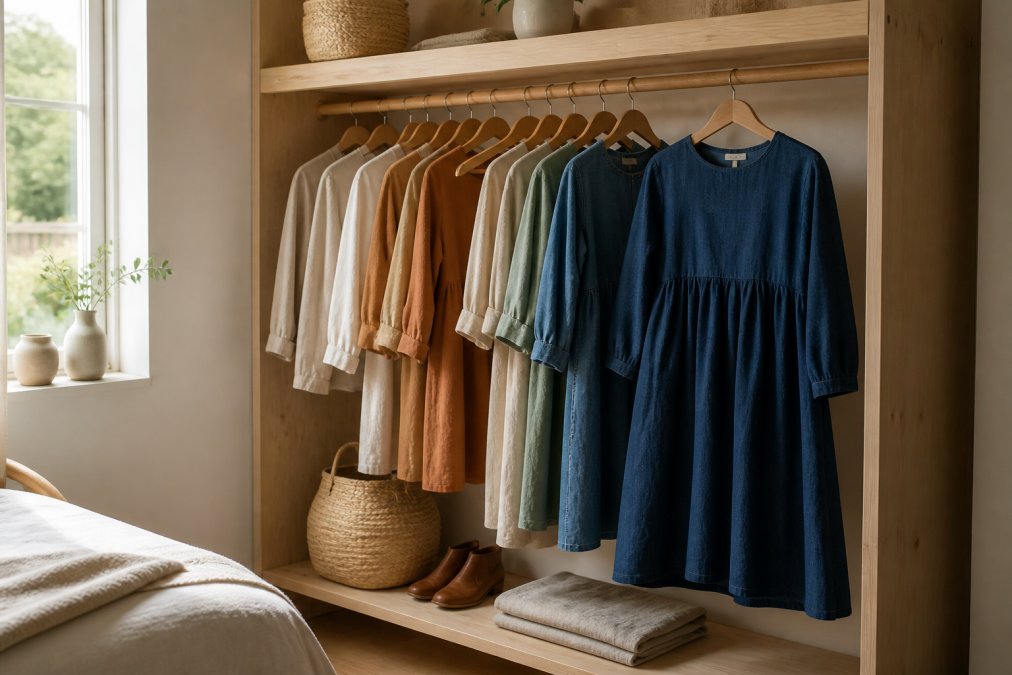
Building a sustainable wardrobe that genuinely lasts starts with rejecting the premise that more is better. A capsule wardrobe of 15-20 well-chosen pieces in natural fibres will outperform a wardrobe of 80 fast fashion items in every meaningful way: cost per wear, longevity, versatility, and environmental impact. Every piece must earn its place by working with at least three other items in the wardrobe.
The Cost-Per-Wear Calculation That Changes How You Shop
Cost-per-wear is the single most useful tool for evaluating clothing purchases:
Cost per wear = Purchase price ÷ Number of times worn
A $50 fast fashion dress worn four times before it pills has a cost-per-wear of $12.50. The Organic Denim Peasant Dress at $298, worn twice a week for three years, has a cost-per-wear of $0.96.
The practical checklist for any sustainable purchase:
- Is this made from a natural or certified recycled fibre?
- Can I name at least five outfits I'd wear this in?
- Does it work across at least two seasons?
- Is the construction quality evident in seams, topstitching, and fabric weight?
- Will I still want to wear this in three years?
If you can't answer yes to all five, it's not a capsule wardrobe piece.
Slow Fashion vs Fast Fashion: The Real Difference
Fast fashion operates on speed and volume: trend-driven designs, synthetic fabrics, offshore manufacturing with minimal wage oversight, and garments engineered to last one or two seasons. Slow fashion inverts every one of those choices: small-batch production, natural fibres, ethical production with supply chain transparency, timeless design, and garments built to last years. The carbon footprint of a single slow fashion piece, amortised over its actual lifespan, is a fraction of the equivalent fast fashion volume.
Size Inclusivity in Sustainable Fashion
Size inclusivity is one of the most significant gaps in the sustainable fashion industry. Many ethical brands produce beautiful, well-made clothing in only narrow size ranges that exclude a large proportion of women.
The Spotted Quoll's collection runs from XXS to 3XL across most pieces, with the Peasant Dress range covering bust measurements from 87cm to 146cm. The Adjustable Hanky Hem Skirt was specifically engineered to solve the waistline problem with a fully adjustable waistband and Tasmanian oak buckle. Genuine size inclusivity also means honest communication about fit, with product descriptions including full garment measurements in centimetres and clear guidance on which cuts suit which body types.
End-of-Life Garment Management and the Circular Economy
The circular economy keeps materials in use for as long as possible. For clothing, it means thinking about what happens to a garment at the end of its life before you buy it. A garment made from natural fibres, organic cotton, linen, hemp, will biodegrade at end of life, while polyester will persist in landfill for hundreds of years.
Practical end-of-life options for natural fibre garments include repair, repurposing (worn organic cotton and linen can become cleaning cloths or craft material), composting (pure natural fibre garments with no synthetic components will compost), and textile recycling through council and charity-based programmes.
The Australian Government's National Waste Policy Action Plan identifies textile waste as a priority category, with increasing focus on extended producer responsibility and circular economy frameworks for the fashion industry.
=== FAQ ANSWERS (audit these too, same rules) ===
[1] Q: What are the best sustainable clothing brands for women in Australia? A: The best sustainable fashion for women prioritises natural fibres, ethical production, and transparent supply chains. Labels that design and make garments locally, such as those operating from small Australian studios, tend to offer the most traceable production. Look for brands using organic cotton, linen, or hemp, and check whether garments are made in sweatshop-free conditions. Small-batch, slow fashion producers are generally more accountable than large retailers making broad sustainability claims.
[2] Q: How can I identify truly ethical fashion brands and avoid greenwashing? A: Check whether a brand names its factory, lists its fabric certifications (such as GOTS for organic cotton), and publishes details about its garment workers and labour conditions. Vague language like 'eco-conscious' without specifics is a greenwashing signal. Brands that make garments locally, in small batches, with named natural fibres and visible production processes are far more credible. Third-party ethical accreditation from recognised bodies adds another layer of verification.
[3] Q: What is a capsule wardrobe and how does it support sustainability? A: A capsule wardrobe is a small, curated collection of versatile, timeless pieces that work together across seasons. It supports sustainability by reducing textile waste, cutting down on impulse purchases, and encouraging a buy-less-buy-well approach. Choosing natural fibres like organic linen and cotton means each piece breathes well, washes easily, and lasts longer. A well-built capsule wardrobe of 10 to 15 quality pieces can replace a much larger fast fashion wardrobe.
[4] Q: Why is choosing natural fibres important for the environment? A: Synthetic fabrics like polyester shed microplastics with every wash, contributing to ocean pollution and taking hundreds of years to break down. Natural fibres, organic cotton, linen, hemp, are biodegradable, require fewer chemical inputs when grown organically, and are far more comfortable against the skin. For the Australian climate in particular, natural fibres regulate body temperature far more effectively than synthetics, making them a practical as well as environmentally friendly choice.
[5] Q: Are there affordable sustainable fashion options, or is ethical clothing always expensive? A: Ethical clothing costs more upfront because it reflects fair wages, quality materials, and responsible manufacturing. However, cost-per-wear tells a more accurate story: a $199 organic linen dress worn 80 times costs less than $2.50 per wear, while a $40 fast fashion equivalent worn 10 times before it falls apart costs $4 per wear. Starting with one or two quality pieces and building slowly is a practical approach.
Frequently Asked Questions
Q: What are the best sustainable clothing brands for women in Australia?
A: The best sustainable fashion for women prioritises natural fibres, ethical production, and transparent supply chains. Labels that design and make garments locally — such as those operating from small Australian studios — tend to offer the most traceable production. Look for brands using organic cotton, linen, or hemp, and check whether garments are made in sweatshop-free conditions. Small-batch, slow fashion producers are generally more accountable than large retailers making broad sustainability claims.
Q: How can I identify truly ethical fashion brands and avoid greenwashing?
A: Check whether a brand names its factory, lists its fabric certifications (such as GOTS for organic cotton), and publishes details about its garment workers and labour conditions. Vague language like 'eco-conscious' without specifics is a greenwashing signal. Brands that make garments locally, in small batches, with named natural fibres and visible production processes are far more credible. Third-party ethical accreditation from recognised bodies adds another layer of verification.
Q: What is a capsule wardrobe and how does it support sustainability?
A: A capsule wardrobe is a small, curated collection of versatile, timeless pieces that work together across seasons. It supports sustainability by reducing textile waste, cutting down on impulse purchases, and encouraging a buy-less-buy-well approach. Choosing natural fibres like organic linen and cotton means each piece breathes well, washes easily, and lasts longer. A well-built capsule wardrobe of 10 to 15 quality pieces can replace a much larger fast fashion wardrobe.
Q: Why is choosing natural fibres important for the environment?
A: Synthetic fabrics like polyester shed microplastics with every wash, contributing to ocean pollution and taking hundreds of years to break down. Natural fibres — organic cotton, linen, hemp — are biodegradable, require fewer chemical inputs when grown organically, and are far more comfortable against the skin. For the Australian climate in particular, natural fibres regulate body temperature far more effectively than synthetics, making them a practical as well as environmentally friendly choice.
Q: Are there affordable sustainable fashion options, or is ethical clothing always expensive?
A: Ethical clothing costs more upfront because it reflects fair wages, quality materials, and responsible manufacturing. However, cost-per-wear tells a more accurate story: a $199 organic linen dress worn 80 times costs less than $2.50 per wear, while a $40 fast fashion equivalent worn 10 times before it falls apart costs $4 per wear. Starting with one or two quality pieces and building slowly is a practical approach. Entry-level sustainable pieces, such as the Frankie Shirred Skirt at $69, make the category more accessible.
This article was written using GrandRanker