


Table of Contents
- Why Flattering Fashion Matters at 50 and Beyond
- Building a Capsule Wardrobe for Women Over 50
- Best Natural Fabrics for Mature Women
- Choosing Silhouettes That Flatter Your Body Shape
- How to Style Botanical Print Dresses with Confidence
- Sustainable Fashion Choices That Last
- Styling for Casual and Elegant Occasions
- Conclusion
- Frequently Asked Questions
Last Updated: September 21, 2026
Why Flattering Fashion Matters at 50 and Beyond
Flattering fashion for women over 50 isn't about hiding yourself or dressing younger than you are. It's about understanding what actually works with your body, your lifestyle, and your confidence level. The difference between feeling frumpy and feeling genuinely chic often comes down to fit, proportion, and choosing pieces that complement rather than fight against your natural shape.
When clothes fit well and flatter your proportions, you wear them more and build a wardrobe that actually works.
Many women over 50 abandon fashion after being told their options are limited. That's not true. Your options are different, and that's an advantage. You know yourself better, have clearer preferences, and care less about strangers' opinions.
This guide covers building a capsule wardrobe, choosing flattering fabrics and silhouettes, and making sustainable choices. The goal isn't to look young, it's to look like the best version of yourself.
Building a Capsule Wardrobe for Women Over 50
A capsule wardrobe is a collection of versatile pieces that work together across seasons. For women over 50, it's the most practical way to get dressed: choose quality over quantity and eliminate decision fatigue.
A capsule approach forces intentionality: every piece must earn its place. Choose neutral foundations, add texture through fabrics, and prioritise fit. A well-fitted pair of trousers in a neutral tone is worth more than five trendy items that don't work.
Essential Wardrobe Staples That Work Across Seasons
Start with a foundation of neutral basics: quality white and cream tops, a well-fitted blazer, neutral trousers, and a simple denim option. These pieces form the backbone of nearly every outfit. Add a neutral cardigan or knit layer for warmth and versatility. The Australian Sustainable Fashion Council guidelines recommend prioritising natural fibres and ethical production, which aligns perfectly with building pieces you'll wear for years.
Add texture through layering pieces and prints. A botanical print dress works as a statement piece, while structured knitwear adds dimension without bulk.
The Spotted Quoll's Lottie Culotte in Organic Linen Hemp exemplifies this approach. Designed with a flat front, deep pockets, and an elastic waist for comfort, these trousers work as a neutral base or a statement piece depending on styling. The organic linen-hemp blend improves with wear, making them a genuine investment. At $298, they're priced to last, not to be replaced seasonally.

The Power of Tailoring and Fit
Tailoring transforms a piece into something that flatters you. A $50 alteration on a $200 piece makes it wearable for years; without it, it sits unworn.
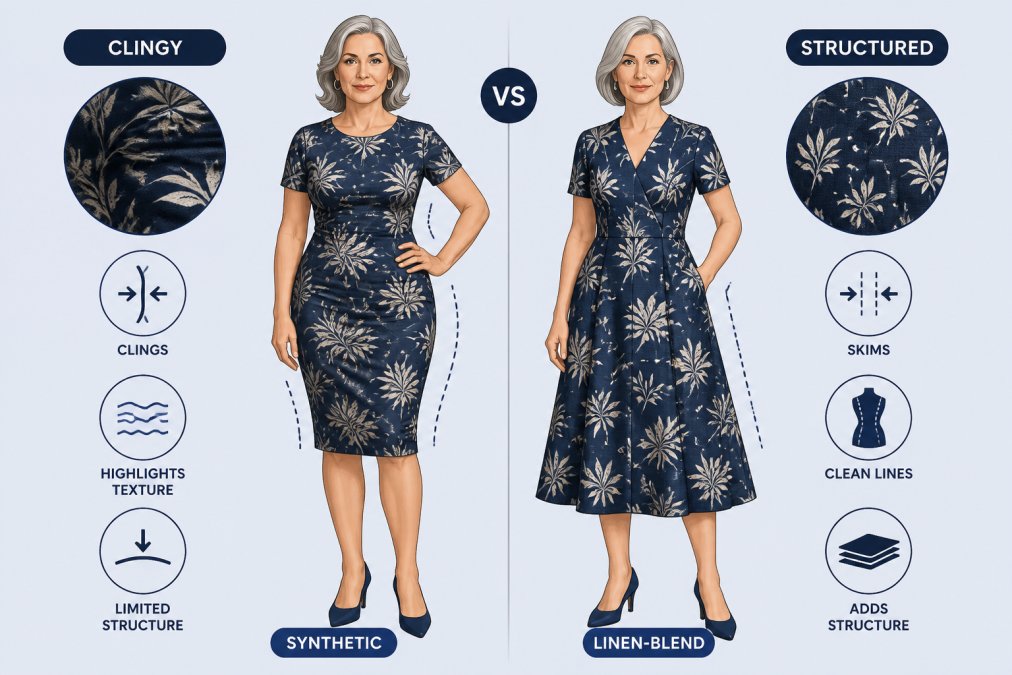
For women over 50, fit matters more than trends. A well-proportioned silhouette that skims your body without clinging or billowing is infinitely more flattering than a trendy piece that pulls or gapes.
Best Natural Fabrics for Mature Women
Fabric choice is one of the most underrated factors in flattering fashion after 50. Natural fibres aren't just better for the environment, they're better for your skin, your comfort, and how clothes actually look on you as your skin changes.
Why Natural Fibres Matter More After 50
As skin matures, it becomes more sensitive. Synthetic fabrics trap moisture, pill easily, and cling to skin texture. Natural fibres breathe, regulate temperature, and drape smoothly without emphasising fine lines.
Natural fibres improve with wear: linen becomes softer, merino resists pilling and odour, cotton softens. Synthetics pill, lose shape, and degrade.
Natural fibres regulate body temperature better, which matters if you experience hot flushes. Merino keeps you warm without overheating, linen keeps you cool, cotton works year-round.
Specific Natural Fibres and How to Use Them
Organic Cotton is soft, durable, and breathable. Use it for basics and layering pieces. Look for organic certification and at least 150 gsm weight. A $60 organic cotton shirt worn 200 times costs 30 cents per wear; a $40 synthetic blouse worn 30 times costs $1.33 per wear.
Linen and Linen Blends improve with wear and keep you cool. Linen blends (linen-cotton, linen-hemp) offer durability with more structure than pure linen. The Lottie Culotte in Organic Linen Hemp at $298 demonstrates this: the blend drapes beautifully and softens with every wash. Linen wrinkles are part of the aesthetic, not a flaw.
Merino Wool regulates temperature, resists odour, and lasts for years. It's naturally antimicrobial, so you can wear it multiple times before washing. Look for 18.5 microns or finer. The Goldie V Neck Vest in Merino Wool at $139 is a year-round layering piece that regulates temperature without bulk.

Hemp and Hemp Blends are durable, breathable, and improve with wear. Hemp is one of the most sustainable fibres, growing without pesticides and requiring minimal water (Hemp: A Sustainable Plant with High Industrial Value in Food Processing).
Silk and Silk Blends are luxurious but require care. Silk blends offer sheen and softness with more durability. Reserve silk for special pieces rather than everyday wear.
How to Identify Quality Natural Fibres When Shopping
Read the fibre content: look for 100% natural fibre. Feel the fabric for weight and structure, quality natural fibres feel substantial. Look for certifications and Fair Trade indicators.
Budget-Friendly Fabric Strategy: Maximising Your Existing Wardrobe
Extend synthetic pieces' life by layering with structured natural-fibre cardigans or blazers. When replacing pieces, prioritise natural fibres for items touching your skin and frequently worn pieces.
Caring for Natural Fibres to Extend Life
Natural fibres last longer with proper care: wash in cold water, use gentle detergent, and air-dry. Avoid high heat.
Choosing Silhouettes That Flatter Your Body Shape
The right silhouette balances your proportions and accounts for how your body changes after 50. This isn't vanity, it's about understanding the structural shifts that happen: loss of elasticity in skin, changes in where you carry weight, and shifts in posture that affect how clothes drape.
Understanding Your Body Shape and Age-Related Changes
After 50, many women experience shifts that affect how garments sit. These aren't flaws; they're normal. The key is choosing silhouettes that work with these changes, not against them.
Apple/inverted-triangle (broader shoulders, weight around middle): Choose A-line skirts, wide-leg trousers, and wrap dresses that skim rather than cling.
Fabric Weight and Drape Matter More After 50
Structured fabrics with weight, linen blends, cotton twills, merino knits, drape smoothly and create clean lines. A botanical print dress in substantial cotton-linen blend skims the body through structure, not tight tailoring. Avoid jersey knits and thin synthetics.
The Role of Vertical Lines and Proportion
Vertical lines, from open cardigans, long necklaces, or column silhouettes, elongate and create a slimming effect, especially valuable after 50 when posture shifts forward. Proportion matters more than size: if your top is loose, your bottom should be fitted (or vice versa). Never go loose on both.
Avoiding Common Silhouette Mistakes
Don't choose silhouettes based on trend alone. Avoid anything that clings to problem areas, gapes at the neckline or waist, or creates horizontal bulk. Tailoring is essential: a $50 alteration transforms a silhouette from unflattering to perfect.
How to Style Botanical Print Dresses with Confidence
A botanical print dress is a statement piece that layers beautifully under a neutral blazer or cardigan. Wear it with structured blazer and neutral trousers for formal occasions, or over a white tee with a cardigan for casual wear. Keep accessories minimal and let the print be the focal point. Choose prints that resonate personally, nature-inspired prints offer timeless appeal.
Sustainable Fashion Choices That Last
Sustainable fashion isn't about buying less (though that helps). It's about buying better. Choose pieces made from natural fibres, produced ethically, and designed to last. Buy from makers who are transparent about their process.
Styling for Casual and Elegant Occasions
The difference between casual and elegant often comes down to tailoring, fabric choice, and accessories rather than completely different pieces.
Conclusion
Flattering fashion for women over 50 starts with understanding your body, choosing quality fabrics, and investing in fit. It's not about following trends or dressing younger. It's about dressing confidently in pieces that actually work for your life.
| Silhouette Type | Best For | Key Features |
|---|---|---|
| Wide-leg trousers | Balanced proportions | Skims the body, creates vertical line |
| Wrap dresses | Defined waistlines | Adjustable fit, creates shape |
| Structured blazers | Adding polish | Creates shoulders, defines waist |
| A-line skirts | Pear shapes | Balances hips, flatters proportions |
| Layered knits | Adding dimension | Texture without bulk, versatile |
Frequently Asked Questions
How do I avoid looking frumpy when dressing over 50?
Focus on fit and proportion. Clothes that are too loose or too tight can add bulk and age you. Invest in tailoring to ensure hems, waistbands, and sleeve lengths sit where they're meant to. Choose structured fabrics that hold their shape, and avoid excessive layering or oversized silhouettes. Quality basics paired with one statement piece per outfit keeps your look polished without trying too hard. A flattering blazer or well-fitted jeans instantly elevates any outfit.
What is the best capsule wardrobe for women over 50?
A capsule wardrobe for women over 50 should include neutral-coloured basics (white, navy, black, cream), well-fitting jeans or trousers, a structured blazer, simple knits, and layering pieces. Add investment pieces in natural fabrics like merino wool or organic linen that age beautifully with wear. Include one or two statement pieces, like a botanical print dress or patterned scarf, to add personality. The goal is pieces that mix and match effortlessly across seasons and occasions, reducing decision fatigue and maximising outfit combinations.
What natural fabrics work best for mature women?
Natural fibres like organic linen, merino wool, cotton, and hemp are ideal for mature women because they're breathable, durable, and improve with washing and wearing. Merino wool regulates temperature and resists odour, making it perfect for layering. Organic linen and linen-hemp blends create beautiful structure and drape, flattering most body shapes. These fabrics age gracefully, developing a softer hand feel over time, and they're kind to sensitive skin. Avoid synthetic blends that can trap heat and create an unflattering appearance.
How do I style botanical print dresses for different occasions?
Botanical print dresses work for both casual and elegant settings depending on how you layer and accessorise. For casual days, pair with white sneakers, a simple linen jacket, and minimal jewellery. For evening events, add a structured blazer, heeled sandals, and a delicate necklace. The key is letting the print be your statement, keep other pieces neutral and simple. A botanical print dress also layers beautifully under a merino wool vest for a smart-casual look, or wear it with a fitted denim jacket for weekend outings. Choose prints that resonate with your colour palette to ensure versatility.
Australian Sustainable Fashion Council ethical production standards
Natural fibres and longevity research
Body-positive fashion and mature style guidance