Table of Contents
- What Makes Durable Sustainable Clothing for Women
- How to Identify Greenwashing in Fashion
- Slow Fashion Capsule Wardrobe Guide
- How to Care for Natural Fibre Clothing
- Durable Sustainable Clothing for Women: What to Look For
- Budget-Friendly Sustainable Shopping and Size Inclusivity
- Frequently Asked Questions
Last Updated: September 20, 2026
What Makes Durable Sustainable Clothing for Women
Durable sustainable clothing for women is apparel built from natural fibres and ethical production so it survives years of washing and wear, not a single season. The Spotted Quoll Studio creates timeless, sustainable women's fashion and lifestyle goods designed and made in Tasmania, featuring natural fibres.
How to Identify Greenwashing in Fashion
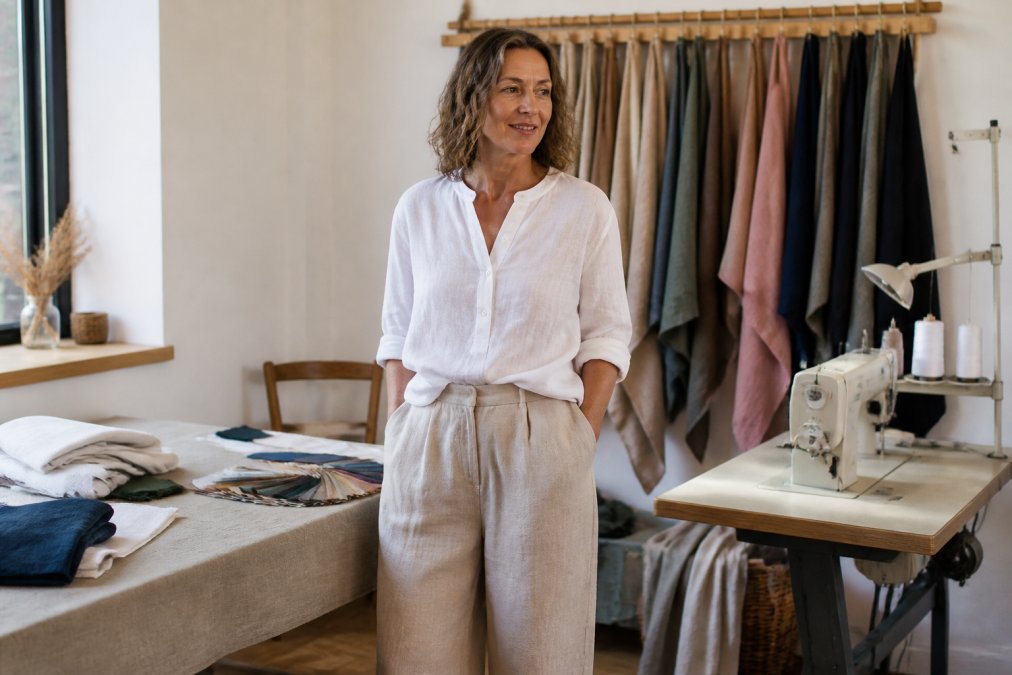
Greenwashing in fashion is when a brand markets itself as sustainable without evidence. The warning signs are vague language, unverifiable claims, and no detail about where and how garments are made. What separates a genuine claim from a marketing line is whether you can verify it against a named standard, a certificate number, or a public register.
The claims that mean nothing on their own
- "Eco-friendly", "green", "conscious", "planet-positive". Unregulated terms with no legal definition or verification requirement.
- "Natural" used as a synonym for sustainable. Cotton is natural; conventionally grown cotton is also one of the most water- and pesticide-intensive fibres in the industry. Natural describes the source, not the impact.
- "Recycled" with no percentage. A garment can contain 2% recycled fibre and still be labelled recycled. Look for the stated percentage.
- A sustainability page with no named factory, no fabric weight and no certification number. Specificity is the cheapest test. A brand that names its mill, fabric weight and cut-and-sew studio is far harder to fake than one that only says "conscious".
Certifications worth checking, and how to verify them
Certifications are only useful if you look them up. Most have a public database or searchable certificate number.
- GOTS (Global Organic Textile Standard). Covers organic fibre content plus processing and social criteria. A GOTS claim should come with a licence number you can check against the public GOTS database.
- OEKO-TEX Standard 100. Tests for harmful substances in the finished textile. It says nothing about fibre origin or labour conditions, so treat it as a chemical-safety mark, not a sustainability mark.
- Responsible Wool Standard (RWS) and ZQ Merino. Relevant to Australian merino supply chains. RWS covers animal welfare and land management; ZQ is a grower programme with traceability back to the farm.
- Fair Trade and SA8000. Labour-focused: wages and working conditions, not environmental impact.
- B Corp certification. A whole-of-business assessment, not a product claim. It covers governance and worker treatment; it does not certify a specific garment.
The Australian regulatory picture
The Australian Competition and Consumer Commission (ACCC) treats false or misleading environmental claims as a breach of the Australian Consumer Law, has published guidance on green marketing, and has taken enforcement action against unsubstantiated sustainability claims. A brand cannot simply assert a product is "sustainable" without a reasonable basis.
Two things follow from that for a shopper:
- You can ask for the basis of a claim. If a brand says a garment is carbon neutral or made from recycled content, it should point to the method and evidence behind it.
- You can report a misleading claim. The ACCC accepts consumer reports, and the same conduct can raise issues under state and territory fair trading laws.
A practical verification routine
Before you buy, run this short sequence:
- Find the fibre content and stated fabric weight. If neither is published, that is your answer.
- Find the certification name and, where one exists, the certificate or licence number.
- Find the factory or studio location. "Made in Australia" has its own legal definition, so check whether it covers the whole garment or only final assembly.
- Check whether the brand publishes a cost-per-wear or repair position, not just a materials story. A brand that repairs what it sells expects the garment to last.
Slow Fashion Capsule Wardrobe Guide
A slow fashion capsule wardrobe is a small set of versatile, high-quality pieces that mix and match across seasons. Build it around neutral bases, a few statement prints, and layers that work year-round.
Start with these core pieces:
- One pair of wide-leg pants in organic linen or a linen-hemp blend. The Boss Pant Organic 100% Linen - Coastal Fern ($299) has an elastic waist and a balloon shape on the leg, making it a perfect capsule wardrobe and easy traveller, work or weekender.
- One tailored blouse. The Lady Jane Organic 100% Linen Blouse - Coastal Fern ($249) has a Bishop's sleeve and a gorgeous curved split hemline, and has earned its stripes as a top selling cut for us selling over 973 units.
- One pair of jeans. The Nova Jeans Denim - Ella & Sunday ($129) have a medium rise and a wide leg, and can be layered with any number of our tops and jackets.
- One knit. The Astrid Fair Isle Jumper in Merino Wool - Uimi ($199) is made in Melbourne and is designed to bring colour and warmth to your everyday wardrobe, making it the kind of knit you'll reach for season after season.
- Two to three tees and tanks. The Goodness Tee Cotton Knit - Nights Garden ($149) and the Organic Cotton Poplin Tank - Pink Summer Bouquet ($49) are designed to keep you cool on warm days.
How to Care for Natural Fibre Clothing
Natural fibre clothing lasts longest when you wash it less, wash it cold, and dry it flat rather than in a tumble dryer. Heat and agitation break down linen, cotton and wool over time. But care is only half of longevity, the other half is repair. Most garments are discarded while the fabric is still sound, because of a failed seam, a lost button or a small hole.

Washing and drying
- Wash cold, on a gentle cycle. Hot water shrinks linen and cotton and speeds up fibre breakdown. A cold gentle cycle with a low-spin finish handles most everyday soiling.
- Air wool instead of washing it. Merino only needs a wash when genuinely soiled. Airing it overnight between wears is often enough.
- Dry flat, never hang wet wool. Hanging stretches a wet knit out of shape. Store folded for the same reason.
- Skip the dryer. Line drying in shade protects the fibre and the print; direct sun fades digital prints faster than any wash cycle.
- Use a mesh bag for knits and delicates. It stops the drum stretching necklines and cuffs.
- Wash prints inside out. Friction in the drum is the main cause of fading on digital prints.
Repair and maintenance: the part most guides skip
A repair kit costs very little and covers almost every failure a natural-fibre garment will develop. Keep a small tin with matching thread in black, navy and cream, a fine hand-sewing needle, a darning needle, a knit comb, a needle-felt or matching fabric patch, and spare buttons.
End-of-life: what to do when a garment is genuinely finished
Repair first, then repurpose, then recycle. In that order.
- Repurpose. Worn linen and cotton make good cleaning cloths, garden ties, produce bags and quilt patches. Wool can be felted into coasters or pot holders.
- Resale and swaps. Clean, repaired garments still have value. Online resale platforms, local clothing swaps and op shops all extend a garment's life. A repaired garment sells faster than one with a visible fault.
- Textile recycling. Most councils run textile drop-off points, and many Australian charities and retailers accept worn textiles for fibre recovery. Check what your local council accepts, many take clean textiles even when no longer wearable.
- Take-back and trade-in programmes. A growing number of brands accept their own garments for resale, repair or fibre recycling. If a brand you buy from offers one, use it, it keeps material in the loop and gives the brand a reason to design for disassembly.
- Composting. Untreated, undyed natural fibres, pure linen, cotton and wool with no synthetic blend, elastane or plastic trim, break down in a home compost over time. Cut off buttons, zips, labels and synthetic stitching first. Blended fabrics will not compost cleanly and should go to textile recycling.
Durable Sustainable Clothing for Women: What to Look For
The features that predict a long life are fabric weight, construction detail and fit. Heavier fabrics resist wear, reinforced seams hold their shape, and a comfortable fit means you actually wear the piece.
| What to Check | Weak Sign | Durable Sign |
|---|---|---|
| Fabric weight | Unlisted or under 150gsm | 180gsm to 220gsm and stated |
| Fibre content | "Blend" with no breakdown | Named fibre, e.g. 100% organic linen |
| Construction | Single-stitched seams | Double-stitched hems and bound edges |
| Fit | Rigid, sized only 8-12 | Elastic waist, sizes XXS to 3XL |
| Production | Country not disclosed | Named studio or factory |
Budget-Friendly Sustainable Shopping and Size Inclusivity
Practical ways to keep costs down:
- Start with one anchor piece. A single pair of organic linen pants at $299 worn twice a week for three years costs about $1.90 per wear.
- Buy transeasonal designs. A piece worn across autumn, winter and spring earns its price faster than a summer-only item.
- Check for free shipping. The Spotted Quoll offers free shipping on some items, which can remove a hidden cost from the total.
- Repair before replacing. A loose button or dropped hem is a ten-minute fix, not a reason to buy new.
- Shop end-of-life options. Resale, clothing swaps and textile recycling keep garments out of landfill.
That is where the honest limits sit. Sustainable clothing costs more per item, and no brand is perfect on every measure. What you can control is how long each piece stays in your wardrobe.
Frequently Asked Questions
What defines durable and sustainable clothing for women?
Durable sustainable clothing for women combines natural fibres like organic linen, hemp and Australian Merino wool with ethical manufacturing and timeless design. Look for garments made from 100% organic cotton or linen, constructed with reinforced seams and quality finishing. The Spotted Quoll Studio uses 190gsm 100% organic pure linen for items like the Boss Pant, and mid-weight 220gsm organic linen/hemp slub for the Lottie Culotte, fabrics that are described as improving with washing and wear.
How do I know if a brand is genuinely sustainable or just greenwashing?
Check for specific claims rather than vague language. Genuine brands name their certifications, disclose where garments are made and explain their supply chain. Look for terms like GOTS certified, Fair Trade, or made in Australia with a named studio or factory. If a brand says 'eco-friendly' without explaining how, or uses nature imagery without proof, treat it with caution. Transparency about materials, factories and workers is the clearest signal.
How should I care for natural fibre clothing to make it last longer?
Wash less often. Airing linen, hemp and Merino wool between wears reduces the need for frequent washing. When you do wash, use cold water on a gentle cycle and avoid tumble drying, which breaks down fibres. Merino wool should be handwashed or machine washed on a wool cycle with no spin, then dried flat. Linen and hemp actually get softer with each wash, so proper care extends their life for years.
Can I build a sustainable capsule wardrobe on a budget?
Yes. Start with one or two versatile pieces that work across multiple outfits, like a linen blouse or wide-leg pants. Calculate cost per wear rather than upfront price: the Lady Jane Organic 100% Linen Blouse - Coastal Fern at $249, worn 100 times, costs $2.49 per wear, which is often less than a $30 fast fashion top worn five times. Prioritise natural fibres that suit your climate, choose colours and prints you will wear for years, and add pieces gradually as your budget allows.
Building a durable wardrobe takes patience, and the reward is a closet where every piece earns its place. The Spotted Quoll makes this easier with transeasonal capsule designs cut from organic linen, hemp and Australian merino wool, all designed and made in Tasmania with exclusive nature-inspired prints. Every piece ships free, and core styles run from size 6 to 24. Shop the collection and start with one piece you will wear for years.