


Table of Contents
- What Is a Sustainable Capsule Wardrobe?
- The Benefits of a Minimalist Closet
- How to Declutter Your Wardrobe Sustainably
- Minimalist Wardrobe Essentials for Women
- Benefits of Natural Fibres in Clothing
- Building Your Colour Palette and Personal Style
- Repair, Maintenance, and Seasonal Transitions
- Frequently Asked Questions
What Is a Sustainable Capsule Wardrobe?
A sustainable capsule wardrobe is a curated collection of high-quality, versatile clothing pieces made from natural or eco-friendly materials that work together across multiple seasons and occasions. The core principle is intentional minimalism: you own fewer items, but each piece is durable, timeless, and designed to mix and match effortlessly.
Unlike fast fashion, which encourages constant replacement, a sustainable capsule wardrobe prioritises longevity and ethical production. According to the Ellen MacArthur Foundation's circular fashion research, the fashion industry generates approximately 92 million tonnes of textile waste annually. Building a capsule wardrobe directly counters this by reducing consumption and extending garment lifespan through thoughtful curation and care.
A sustainable capsule wardrobe combines three elements: quality construction, natural fibres, and timeless design. This approach means you'll wear each piece repeatedly, maximising value and minimising waste. At The Spotted Quoll, we design capsule pieces specifically for this purpose, featuring organic cotton, linen, and other natural fibres in colours and styles that transcend seasonal trends.
The Benefits of a Minimalist Closet
Building a minimalist closet delivers practical benefits that extend far beyond aesthetics. When you own fewer items with intentional versatility, decision fatigue disappears. Each morning becomes simpler because every piece in your wardrobe works with everything else.
The environmental impact is substantial. Producing a single cotton t-shirt requires approximately 2,700 litres of water (peer-reviewed research). A garment worn 200 times has one-fifth the environmental impact of one worn only 50 times, which is why investing in quality pieces that last matters enormously.
There's also a financial advantage. Spending more on fewer items that last, rather than less on many items that wear out quickly, typically results in lower cost-per-wear. A linen shirt worn 100 times costs significantly less per wear than a disposable alternative worn five times.
Beyond the practical, a minimalist closet creates mental clarity. A curated wardrobe of pieces you genuinely love eliminates the daily frustration of having "nothing to wear" despite a full cupboard.
How to Declutter Your Wardrobe Sustainably
Decluttering sustainably means being intentional about what leaves your wardrobe. Rather than throwing items away, consider their next life.
Step 1: Sort by Category and Condition Pull everything from your wardrobe and group by type: tops, bottoms, dresses, outerwear. Assess condition honestly. Items in good repair stay in the "keep" pile. Damaged pieces go to "repair" or "donate."
Step 2: Identify Pieces That Spark Joy and Serve a Purpose Keep items that fit well, flatter your body, and align with your personal style. Discard pieces that don't work with your lifestyle or colour palette, regardless of brand or original cost.
Step 3: Create a "Donate" Pile Clothing in good condition but no longer worn should find new owners. Donate to local charities, community organisations, or textile recycling programs rather than landfill. Textile Recyclers Australia provides guidance on responsible clothing disposal can direct you to facilities accepting used garments.
Step 4: Repair Before Removing Before discarding damaged items, assess repair feasibility. A missing button, loose seam, or small hole can often be fixed. Professional alterations or mending extends garment life significantly.
Step 5: Document What Remains Take photos of your remaining wardrobe or create a simple list. This becomes your reference for building outfits and identifying gaps.
| Step | Action | Outcome |
|---|---|---|
| Sort by category | Group clothing by type and assess condition | Clear view of your entire wardrobe |
| Identify keepers | Assess fit, style alignment, and functionality | Pieces that genuinely serve you |
| Create donate pile | Separate unworn items in good condition | Responsible disposal pathway |
| Repair assessment | Identify fixable damage | Extended garment lifespan |
| Document remaining | Photo or list your kept pieces | Reference for styling and gap-spotting |
Minimalist Wardrobe Essentials for Women
The foundation of any capsule wardrobe consists of versatile basics that work across seasons and styling approaches.
Neutral Layering Pieces A well-fitted blazer in neutral linen or organic cotton is non-negotiable. The [Island Pleat Denim Blazer(/products/island-pleat-organic-denim-blazer) from The Spotted Quoll | thespottedquoll.com.au/products/island-pleat-organic-denim-blazer] exemplifies this principle, crafted in organic cotton denim with signature pleat detailing and generous pockets, transitioning seamlessly from casual to professional. Invest in quality basics: plain t-shirts, long-sleeve tops, and fitted knitwear in white, black, cream, and grey.
Bottoms That Work Year-Round A pair of well-fitting neutral denim in a classic cut works across seasons. Dark indigo or black denim pairs with nearly everything. Add tailored trousers in neutral tones for professional settings and a simple linen or organic cotton skirt for variety.
Dresses as Workhorses A simple dress eliminates the need to coordinate multiple pieces. The Organic Denim Peasant Dress from The Spotted Quoll demonstrates this approach, made from organic cotton with practical pockets and designed for effortless styling across seasons. A neutral shift dress, a simple linen option, and one patterned piece provide maximum flexibility.
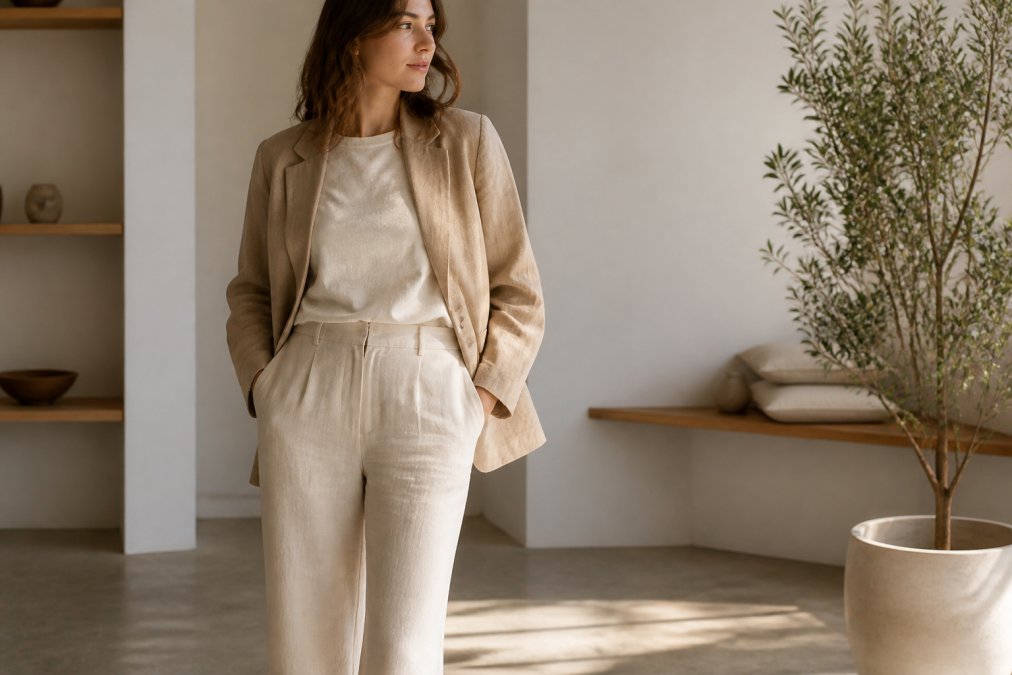
Outerwear and Footwear Choose one or two outerwear pieces appropriate to your region's seasons. A linen blazer works for transitional weather; a quality wool coat handles colder months. Three to five pairs of shoes suffice: neutral everyday shoes, professional footwear, casual options, and seasonal boots if needed.
Benefits of Natural Fibres in Clothing
Natural fibres fundamentally outperform synthetic alternatives for sustainable capsule wardrobes. They're breathable, durable, and biodegradable, qualities that matter for longevity and environmental impact.
Linen: Durability and Versatility Linen becomes softer and more comfortable with each wash, making it ideal for pieces you'll wear frequently. It's naturally temperature-regulating, working across seasons. The Linen Dion Blue Fine Stripe Short Sleeve Shirt from The Spotted Quoll demonstrates linen's versatility as a classic button shirt that works dressed up or casual, season to season. Linen production requires significantly less water than cotton and fewer pesticides than conventional cotton farming.

Organic Cotton: Sustainable and Comfortable Organic cotton eliminates synthetic pesticides and uses less water than conventional cotton. It's soft against skin, breathable, and improves with washing. Most quality capsule basics benefit from organic cotton construction.
Wool and Other Plant Fibres Merino wool and other quality wool fibres regulate temperature naturally, making them perfect for layering. Wool resists odours and wrinkles, requiring less frequent washing. Hemp requires minimal water and no pesticides, becoming softer with age. Natural fibres biodegrade at end-of-life, unlike synthetics that persist in landfills for centuries.
Building Your Colour Palette and Personal Style
A coherent colour palette transforms a capsule wardrobe from functional to genuinely wearable. When every piece coordinates with others, outfit combinations multiply exponentially.
Start with Neutrals Build your foundation on neutral tones: black, white, cream, grey, and brown. Approximately 70% of your pieces should be neutral, allowing flexibility and preventing visual chaos.
Add Accent Colours Strategically Choose two to three accent colours that complement your skin tone and personal preference. Consistency matters; if you choose navy as an accent, wear navy repeatedly rather than scattering multiple different colours throughout.
Consider Undertones Warm undertones pair well with warm neutrals (cream, warm grey, camel) and warm accents (terracotta, olive, warm red). Cool undertones suit cool neutrals (pure white, cool grey, taupe) and cool accents (navy, jewel tones, cool reds). Matching undertones creates visual harmony across your wardrobe.
Repair, Maintenance, and Seasonal Transitions
Repair and maintenance are the difference between a capsule wardrobe that lasts five years and one that lasts fifteen. Active garment care is where sustainability becomes tangible and where a capsule wardrobe proves its financial and environmental value.
Preventive Care: The Foundation Prevention is far cheaper than repair. Wash garments less frequently, most pieces need washing only every three to five wears. Spot-clean minor stains with cold water and a soft cloth rather than full washes. Use cold water and gentle cycles for natural fibres; heat damages fibres, fades colours, and weakens seams. Air dry whenever possible; tumble drying degrades fabric and shortens garment lifespan significantly.
Store items properly to prevent damage. Fold heavier knits to prevent stretching; hang lighter pieces like shirts and dresses. Use wooden hangers rather than plastic. Store off-season items in breathable cotton bags, not plastic, which traps moisture. Use natural moth deterrents, cedar blocks, lavender sachets, or dried rosemary, rather than chemical mothballs.
Basic Repair Skills You Can Learn Three fundamental repairs extend garment life dramatically:
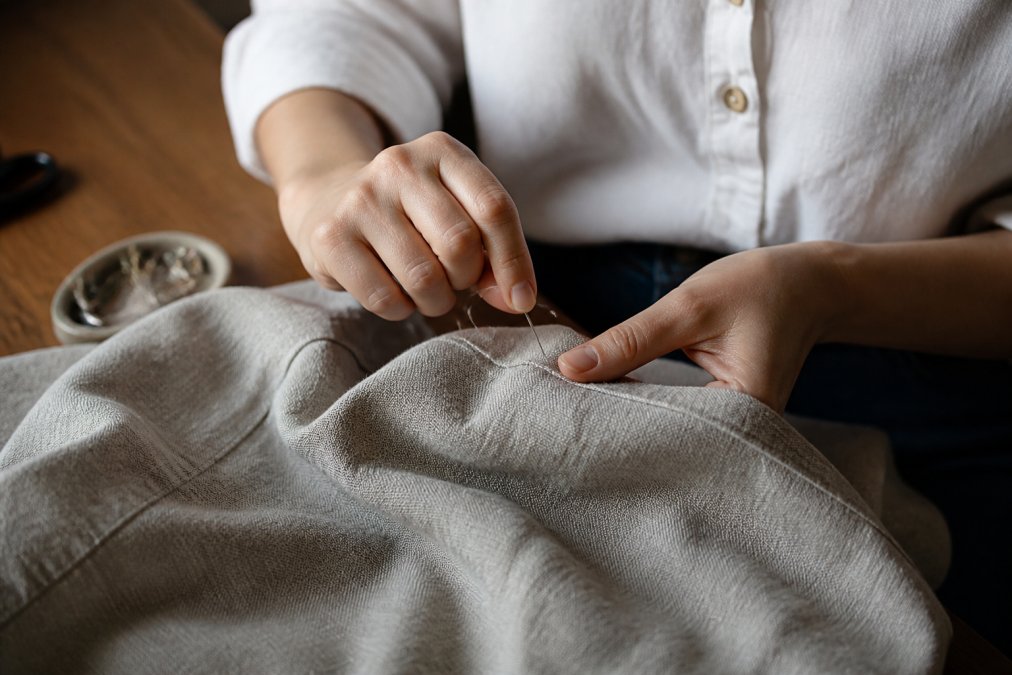
Button Replacement: A missing button takes five minutes to replace with needle and thread. Keep a small sewing kit with neutral thread colours and spare buttons. This single skill prevents the premature retirement of otherwise perfect pieces.
Seam Repair: A loose seam or small split can be closed with a needle and thread using a simple running stitch or backstitch. Catching a loose seam early prevents it from becoming a large tear.
Patching Small Holes: A small hole in a less-visible area can be patched with a needle and thread or with an iron-on patch for quick fixes. For visible holes in natural fabrics, a visible mend, where the patch becomes part of the design, extends garment life.
These skills require only a basic sewing kit. Learning them takes an hour; the time investment pays dividends across your entire wardrobe.
When to Seek Professional Repair Some repairs justify professional help: tailoring and alterations, zip replacement, or fabric repair for large tears or delicate fabrics. Before discarding a damaged piece, ask: Is the damage repairable? Does the piece still fit and suit my style? Will I actually wear it after repair?
Seasonal Transitions Without New Purchases A sustainable capsule wardrobe evolves through seasonal rotation, not seasonal shopping. Lightweight pieces work year-round when layered under blazers and cardigans. A linen shirt worn alone in summer becomes a layering piece under a wool jumper in winter.
When transitioning between seasons, assess your stored pieces before assuming you need replacements. Clean items before storage to prevent staining. When you retrieve off-season pieces, check condition and try them on; you may rediscover pieces you'd forgotten. After rotating through a full year, you'll notice which pieces you wore frequently and which remained unworn, revealing actual gaps to fill intentionally.
A wool coat worn one season per year, properly stored and maintained, lasts 10-15 years. A linen shirt worn year-round with proper care lasts 15+ years. This longevity is where the environmental and financial benefits of a capsule wardrobe become undeniable.
Frequently Asked Questions
Q: How many items should be in a sustainable capsule wardrobe?
A: A functional sustainable capsule wardrobe typically contains 30-50 pieces, though the exact number depends on your lifestyle and climate. The key is quality over quantity, each piece should work with multiple other items and serve a purpose. Focus on versatile staples in neutral tones that layer easily, rather than aiming for a specific number. This approach reduces waste and ensures every garment earns its place in your wardrobe.
Q: What are the best natural fibres for a sustainable wardrobe?
A: Organic cotton, linen, hemp, and wool are among the most sustainable natural fibres. Organic cotton requires fewer pesticides than conventional cotton, linen is durable and biodegradable, and hemp grows without synthetic inputs. Look for garments made from certified organic materials and natural dyes where possible. The Spotted Quoll uses organic cotton and linen in pieces like the Island Pleat Denim Blazer and Linen Dion Blue Fine Stripe Shirt, designed to last for years.
Q: How do you transition a capsule wardrobe between seasons?
A: Layering is the foundation of seasonal transitions. Build your capsule around transeasonal pieces, lightweight linen shirts, blazers, and denim that work year-round, then add season-specific layers like cardigans or jackets. Store off-season items properly to extend garment life, and rotate pieces based on temperature rather than buying new collections. This approach reduces shopping frequency and supports conscious consumerism, making your wardrobe work harder across all seasons.
Q: How do I know if a fashion brand is genuinely ethical and sustainable?
A: Look for transparent supply chain information, certifications from recognised bodies, and clear communication about materials and production practices. Ethical brands share details about where and how garments are made, use natural fibres, and pay fair wages. Check if they offer repair services or take-back schemes, these signal genuine commitment to garment longevity. Australian-made brands like The Spotted Quoll provide traceability and support local makers, reducing environmental impact from shipping.
Building a sustainable capsule wardrobe requires intentionality, but the rewards extend far beyond a tidy cupboard. You'll reduce waste, simplify daily decisions, and invest in pieces that genuinely serve your life. The Spotted Quoll creates capsule pieces specifically designed for this philosophy, timeless designs in natural fibres that work across seasons and body types. SHOP NOW and start building a wardrobe that's kind to you and the earth.