


Table of Contents
- What Ethical Fashion Actually Means Beyond the Label
- How to Read Clothing Labels Like a Detective
- How to Spot Greenwashing in Fashion
- Ethical Fashion Certifications Australia: What to Look For
- Transparent Clothing Brands Australia: What Real Transparency Looks Like
- Cost-Per-Wear: The Real Cost of Ethical Fashion
- How to Identify Ethical Fashion in Practice: A Step-by-Step Checklist
- Conclusion
- Frequently Asked Questions
Last Updated: September 17, 2026
What Ethical Fashion Actually Means Beyond the Label
Learning how to identify ethical fashion starts with one shift in thinking: a garment is not ethical just because it says so. Ethical fashion is clothing made with respect for the people who produce it and the planet it comes from, with honest information available about both. This guide from The Spotted Quoll breaks down exactly how to check that.
People, Planet, and Transparency
Ethical fashion is a way of making and buying clothes that protects garment workers, reduces harm to the environment, and tells the truth about how a piece was made.
Three things sit at its core:
- People: safe working conditions and a living wage
- Planet: sustainable fabrics, less textile waste, a smaller carbon footprint
- Transparency: a brand that shows its supply chain, not hides it
How to Read Clothing Labels Like a Detective
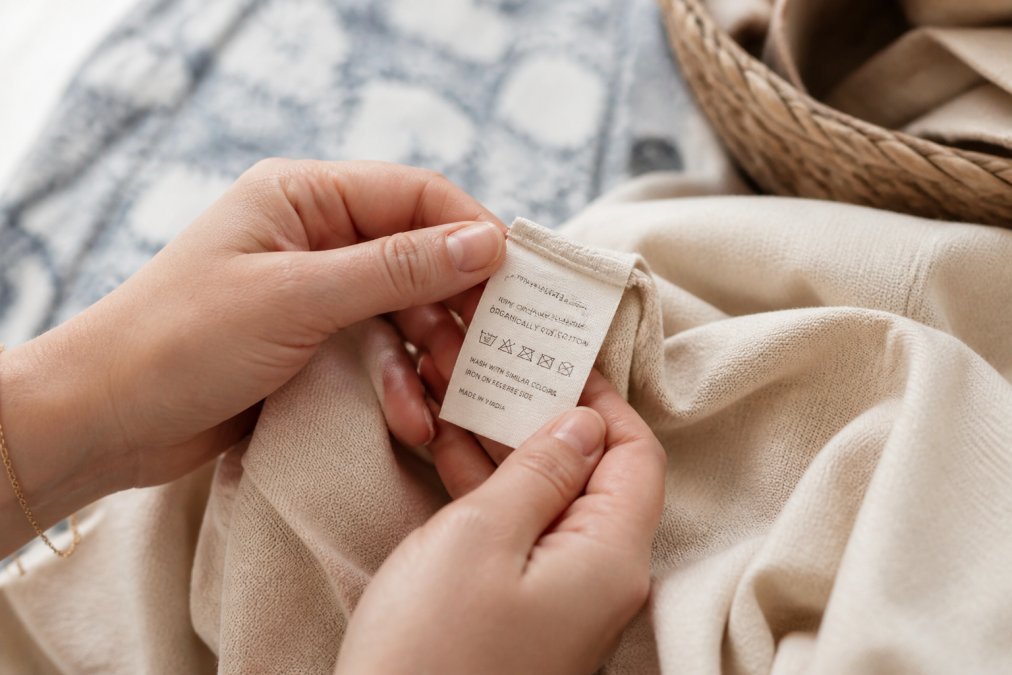
A clothing label is a starting point, not proof. It tells you the fibre content and where the item was made, but rarely who made it or how they were treated. Treat it as one clue among several.
Fibre Content and Country of Origin
Check the fibre list first. Natural and recycled materials such as organic cotton, linen, hemp, and recycled fibres carry a lighter footprint than most synthetics. Then look at where it was made: "Made in" tells you the final stitch point, not where the raw materials came from. A common mistake is assuming "natural fibre" means "ethical." It does not, how the fibre was grown and who sewed the garment still matter.
Certifications on the Tag
Certifications are where labels get useful. Look for recognised marks, not vague words like "eco" or "green."
- Fair trade certification: confirms fair pay and safe conditions
- Organic certifications: verify farming without harmful chemicals
- Recycled content marks: prove materials came from post-consumer waste
How to Spot Greenwashing in Fashion
Greenwashing is when a brand talks up its ethics without the proof to back it. Watch for these red flags:
- Vague claims like "planet-friendly" with no certification
- A single green collection while the rest of the range stays unchanged
- No named factories or suppliers anywhere on the site
- "Sustainable" printed on a synthetic, fast-turnover garment
- No third-party audits or traceability information
Ethical Fashion Certifications Australia: What to Look For
Certifications are the closest thing to a shortcut in ethical fashion: independent, verifiable checks rather than claims a brand makes about itself. Here is what the main certification families actually verify.
Worker welfare and fair trade
- Fairtrade International certifies cotton and other commodities against social, economic, and environmental standards, including a minimum price and a premium paid to producer cooperatives. It covers farming, not the cut-and-sew factory.
- Fair Wear Foundation is a multi-stakeholder initiative that audits garment factories against a code of labour practice covering living wages, working hours, and freedom of association. Brands that join are published as members, so you can check the member list directly.
- SA8000 is a social accountability standard covering child labour, forced labour, health and safety, and remuneration, audited by accredited certification bodies.
Fibre and processing standards
- Global Organic Textile Standard (GOTS) is the benchmark for organic fibre, covering the whole processing chain from harvesting to finished garment, including chemical inputs, wastewater treatment, and social criteria. A GOTS label means the item contains a minimum threshold of certified organic fibre and was processed to the standard.
- Organic Content Standard (OCS) and Global Recycled Standard (GRS) verify the presence and percentage of organic or recycled content respectively. GRS also covers social and environmental processing criteria; OCS is narrower and content-focused.
- OEKO-TEX Standard 100 tests finished textiles for harmful substances (OEKO-TEX® STANDARD 100). It is a chemical-safety mark, not a labour or environmental one, so treat it as one piece of the picture rather than proof of ethics.
Animal welfare
- Responsible Wool Standard (RWS) and Responsible Down Standard (RDS) trace animal-derived materials back to farms and set welfare criteria. PETA-Approved Vegan is a self-declared brand scheme rather than an audited standard, so weigh it accordingly.
Local and regional signals
- Australian Made confirms where goods were made, not how workers were treated, so pair it with a labour standard.
- Ethical Clothing Australia accredits businesses meeting Australian workplace laws across their local supply chain, including homeworkers, one of the few schemes that maps directly onto local labour law.
How to verify a mark before you trust it
A genuine certification is checkable in three steps:
- Note the exact name and, where shown, the licence or certificate number.
- Search the issuing body's own website for the brand or certificate number. Most maintain a public database or member list.
- Check the scope. A GOTS mark on a T-shirt does not certify the brand's entire range, and an OEKO-TEX mark says nothing about wages.
Ethical Clothing Australia accredited business search
Digital verification tools
Beyond the tag, some brands publish a QR code or product passport linking to supply-chain data. Scanning it should take you to a named factory, a certification record, or a traceability page. If it resolves to a marketing landing page with no verifiable detail, that is a signal in itself. Cross-check anything you find against the certifier's database rather than the brand's own summary.
Transparent Clothing Brands Australia: What Real Transparency Looks Like
Transparency is not a feeling. It is a testable claim: a transparent brand is one where a shopper can trace a garment from raw material to finished piece using published information, without having to email and wait. Here is how to run that trace, and how to apply the same test to second-hand and resale.
Organic Denim Peasant Dress - Staple →
The three-layer trace
Run any garment through these three layers. If a brand passes all three, it is genuinely transparent.
- Tier 1, the final assembly. Can you name the factory that cut and sewed the garment, and its location? Not just "made in" a country, but the facility. Check whether the specific factory for your item appears on the brand's supplier list.
- Tier 2, the fabric and processing. Can you find where the fabric was woven or knitted, and where it was dyed and finished? Dyeing and finishing are the most chemically intensive stages and often the least disclosed.
- Tier 3, the raw material. Can you trace the fibre back to a farm, cooperative, or recycler? For organic cotton this usually means a GOTS transaction certificate; for recycled polyester, a GRS chain-of-custody record.
What to look for on a brand's site
- A published supplier list with factory names and locations, updated at least annually.
- Certifications with links to the issuing body, not just logo images.
- A named person or team responsible for ethics or sustainability.
- Audit results including any non-compliances the brand is working on. Brands that only publish good news are curating, not disclosing.
- A clear statement of what the brand does not yet know. Honest gaps are a stronger signal than a flawless-sounding page.
The one-question test
Ask a brand directly: "Can you name the factory that made this garment and show a recent audit?" A transparent brand will answer with specifics. A vague answer, a redirect to a marketing page, or silence tells you more than any sustainability report.
Transparency in second-hand and resale
The resale market is the biggest blind spot in ethical fashion guides, and it is where circularity actually happens. The three-layer trace is harder on a second-hand item, but you can still apply a version of it.
- Identify the original brand and item. Use the label, style name, and product code to find the original listing. The brand's transparency page still applies, even second-hand.
- Check the fibre and care label. Fibre content is fixed at manufacture: natural and recycled fibres generally carry a lighter footprint than virgin synthetics.
- Assess condition honestly. A well-made garment that has survived several owners is evidence of durability. Visible repairs, reinforced seams, and intact hardware are positive signals.
- Prefer platforms with verification. Some resale platforms authenticate items and publish condition reports. Where they do not, inspect in person or ask for detailed photos.
- Extend the life you can. Repair, alter, and re-wear before you re-home. The most ethical garment is the one already in your wardrobe.
Why this matters more than a badge
A certification tells you a standard was met at a point in time. Transparency tells you whether the brand is still telling you the truth today. Certifications give you verified checkpoints; transparency gives you the ongoing record. A brand with both is the strongest signal you can get without visiting the factory yourself.
Cost-Per-Wear: The Real Cost of Ethical Fashion
Cost-per-wear is the price of a garment divided by how many times you actually wear it. It is the fairest way to judge value, and it often flips the "ethical fashion is too expensive" argument on its head.
How to Identify Ethical Fashion in Practice: A Step-by-Step Checklist
Use this checklist every time you shop. It turns a vague feeling into a clear decision.
- Check the fibre content. Look for organic cotton, linen, hemp, or recycled materials.
- Find the country of origin. Note where it was made and whether that is disclosed clearly.
- Look for real certifications. Fair trade, organic, and recycled marks, not vague words.
- Hunt for greenwashing. Vague claims and hidden suppliers are red flags.
- Check supply chain transparency. Can you name the factory? If not, ask why.
- Judge durability. Will this last 100 wears, or five?
- Run the cost-per-wear maths. Divide price by expected wears.
- Consider second-hand first. Circularity starts with what already exists.
What is the fastest way to check if a brand is ethical?
Search the brand's site for a named factory and a recognised certification. If both are easy to find, that is a strong signal. If neither exists, treat the ethics claims with caution.
Conclusion
Sorting real ethics from marketing noise takes effort, which is why so many shoppers give up. The brands worth your money make it easy: they name their makers, show their certifications, and build clothes that last.
Frequently Asked Questions
What are the key indicators of an ethical fashion brand?
Look for transparency about where and how garments are made, fair wages for garment workers, safe working conditions, and the use of sustainable fabrics like organic cotton or recycled materials. Brands should publish information about their supply chain and hold certifications such as Fair Trade or B Corp. A genuine ethical fashion brand will also prioritise durability and slow fashion over rapid seasonal turnover, and be honest about what they don't yet do perfectly.
How can I tell if a clothing brand is greenwashing?
Watch for vague claims like 'eco-friendly' or 'natural' without specifics. Check whether sustainability claims are backed by third-party audits or certifications. Be sceptical of brands that highlight one green initiative while ignoring labour rights or textile waste. If a company can't tell you where its fabrics come from or who makes its clothes, that's a red flag. Genuine transparent clothing brands Australia-wide publish detailed supply chain information, not just marketing slogans.
What certifications should I look for in ethical clothing?
In Australia, look for Fair Trade certification, B Corp certification, and Global Organic Textile Standard (GOTS) for organic fibres. Ethical Clothing Australia accreditation is particularly relevant for local brands, verifying fair wages and safe conditions for garment workers. Also check for Oeko-Tex Standard 100, which tests for harmful substances. These certifications are independently verified, so they carry more weight than self-declared sustainability claims.
How do I check if a brand pays fair wages?
Start by checking if the brand is accredited by Ethical Clothing Australia, which audits local supply chains for fair wages and safe working conditions. For offshore production, look for Fair Trade certification or membership with the Fair Labor Association. Brands committed to a living wage will often publish wage data or supplier lists. If a brand can't confirm how its garment workers are paid, treat that as a warning sign and ask them directly before buying.