


Table of Contents
- Linen vs Cotton: Quick Comparison Table
- Breathability and Moisture-Wicking: How They Perform in Heat
- The Wrinkle Factor: Linen vs Cotton in Capsule Wear
- How to Care for Linen Garments vs Cotton
- Sustainable Summer Capsule Wardrobe Essentials
- Minimalist Wardrobe Essentials for Women: Linen and Cotton Staples
- Which Fabric Should You Choose? A Decision Framework
- Conclusion
- Frequently Asked Questions
Last Updated: September 28, 2026
Linen vs Cotton: Quick Comparison Table
When considering linen vs cotton for summer capsule wardrobes, the choice fundamentally shapes how your clothes feel, perform, and age. Both are natural fibres that offer breathability, but they behave differently in heat, respond to washing in distinct ways, and carry different environmental footprints.
This comparison cuts through the marketing noise. We've looked at real-world performance across the factors that actually matter for summer wear: how each fabric handles moisture, what happens when you wash and wear them repeatedly, and which suits different lifestyles.
| Aspect | Linen | Cotton | Winner for Summer |
|---|---|---|---|
| Breathability | Excellent; air flows through fibres | Good; moderate air circulation | Linen |
| Moisture-wicking | Superior; pulls sweat away quickly | Moderate; absorbs but slower to dry | Linen |
| Wrinkles | Develops character creases naturally | Minimal creasing; smoother appearance | Cotton |
| Durability | Improves with washing and wear | Stays consistent; reliable longevity | Linen |
| Maintenance | Low effort; wrinkles add charm | Higher effort; needs ironing for polish | Linen |
| Sustainability | Lower water use; biodegradable | Higher water demand; fully biodegradable | Linen |
| Cost | Higher upfront investment | More affordable entry point | Cotton |
| Best for | Heat relief, travel, minimal care | Structured looks, frequent ironing tolerance | Depends on lifestyle |
The real question isn't which is objectively "better", it's which aligns with how you actually live. If you're building a minimalist wardrobe that travels well and requires minimal fussing, linen wins. If you prefer a polished, structured look and don't mind regular ironing, cotton serves you better.
Breathability and Moisture-Wicking: How They Perform in Heat
Linen's breathability comes from its hollow fibre structure, which allows air to move freely through the fabric. Cotton breathes well too, but linen moves air roughly 25% faster. This matters when you're standing in direct sun or moving between air-conditioned and warm spaces.
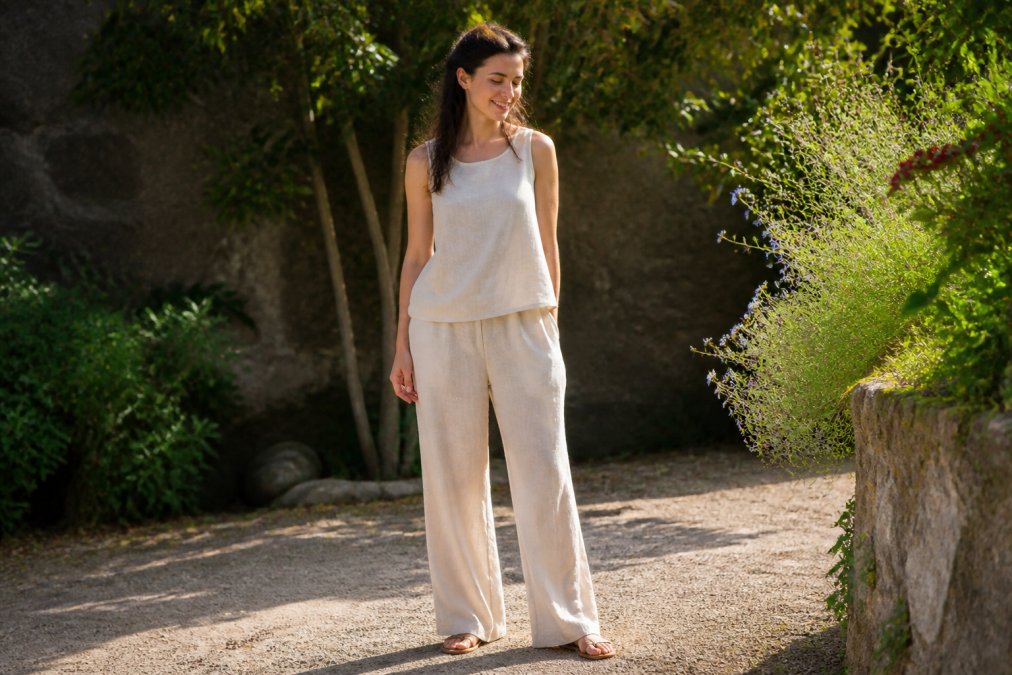
Moisture-wicking, how quickly fabric pulls sweat away from your skin, is where linen really separates itself. Linen absorbs moisture rapidly and releases it just as fast, keeping you feeling dry even when you're perspiring. Cotton absorbs moisture well but holds it longer against your skin, which can feel clammy in high humidity.
For anyone managing heat sensitivity or menopause symptoms, this difference is significant. Natural fibres like linen offer relief from the Australian heat because they don't cling or trap warmth the way synthetic blends do. Polyester and poly blends exacerbate heat retention, leaving you feeling overwhelmed.
The practical upshot: on a 35-degree day, linen feels noticeably cooler than cotton. You'll sweat less visibly, and the fabric won't stick to your body. This is why linen has been the fabric of choice in Mediterranean and tropical climates for centuries.
Linen's hollow fibre structure makes it ideal for high-humidity climates. If you're building a summer capsule for Australian heat, prioritise linen pieces for your core basics, trousers, dresses, and lightweight tops.
The Wrinkle Factor: Linen vs Cotton in Capsule Wear
This is where linen and cotton diverge most visibly. Linen wrinkles easily and deeply. Wear a linen shirt for an hour and it will show creases. This isn't a flaw, it's how the fabric behaves. Many people embrace this as part of linen's aesthetic: the wrinkles add texture and character.
Cotton resists wrinkles far better. A quality cotton piece can come out of the wash relatively smooth, and it holds its shape through the day. If you're building a capsule wardrobe for professional settings or occasions where polish matters, cotton's low-wrinkle nature is an advantage.
The decision here is personal. If you're willing to accept, even celebrate, the lived-in look that linen develops, you gain a fabric that requires minimal ironing and looks better the more you wear it. If you prefer a crisp, structured appearance, cotton demands more effort but delivers consistency.
For travel, linen's wrinkles are actually an asset. They pack smaller, and the creases that emerge during travel blend naturally into the fabric's character. Cotton pieces take up more space in a suitcase and show travel creases as flaws rather than features.
The Spotted Quoll's Boss Pant Organic Linen in Chocolate is engineered with a balloon-leg cut that works beautifully with linen's natural movement and texture. The mid-weight 180gsm organic linen improves with washing and wear, the more you care for it, the better it becomes.

How to Care for Linen Garments vs Cotton
Linen and cotton require different approaches to washing and storage, and understanding these differences extends the life of your capsule pieces significantly.
Linen care is surprisingly straightforward. Wash in cool water and avoid harsh detergents that break down the fibres. Linen actually improves with washing, the fabric softens and becomes more absorbent over time. Air-dry when possible; the sun naturally brightens linen without damage. If you iron, do it while the fabric is still damp. Many people skip ironing entirely and let the wrinkles sit as part of the aesthetic.
Cotton care demands more attention to maintain its appearance. Wash in warm water with a quality detergent. Cotton can handle higher temperatures than linen, but excessive heat weakens fibres over time. To prevent shrinkage, air-dry whenever possible. If you machine-dry, use low heat. Iron on medium heat to avoid scorching.
Boss Pant Organic Linen - Chocolate →
The sustainability angle matters here. Linen requires less water to produce than cotton and biodegrades fully. Cotton uses significantly more water during cultivation but is equally biodegradable. If environmental impact influences your capsule choices, linen edges ahead, particularly organic linen, which avoids synthetic pesticides.
For a minimalist wardrobe, linen's low-maintenance nature is a genuine advantage. You're building pieces you'll wear for years, and linen actually improves with age.
Sustainable Summer Capsule Wardrobe Essentials
A sustainable summer capsule starts with choosing natural fibres and investing in pieces designed to last multiple seasons. The goal isn't quantity, it's quality garments that work together and age beautifully.
Minimalist Wardrobe Essentials for Women: Linen and Cotton Staples
A minimalist wardrobe for women centres on versatile basics that work across seasons and occasions. For summer, this means pieces in neutral tones that layer easily and transition from day to evening.
Core linen staples:
- Wide-leg or tapered linen trousers in neutral (cream, black, or khaki)
- Lightweight linen shirt or blouse
- Linen slip dress for layering or solo wear
- Linen blazer for structure and coverage
Core cotton staples:
- Classic cotton t-shirt or tank in white or neutral
- Structured cotton shirt for professional settings
- Cotton denim for durability and versatility
- Cotton slip or camisole for layering
Which Fabric Should You Choose? A Decision Framework
The choice in linen vs cotton for summer capsule wardrobes depends on three factors: your climate, your lifestyle, and your aesthetic preferences.
Choose linen if:
- You live in or regularly visit high-heat, high-humidity environments
- You travel frequently and want pieces that pack small
- You prefer minimal maintenance and don't mind wrinkles
- You value pieces that improve with age and wear
- You're building a sustainable wardrobe and want lower water-use fabrics
- You experience heat sensitivity or menopause symptoms
Choose cotton if:
- You prefer a polished, structured appearance
- You're willing to iron regularly for a crisp look
- You need pieces that hold their shape consistently
- You work in professional settings where wrinkles read as careless
- You want lower upfront costs
- You prefer fabrics that feel familiar and predictable
Choose both if:
- You're building a complete capsule wardrobe
- You want versatility across different occasions and seasons
- You can commit to learning care routines for each fabric
Conclusion
Building a summer capsule wardrobe is about choosing fabrics and pieces that align with how you actually live. Linen and cotton each bring distinct advantages: linen's superior breathability and low-maintenance nature make it ideal for heat, while cotton's wrinkle resistance and structure serve professional and polished occasions.
Frequently Asked Questions
Is linen or cotton better for hot, humid weather?
Linen outperforms cotton in hot, humid conditions. Linen's hollow fibre structure allows air to circulate more freely, wicking moisture away from skin faster than cotton. Linen absorbs up to 20% of its weight in moisture without feeling damp, making it ideal for summer heat. This is why natural fibres like linen offer relief from heat retention that synthetic fabrics exacerbate.
Does linen wrinkle more than cotton in a capsule wardrobe?
Yes, linen wrinkles more readily than cotton, but this is often considered part of its charm in minimalist fashion. Linen's creasing is less permanent than it appears; wrinkles often relax naturally when hung or worn. If you prefer a crisper look, a light press with a damp cloth works well. For capsule wardrobes, embracing linen's relaxed texture reduces styling effort and maintenance time.
How do I care for linen garments to ensure longevity?
Wash linen in cool water on a gentle cycle, then air-dry to preserve fibre integrity. Avoid high heat, which weakens linen over time. The more you wash and wear quality linen, the softer and more beautiful it becomes. Store in a breathable space away from direct sunlight. Organic linen pieces, like those made from 190gsm pure linen, improve with age and washing, making them excellent investment pieces for a capsule wardrobe.
Which fabric is more sustainable for long-term capsule wear?
Linen is generally more sustainable when made from organic sources. It requires less water and pesticides than conventional cotton and biodegrades fully. Both fabrics are natural and compostable, but organic linen's durability means fewer replacements over time. Choose garments made from certified organic fibres and ethical production to maximise sustainability. Pieces designed to last seasons, like structured linen trousers, reduce waste more effectively than fast-fashion alternatives.