


Table of Contents
- The Real Cost of Handmade Homewares: What You're Actually Paying For
- Benefits of Buying Handmade Furniture and Homewares
- Why Shop Small for Home Goods: The Case for Local Makers
- Sustainable Home Decor Trends and the Slow Living Shift
- How to Identify Quality Craftsmanship in Handmade Homewares
- Care and Maintenance: Protecting Your Investment Long-Term
- Conclusion: Making the Investment Decision
- Frequently Asked Questions
Last Updated: September 29, 2026
The Real Cost of Handmade Homewares: What You're Actually Paying For
Handmade homewares are decorative and functional objects made by individual artisans rather than factories, and whether they are worth the investment depends on how you calculate value over time. A mass-produced vase might cost a fraction of a hand-thrown one, but the handmade piece is built to outlast it. Pieces made slowly, by hand, in small batches tend to stay in people's homes far longer than anything bought on impulse.
Labour, Materials and the Premium Pricing Equation
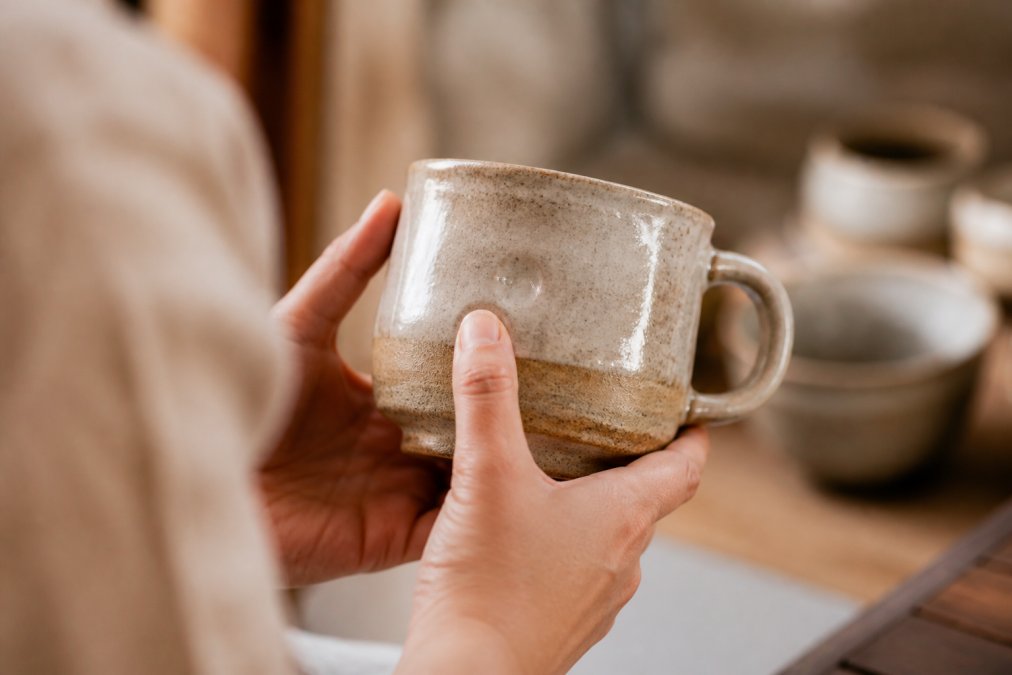
A handmade mug priced at $49 isn't expensive because it's trendy. It's expensive because someone shaped it by hand, fired it, and finished it individually. Our Ceramic Mugs from The Little Mud Room sit in that category: each one is uniquely crafted by local maker Emma Targett at Studio Seven, with rugged, earthy marks that no machine can reproduce.

Benefits of Buying Handmade Furniture and Homewares
The benefits of buying handmade furniture and homewares come down to three things: longevity, material quality, and character. But the argument only holds up if you can put numbers against it, the stronger case is arithmetic.
The Cost-Per-Use Calculation Nobody Runs
A mass-produced vase at $15 that you replace every two years costs roughly $7.50 a year to own. A hand-thrown vase at $120 that stays in your home for twenty years costs roughly $6 a year. Over the same twenty-year window, the cheap option costs about $150 in total and the handmade option costs $120, and you only ever owned one object.
Durability and Longevity: Why Handmade Pieces Outlast Mass-Produced Goods
Durability in handmade homewares usually comes down to material sourcing and construction method. Artisans working in small-batch production tend to choose materials for how they age, not just how cheaply they can be bought. A piece designed to be an heirloom is built to be handled, washed, and used for decades.
Resale and Retained Value
Handmade homewares are not a financial asset in the way shares or property are. But they retain value in a way mass-produced decor does not: a discontinued mass-produced range becomes worthless the moment it leaves the shelf, while a signed piece from a working studio can be resold, gifted, or passed on, because the maker's name and provenance travel with the object.
Why Shop Small for Home Goods: The Case for Local Makers
Shopping small for home goods keeps money in local economies and gives you direct access to the person who made your piece. When you buy from a small studio, you can usually trace the maker, the material, and the process without guesswork.
Sustainable Home Decor Trends and the Slow Living Shift
Sustainable home decor trends point in one direction: fewer, better things. Driven by buyers tired of replacing cheap decor every year, this slow living shift is reshaping how people furnish their homes.
The Psychology of Intentional Living and Conscious Consumerism
The psychology is straightforward: people feel better about objects they've chosen deliberately, and they keep them longer. Conscious consumerism isn't deprivation; it's directing spending toward things that hold meaning and value.
How to Identify Quality Craftsmanship in Handmade Homewares
Quality craftsmanship in handmade homewares is identifiable by consistent form, honest materials, and visible evidence of the maker's hand. You don't need to be an expert, just know what to look for.
Start with these checks:
- Weight and balance: A well-made piece feels solid and sits level.
- Surface consistency: Glaze should be even, with intentional variation rather than flaws.
- Material honesty: The maker should be able to tell you exactly what it's made from.
- Finish quality: Edges should be smooth, joints tight, seams clean.
- Maker transparency: A named artisan and studio is a good sign.
Care and Maintenance: Protecting Your Investment Long-Term
Caring for handmade homewares is simpler than most people expect, and it protects the investment. The point of maintenance is cost-per-use: a piece that lasts twenty years at $120 costs roughly $6 a year, while a $15 piece replaced every two years costs about $7.50 a year. Maintenance is the mechanism that keeps the first number low.
Ceramic Vases - The Little Mud Room →
Here is what care actually involves, by material.
Ceramics and Pottery
Hand-thrown ceramics are fired to a durable temperature, but glaze and clay body respond differently to heat. Two rules matter most: avoid sudden temperature changes, and hand wash where practical.
- Thermal shock is the main killer. Pouring boiling water into a cold mug, or moving a dish straight from the fridge to a hot oven, can crack the glaze or the body. Let the piece come to room temperature first.
- Hand washing preserves the glaze surface. Dishwashers use high heat and harsh detergents that dull matte glazes over time. If a piece is dishwasher-safe, the maker will usually say so explicitly.
- Stacking is where most chips happen. Store pieces with a felt pad or a cloth between them, or display them rather than stacking.
- Crazing, the fine network of cracks in a glaze, is not always a fault. On some handmade pieces it is intentional.
Textiles: Linen, Wool and Natural Fibres
Natural-fibre textiles need care that follows the fibre, not a generic label.
- Linen softens with every wash. Cold or lukewarm water, a gentle detergent, and line drying in shade will keep it for decades. Hot water and tumble drying break the fibres down.
- Wool should be washed rarely and aired often. When it does need washing, use a wool-specific detergent and cool water, and dry flat to avoid stretching.
- Cotton is the most forgiving but still benefits from cool washes and shade drying to prevent fading.
- Sunlight is the quiet destroyer of all natural textiles. Rotate cushions, throws and wall hangings so no single panel takes years of direct UV.
Timber and Furniture
Timber is a living material even after it is cut, and it moves with humidity. A handmade timber piece will expand and contract slightly across the year. That is normal.
- Re-oil or re-wax every six to twelve months, depending on use. A dining table used daily needs it more often than a side table.
- Keep it away from direct heat and out of prolonged direct sun, which dries the timber unevenly and can cause checking.
- Wipe spills promptly. Water rings are easier to prevent than to remove.
- Tighten joints once a year. A small turn of a screw or a tap on a wooden joint is far cheaper than a repair.
The Repair Pathway
One of the strongest arguments for handmade is that it can be repaired. Before you need it, know the pathway:
- Ask the maker at the point of purchase whether they offer repairs, re-glazing or refinishing.
- Keep the maker's details with the piece, a card inside a drawer is enough.
- For ceramics, a food-safe glaze repair is a specialist job. For decorative pieces, a chip can often be filled and refinished.
- For textiles, a visible mend is not a failure. It is part of the object's history and, in many handmade traditions, part of its value.
A Simple Maintenance Schedule
| Care Task | Frequency | Why It Matters |
|---|---|---|
| Hand wash ceramics | After each use | Prevents glaze wear and dulling |
| Check joints and seams | Every few months | Catches small repairs before they become big ones |
| Rotate display pieces | Seasonally | Reduces UV and dust damage |
| Store with padding | Always | Prevents chips and cracks |
| Re-oil or re-wax timber | Every 6-12 months | Prevents drying, checking and water damage |
| Air wool, wash rarely | As needed | Preserves fibre structure |
| Review maker's care notes | Annually | Keeps you aligned with the specific piece |
That table is the whole argument in miniature: small, regular care turns a purchase into an investment piece. The buyer who maintains a handmade object isn't just preserving it, they're lowering its cost-per-use every year they keep it.
Conclusion: Making the Investment Decision
The honest answer to whether handmade homewares are worth the investment is: it depends on how long you plan to keep them. If you want decor you'll replace next season, buy cheap. If you want pieces that earn their place for years, handmade wins on durability and meaning.
Frequently Asked Questions
Are handmade homewares more durable than mass-produced items?
Handmade homewares often last longer because makers use quality materials and inspect each piece individually. A handmade ceramic mug fired at high temperatures resists chipping better than factory-produced alternatives. Mass-produced items prioritise speed over material integrity, so glazes thin and seams weaken faster. The labour-intensive process behind artisan-made goods means flaws get caught before the piece reaches you, not after three months of daily use.
How can you tell if a homeware item is truly handmade?
Look for slight variations between pieces. Genuine handmade homewares carry small marks of the maker's hand: uneven glaze pools, thumb indentations, or slight differences in shape. Ask about the maker and their studio. If a retailer cannot name who made the piece or where it was produced, it is likely mass-produced. Material sourcing transparency and visible imperfections are strong signals of authentic craftsmanship.
What are the long-term benefits of buying handmade homewares?
The long-term benefits include better cost-per-use, since a durable piece replaces multiple cheap alternatives over the same period. Handmade items also hold resale value and often become heirloom quality pieces passed between generations. You support small-batch production and heritage techniques that keep artisan skills alive. Each purchase contributes to ethical consumption rather than disposable culture.
Why is there a price difference between artisanal and mass-produced goods?
Artisan-made goods cost more because one person shapes, finishes and inspects each piece rather than a production line churning out thousands per hour. Premium pricing reflects labour-intensive work, material sourcing from smaller suppliers and the skill built over years. Mass-produced items spread costs across enormous volumes. A handmade ceramic vase at $48 reflects the maker's time, kiln costs and the unique character no factory can replicate.