Table of Contents
- What Makes Sustainable Home Decor Worth Buying Online
- Ethical Homewares Australia: What to Look For
- Benefits of Natural Fibres in Homewares
-
Top Sustainable Home Decor Pieces to Shop Online in Australia
- 1. Organic Linen/Hemp Cushion - Seed Pods ($59)
- 2. Hollybank Forest Printed Linen Cushion ($69)
- 3. Printed Canvas Cushion - Aerial Bay of Fires ($99)
- 4. Cradle Mountain Tasmania Cushion ($99)
- 5. Oyster Catchers East Coast Cushion ($99)
- 6. Organic Wool Felt Throw ($199)
- 7. Handmade Ceramic Mugs - The Little Mud Room ($49)
- 8. Handmade Ceramic Vases - The Little Mud Room ($48)
- 9. Ceramic Oyster Plate - The Little Mud Room ($79.95)
- 10. Blue Gum Aromatic Room & Linen Spray ($39)
- How to Style a Sustainable Home Without Starting From Scratch
- Caring for Natural and Organic Homewares So They Last
- Sustainable Home Decor as a Gift Idea
- Conclusion
Last Updated: August 28, 2026
Conscious consumerism is reshaping how people furnish their homes. Customers now ask "who made it, from what, and at what cost to the planet?" This guide to sustainable home decor helps you shop online with confidence, covering everything from spotting greenwashing to caring for natural materials so they last for decades.
What Makes Sustainable Home Decor Worth Buying Online
Sustainable home decor is homewares made with materials, manufacturing processes, and supply chains that minimise environmental harm and support fair labour practices. Three qualities separate truly sustainable homewares from the rest: material integrity, production transparency, and longevity. A piece made from organic linen that lasts 20 years has a far lower environmental footprint than a cheap synthetic alternative replaced every two seasons.
According to the Australian Competition and Consumer Commission's guidance on environmental claims, businesses making sustainability claims must substantiate them. If a brand can't explain how their product is made, that silence is informative.
How to Spot Greenwashing Before You Buy
Greenwashing uses vague environmental language to imply sustainability credentials that don't exist. Watch for these red flags:
- Vague language without evidence: "eco-friendly," "natural," or "green" with no certification or explanation
- Single-attribute claims: marketing one sustainable feature while ignoring harmful practices elsewhere
- No transparency about manufacturing: brands that won't say where or how products are made
- Disposable design disguised as sustainable: low-cost items marketed with sustainability language but built to be replaced
Before you buy, ask: Is the fabric certified organic? Is production zero-waste or sweatshop-free? Can the brand name their factory? Brands with genuine credentials welcome these questions.
Lifecycle Thinking: Buying Less, Choosing Better
The most sustainable purchase is often the one you don't make. Lifecycle thinking means asking: where does this product come from, how long will it last, and where does it go at the end of its life? A handmade ceramic mug fired from local clay, used daily for 15 years, then returned to earth, has a vastly different impact profile than a mass-produced synthetic alternative discarded after a year.
Prioritise pieces that are repairable, biodegradable, or recyclable. Natural fibres like linen, hemp, and wool decompose at end of life.
Ethical Homewares Australia: What to Look For
Ethical homewares are products made under conditions that respect both workers and the environment throughout the entire supply chain. The Ethical Clothing Australia accreditation program provides one of the most rigorous local frameworks for verifying ethical production.
What to look for when shopping ethical homewares:
- Transparent supply chain: the brand can name where and how products are made
- Fair labour practices: no outsourcing to unverified overseas factories
- Small-batch or made-to-order production: reduces overproduction and waste
- Locally made or responsibly imported: shorter supply chains generally mean lower emissions
Australian-Made vs Imported: Why Provenance Matters
Products made locally travel shorter distances, reducing transport emissions, and support local employment. However, "Australian-made" is not automatically synonymous with sustainable. Provenance is one important factor, not the whole picture.
Benefits of Natural Fibres in Homewares
Natural fibres outperform synthetics in almost every dimension that matters for long-term home styling. Linen, hemp, wool, and organic cotton are breathable, durable, and biodegradable. They age beautifully rather than degrading, developing character over time.
Linen is particularly compelling. It's derived from the flax plant, requires significantly less water than conventional cotton, and becomes softer with each wash without losing structural integrity. Hemp grows quickly, improves soil health, and produces a fibre with natural antimicrobial properties. Organic wool is one of the most circular materials available, renewable, biodegradable, and an exceptional insulator.
Non-toxic materials matter for home wellness too. Synthetic textiles often contain chemical finishes, dyes, and flame retardants that off-gas into living spaces. Natural fibres, particularly those with organic certification, avoid these additives.
Fibre |
Key Benefit |
End of Life |
Best Used For |
|---|---|---|---|
Organic linen |
Durable, softens with age |
Biodegradable |
Cushions, throws, table linen |
Hemp |
Low water use, antimicrobial |
Biodegradable |
Cushions, upholstery fabric |
Organic wool |
Renewable, insulating |
Biodegradable |
Throws, rugs |
Organic cotton |
Soft, breathable |
Biodegradable |
Bedding, cushion covers |
Recycled materials |
Diverts landfill waste |
Varies |
Rugs, decorative pieces |
Top Sustainable Home Decor Pieces to Shop Online in Australia
The pieces below represent some of the most considered sustainable home decor available to buy online. Each is made from natural or organic materials, produced under ethical conditions, and designed to last.
Quick Picks:
- Most Sold Cushion: Cool Climate Lichen Print ($99)
- Best for nature-inspired art: Printed Canvas Cushion - Aerial Bay of Fires ($99)
- Best investment textile: Merino Wool Throws (from $299)
- Best handmade gift: Ceramic Mugs Locally Made ($49)
1. Removable Wall Art ($39)
Created for renters, waiting rooms, the office or those adventuring in van, wall spots are fully removable! They are price effective art, do no mark walls and come in an array of nature inspired spots. Available in two sizes 30cm and 60cm all you need to do is mix and match. Just because you rent doesn’t mean you like staring at beige walls.
Best for: For those that have a small budget but don’t want beige walls
2. Organic Linen Table Ware ($79)
There is nothing that brings delight like heirloom quality linen table ware that get better with age. If you love a beautifully set table choose a table cloth, table runner or matching napkins in our nature inspired prints. They make perfect gifts for a house warming and each print is limited edition and timeless.
Best for: Nature enthusiasts who want a piece that tells a makers story.
Shop the Printed Linen Table Ware
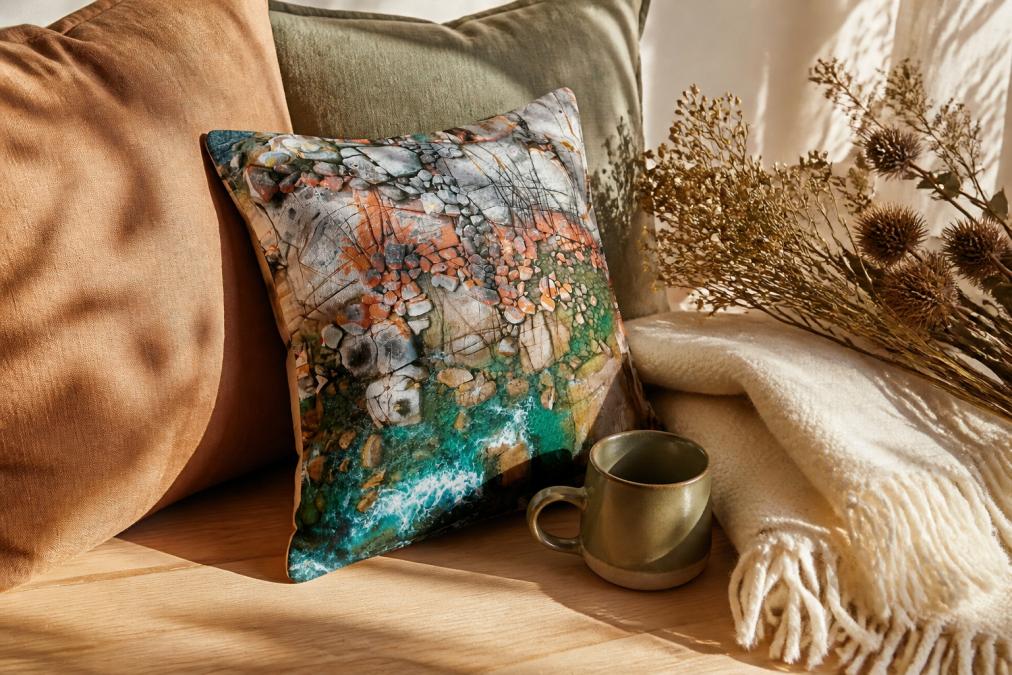
3. Printed Canvas Cushion - Aerial Bay of Fires ($99)
This cushion captures the Bay of Fires with fidelity that makes it feel like a window rather than a print. The heavy cotton canvas front has genuine tactile weight; the French seam finish is a detail usually reserved for garments. Designed and made in Tasmania.
Best for: Coastal interiors and anyone building a curated sanctuary with a sense of place.
Shop the Aerial Bay of Fires Cushion

4. Cradle Mountain Tasmania Cushion ($99)
The Cradle Mountain design translates the jagged alpine landscape into an earthy, distinctive print that works equally well in a contemporary apartment or a timber-lined weekender. This piece is designed to mix and match with other cushions, creating a cohesive collection. custom glassware.
Best for: Those building a nature-inspired interior across multiple pieces.
Shop the Cradle Mountain Tasmania Cushion

5. Oyster Catchers East Coast Cushion ($99)
Oyster catchers and seagulls captured at Beer Barrel Beach on the East Coast of Tasmania, printed onto natural canvas with an invisible zipper for easy removal and washing. A washable cushion cover extends the usable life of the piece significantly. Designed and made in Tasmania.
Best for: Coastal styling and sustainable gift ideas for people who love the Tasmanian coast.
Shop the Oyster Catchers East Coast Cushion

6. Organic Wool Felt Cushions ($99)
Made from 100% organic wool felt in The Spotted Quoll's Launceston factory, choose a colour from our range of textured natural wool with brand's signature blanket stitch. This range is inspired by the rugged terrain of Cradle Mountain. They come flat pack or choose a quality Australian made down insert.
Care instructions: dry clean only, or spot clean with a damp cloth. This preserves the structure of the weave.
Best for: Anyone who wants a genuine heirloom-quality textile that will be in use 20 years from now.
Shop the Organic Wool Felt Cushions
7. Tas Oak Coasters - The Spotted Quoll Studio ($54)
When you need a functional easy to post gift and at a good price point you will find it hard to go past The Spotted Quoll Studio’s Tas Oak Coaster 6 Pack. Made in Tasmania from quality Tasmanian Oak and presented in sustainable packaging.
Best for: Daily use and as a sustainable gift for anyone who takes their morning coffee seriously and don’t need mark on the furniture.
8. Handmade Tasmanian Timber Boards - The Little Chopper Chopping Boards from ($39)
Each board is hand crafted in Launceston, Tasmania using specialty timbers like Huon Pine, Blackwood, Myrtle and Tasmanian Oak. Choose from serving boards to carving boards in every size you can imagine.
Best for: Those that like to cook and entertain with quality timbers
Shop handcrafted serving boards
9. Tas Oak Placemat Sets - The Spotted Quoll Studio ($199)
The perfect homewares gift is both functional and beautiful. Practical homewares that are also beautiful objects are the cornerstone of a well-curated sustainable home. The Spotted Quoll Studio’s Placemat and coaster sets are made from quality Tasmanian Oak and are something you will use everyday, not collect dust. Even the sustainable packaging is made in Tasmania.
Best for: People who entertain and want homewares that are both functional and genuinely artisan-made.
10. Blue Gum Aromatic Room & Linen Spray ($39)
This Blue Gum spray uses natural oils sourced from the Tasman Peninsula, diluted with pure rainwater. It functions as a room spray, linen spray, and can be applied directly to skin as a hydrating mist.
Best for: Anyone building a non-toxic home environment, or looking for a sustainable gift that feels genuinely special.
Shop the Blue Gum Aromatic Room & Linen Spray
How to Style a Sustainable Home Without Starting From Scratch
The biggest mistake people make with sustainable home styling is treating it as an all-or-nothing project. The most effective approach is additive: introduce one quality piece at a time and build gradually.
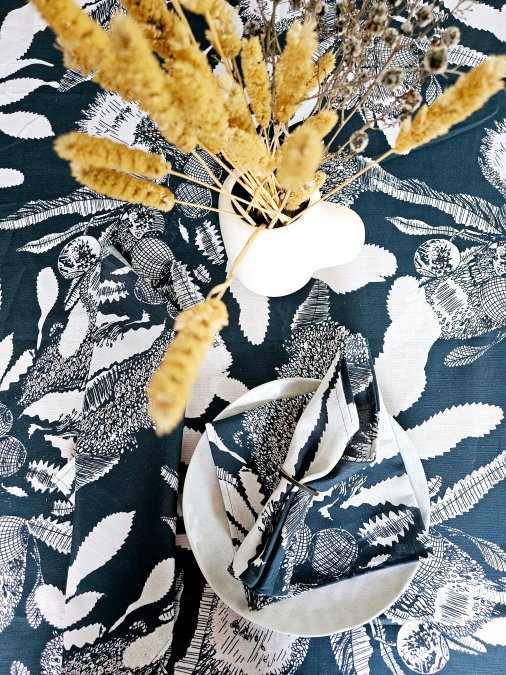
Start with textiles. Cushions and throws have the highest visual impact per dollar spent and are the easiest things to swap without disrupting existing furniture. A single quality linen cushion on a plain sofa changes the entire character of a room. From there, introduce handmade ceramics to shelves and surfaces. Fewer, better objects create more visual calm than a room full of decorative noise.
Budget-Friendly Sustainable Styling Tips
- Start with one hero piece: a quality throw or a pair of linen cushions anchors a room more effectively than a dozen smaller items
- Shop flat-pack: cushion covers without inserts cost less and let you source inserts locally
- Prioritise longevity over trend: a classic natural linen print will still look considered in ten years
- Mix price points deliberately: a $48 handmade ceramic vase alongside existing furniture reads as curated, not expensive
- Use dried botanicals: native grasses and eucalyptus in a handmade vase cost almost nothing and last months
The goal is a home that reflects genuine values, not a home that signals spending.
Caring for Natural and Organic Homewares So They Last
Natural materials reward proper care with decades of use.
Linen and hemp cushion covers: machine wash on a gentle, cool cycle (30°C maximum). Do not tumble dry; reshape while damp and dry flat or on a line.
Organic wool felt throws: dry clean only, or spot clean with a cool, damp cloth and wool wash. Never machine wash; wool felt will shrink and lose its structure.
Handmade ceramics: dishwasher-safe in most cases, but hand washing extends the life of the glaze. Avoid sudden temperature changes.
Natural oil sprays: store in a cool, dark place away from direct sunlight.
A common mistake is over-washing natural textiles. Linen cushion covers rarely need washing more than a few times per year unless in heavy daily use.
Sustainable Home Decor as a Gift Idea
Handmade, locally produced homewares are among the most considered sustainable gift ideas available. They carry a story, support a maker, and last for years rather than months.
The pieces in this guide cover a wide price range. The Blue Gum Aromatic Room & Linen Spray at $39 is an ideal entry-level gift. The Tas Oak Coasters at $54 work for almost anyone. For a more significant gift, the Merino Wool Felt Throw at $299 is the kind of piece that gets used every winter for a generations.
What makes a sustainable gift genuinely meaningful is the combination of quality, provenance, and purpose. A piece made by a named maker, from a specific place, from materials you can trace, is a fundamentally different object from a generic "eco" product with vague credentials.
According to the Australian Made Campaign's guide to buying Australian-made products, products certified as Australian-made support local jobs and contribute to the domestic economy.
Product |
Price |
Material |
Best For |
|---|---|---|---|
$39 |
PVC FREE Fabric Spot |
Renters -nature inspired art piece |
|
$79 |
Linen/Hemp |
Entertainers |
|
Aerial Bay of Fires Canvas Cushion |
$99 |
Heavy cotton canvas |
Coastal interiors |
$99 |
Natural canvas |
Bringing the outdoors in |
|
Oyster Catchers East Coast Cushion |
$99 |
Natural canvas |
Sea lover |
$99 |
100% Organic wool |
Heirloom-quality investment |
|
$54 |
Tas Oak |
Daily use and gifting |
|
$39 |
Specialty Timbers |
The cook & entertainer |
|
$199 |
Tas Oak |
Functional artisan piece |
|
$39 |
Pure Tasmanian oils |
Non-toxic home wellness |
Frequently Asked Questions
Q: What should I look for when buying sustainable home decor online?
A: Check that the brand discloses where and how products are made. Genuine sustainable home decor will name the materials — organic linen, hemp, wool — and confirm ethical production conditions. Certifications help, but transparent sourcing statements and locally made credentials are equally telling. Avoid vague claims like 'eco-friendly' with no supporting detail, as these are common signs of greenwashing.
Q: Are there Australian-made alternatives for eco-friendly homewares?
A: Yes. A small number of studios still design and produce homewares entirely within Australia. The Spotted Quoll, based in Tasmania, makes cushions, throws, and ceramics locally using natural fibres including organic linen, hemp, and wool. Buying Australian-made reduces the carbon footprint of shipping, supports local makers, and gives you direct accountability over the supply chain — something imported 'eco' ranges rarely offer.
Q: What are the benefits of choosing natural fibres for home textiles?
A: Natural fibres — linen, hemp, organic cotton, and wool — are biodegradable, breathable, and far more durable than synthetic alternatives. Linen and hemp soften with each wash rather than pilling or shedding microplastics. Wool regulates temperature naturally, reducing the need for heating. Organic versions are grown without synthetic pesticides, which protects soil health and waterways. Over a product's full lifecycle, natural fibre homewares typically outlast synthetics and generate significantly less landfill waste.
Q: How can I identify greenwashing in home decor brands?
A: Look past surface-level language. Phrases like 'conscious collection' or 'planet-friendly' mean nothing without specifics. Ask: What are the materials? Where are they sourced? Who made this, and under what conditions? Credible brands name their fabrics, their factory locations, and their waste practices. If a brand cannot answer those questions clearly, treat the sustainability claims with scepticism.
Q: How do I care for natural fibre homewares to make them last longer?
A: Linen and hemp cushion covers can be machine washed on a gentle, cold cycle and line dried to preserve the fibres and print quality. Organic wool throws are best spot-cleaned with a damp cloth or dry-cleaned to maintain their structure — avoid machine washing, which can cause felting. Ceramic pieces should be hand washed where possible to protect their surface textures. Proper care extends the life of each piece significantly, reducing the need for replacement and keeping items out of landfill.
This article was written using GrandRanker