


Table of Contents
- What Actually Makes a Fashion Brand Sustainable
- A Quick Comparison: How to Read a Sustainability Claim
- How to Spot Greenwashing in Fashion Without a Chemistry Degree
- Ethical Fashion Certifications Australia Shoppers Can Actually Check
- What a Sustainable Capsule Wardrobe Essential Looks Like in Practice
- The Questions to Ask Before You Buy Anything
- Frequently Asked Questions
Last Updated: September 26, 2026
What Actually Makes a Fashion Brand Sustainable
A brand is actually sustainable when it can prove where its materials come from, who made the garment, and how it will hold up over years rather than weeks. Claims alone are not evidence. Documentation is.
That distinction matters: the Australian Competition and Consumer Commission has been reviewing environmental claims across sectors, and businesses that cannot substantiate green marketing risk penalties under Australian Consumer Law. At The Spotted Quoll, we make our proof visible: garments designed and made in Tasmania from natural fibres like organic linen, hemp and organic cotton, sold under a simple motto, buy well, buy once.

"Sustainable" has no single legal definition in fashion, a brand can print it on a swing tag without changing how the garment was made. The real question is not which brands use the word, but which ones can show their working.
Below: how to read a sustainability claim, spot greenwashing without a chemistry degree, check certifications, and work out what a garment truly costs per wear.
A Quick Comparison: How to Read a Sustainability Claim
Not all claims carry the same weight. The difference comes down to whether a claim names a specific fibre, facility, standard or number, or leans on an adjective.
| Claim type | What it actually tells you | Evidence to ask for |
|---|---|---|
| "Made in Australia" | Where final production happened | Factory name and location |
| "Ethical production" | Broad, self-declared | Code of conduct, audit reports |
| "Organic cotton" | Fibre grown without synthetic pesticides | Certification number and body |
| "Natural fibres" | Material type, not farming method | Fibre composition on the label |
| "Sustainably sourced" | Vague by design | Traceability to farm or supplier |
| "Recycled" | Feedstock origin, not labour or energy | Percentage of recycled content and the standard behind it |
| "Carbon neutral" | Often offsets, not reductions | Which emissions were measured, and what was offset versus cut |
The pattern: claims naming a specific process or place are usually verifiable; claims built on adjectives are not.

A Practical Toolkit for Verifying a Claim
Most shoppers stop at the swing tag. Verification happens in four places, each taking under a minute.
1. Read the fibre composition, not the marketing name. "Eco-blend" or "conscious cotton" tells you nothing until you find the percentage breakdown. Look for a specific fibre, organic cotton, hemp, linen, TENCEL lyocell, recycled wool, and a percentage. "60% organic cotton, 40% recycled polyester" is checkable. "Sustainable blend" is not.
**2.
What Good Evidence Looks Like
Strong evidence shares three features: it is specific (a named fibre, facility or standard), current (certifications expire and are renewed), and proportionate, a claim about a single garment should be backed by evidence about that garment, not the company's office recycling program.
How to Spot Greenwashing in Fashion Without a Chemistry Degree
Greenwashing in fashion is any marketing that makes a brand look more environmentally responsible than its actual practices support. You do not need a science background to catch it. You need to notice what is missing.
The Five Questions That Expose a Weak Claim
- Which specific fibre is this garment made from, and is it certified?
- Where was it cut and sewn, and can the brand name the facility?
- Is there a certification logo, and does it have a traceable number?
- Does the brand publish anything about worker wages or conditions?
- Is there a repair, resale or take-back option once the garment wears out?
A brand answering three or more in detail is doing real work; one answering none is relying on the word "sustainable" to do the heavy lifting.
Organic Denim Peasant Dress - Staple →
A recycled fibre claim can still sit inside a garment made in a factory with no labour transparency. Recycling one component does not make the whole supply chain ethical, and treating it as though it does is exactly how greenwashing spreads.
Ethical Fashion Certifications Australia Shoppers Can Actually Check
Certifications are only useful if you verify them, a logo means nothing if the certificate number does not check out. The table below sets out what each common standard covers, what it does not, and how to verify it.
| Certification | What it covers | What it does not cover | How to verify |
|---|---|---|---|
| GOTS (Global Organic Textile Standard) | Organic fibre content and processing, from harvest through to finished textile, plus social criteria for processing facilities | Water use at the farming stage, and end-of-life disposal | Licence number on the certifier's public database |
| Fairtrade | Fair pricing and conditions for farmers and workers in the supply chain | Fibre type, chemical use, or garment durability | Transaction certificate or the Fairtrade licence number |
| B Corp | A company's overall social and environmental performance across its operations | Any single garment or product line | B Corp directory listing, which shows the certified entity and score |
| OEKO-TEX | Testing for harmful substances in textiles | Labour conditions, fibre origin, or environmental impact of production | Certificate number on the OEKO-TEX label check |
| Australian Made | Confirms the product was made here | Anything about sustainability, labour or materials | Australian Made licence number |
| Responsible Wool Standard | Animal welfare and land management on wool farms | Processing, dyeing or garment manufacturing | Certification body's public register |
| Global Recycled Standard | Recycled content and chain of custody for recycled materials | Labour conditions or the energy used in recycling | Certification body's public register |
The Verification Step Most Shoppers Skip
A certification logo is a claim; the certificate number is the evidence. When you see a logo, find the number and check it against the certifying body's public register. Two minutes filters out most vague or expired claims.
When There Is No Certification
Small labels often cannot afford formal certification, and a missing logo is not automatically a red flag. What matters is whether the brand substitutes traceability for certification. A studio that makes its own garments can name the facility because it is the facility; a brand publishing its supplier list, fibre sources and factory locations provides the same information a certification would confirm, just without the third-party stamp.
What a Sustainable Capsule Wardrobe Essential Looks Like in Practice
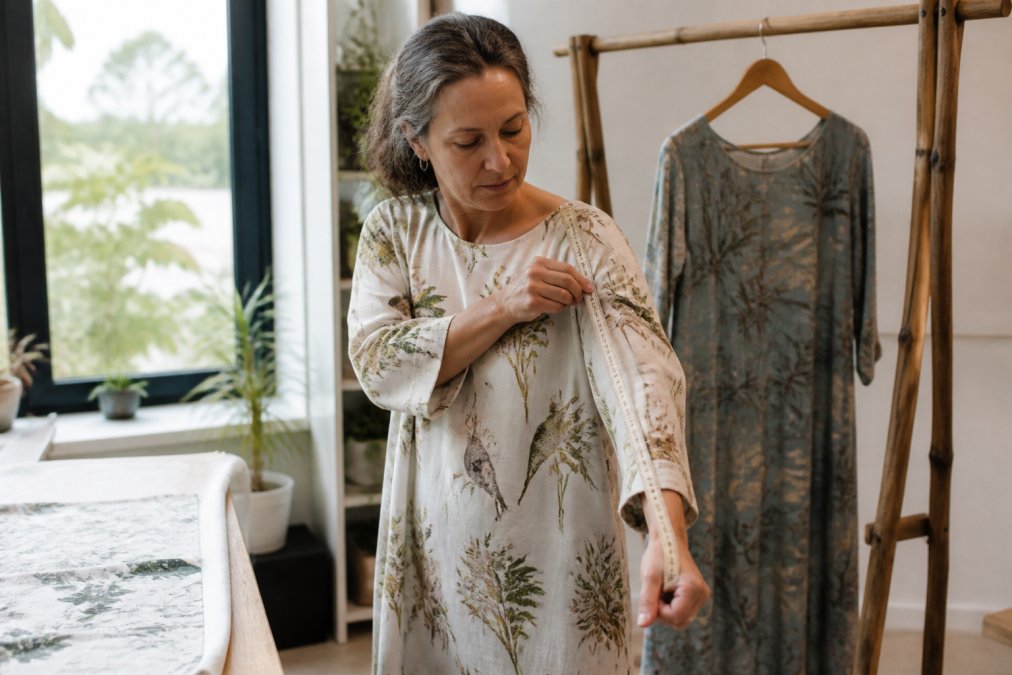
A sustainable capsule wardrobe essential is a garment you can wear across seasons, dress up or down, and still be wearing in five years. It earns its place by being worn often, not bought rarely.
Cost Per Wear: The Number That Settles the Price Argument
Divide the price by the number of times you wear it. That is your cost per wear.
The Questions to Ask Before You Buy Anything
Before you hand over a card, run the garment through a short checklist. Two minutes saves years of regret.
- Can I name the fibre and where it was made?
- Will this work with at least three things already in my wardrobe?
- Does the construction feel solid at the seams, hem and fastenings?
- Can I wash it easily without dry cleaning?
- Will I still want to wear this in three years?
- Is there a repair or resale path when I am done with it?
Frequently Asked Questions
Which fashion brand is considered the most sustainable?
There is no single winner. The brands that hold up best are the ones that publish specific, checkable facts: which fibres they use, where the garment is cut and sewn, and who made it. A brand that says 'made in Tasmania, sweatshop free' and names the fabric weight, such as 190gsm 100% organic linen, gives you something to verify. A brand that only says 'eco-friendly' gives you nothing. Judge the claim, not the logo.
How can I verify if a fashion brand is truly sustainable?
Start with the label inside the garment, not the website banner. Look for the fibre content, the country of manufacture and any certification number. Then check whether the brand's claim matches what you can see: if it says organic linen, the care label should confirm linen, not a polyester blend. If a brand cannot tell you which factory made the item, that silence is your answer. Traceability is the test that separates real claims from marketing.
What certifications should I look for in sustainable clothing?
Look for certification marks you can trace to a specific standard, such as certified organic fibre schemes or fair trade certification, and check the certificate number rather than trusting a badge image. In Australia, the Australian Consumer Law also applies: a business cannot make a misleading environmental claim about a product. If a brand claims a certification, ask for the certificate. A brand that has one will share it without hesitation.
Is it possible to find affordable sustainable fashion?
Affordable depends on how you count. A $199 dress worn 100 times costs about $2 per wear, while a $40 dress worn five times costs $8 per wear. Cost per wear is the number that matters, and it usually favours slower-made natural fibre pieces. Look for transeasonal cuts you can layer, such as a linen peasant dress that works with tights in winter and sandals in summer, so one garment covers more of your year.
How does the Australian Consumer Law protect against greenwashing?
The Australian Consumer Law prohibits businesses from making false or misleading representations about goods, including environmental claims. If a brand describes a product as sustainable, organic or ethically made and that claim is not accurate, it can breach the law. Regulators have taken action against vague or overstated environmental claims in recent years. If a claim feels unsupported, you can report it to the ACCC, which enforces these rules.