Table of Contents
- Start With the Label: How to Confirm a Garment Is Genuinely Australian Made
- Australian Made Logo Certification: What the Kangaroo Actually Certifies
- The Research Steps: How to Find Australian Made Clothing Brands in Practice
- Spotting Ethical Fashion Brands Australia Wide: Beyond the Country of Origin
- What Sustainable Women's Fashion Looks Like on a Care Label
- Where to Shop for Australian Made Clothing: Studios, Markets and Direct
- Conclusion
- Frequently Asked Questions
Last Updated: September 25, 2026
Start With the Label: How to Confirm a Garment Is Genuinely Australian Made
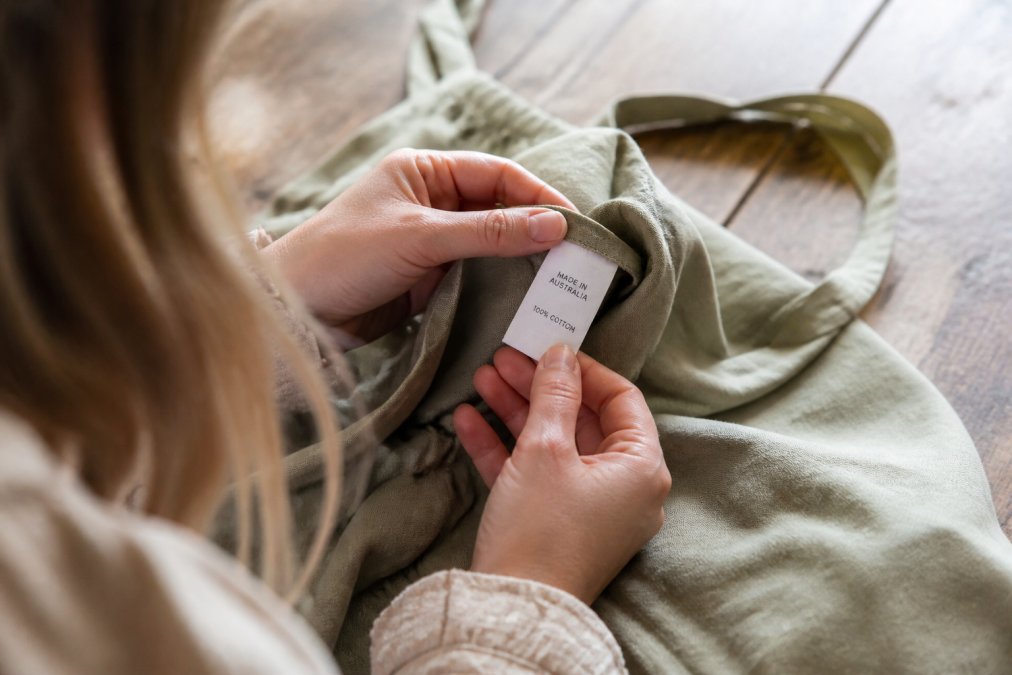
Learning how to find Australian made clothing brands starts with one habit: read the label before you fall in love with the print. Australian consumer law requires most clothing sold here to carry a country of origin label, and that small tag tells you more than any marketing claim on the swing tag.
This guide from The Spotted Quoll walks through exactly how to check a garment, what the Australian Made logo actually certifies, and where to shop once you know what you're looking for.
Here's the part most shoppers miss. "Designed in Australia" and "Made in Australia" are not the same claim, and only one of them means the garment was sewn here.
What 'Designed In' Really Means Versus 'Made In'
Designed in Australia means the concept, patterns and artwork were created here. The sewing can happen anywhere.
Made in Australia means the garment was substantially transformed in this country. Under Australian Consumer Law country of origin guidance, that usually means the fabric was cut and sewn locally.
So a dress can be "designed in Australia" and stitched overseas. Neither claim is illegal, but they mean different things. If local manufacturing matters to you, look for the words "Made in Australia" on the care label itself, not just the marketing copy.
Australian Made Logo Certification: What the Kangaroo Actually Certifies
The green and gold kangaroo is a licensed certification mark, not a decoration. Australian Made logo certification is administered by the not-for-profit Australian Made Campaign, and a business must apply and meet a threshold before it can print the logo.
That's the key difference. Anyone can type "Aussie owned" on a website. Only certified products carry the kangaroo.
The Two Thresholds: Australian Made and Australian Grown
The logo comes in two versions, and they set different bars:
- Australian Made: the product was substantially transformed in Australia, and the business meets the campaign's cost-of-production test
- Australian Grown: for produce and natural materials, the ingredients must be grown here
For clothing, the Australian Made mark is the one to look for. You can check any claim directly through the Australian Made Campaign's official product search before you spend a cent.
The Research Steps: How to Find Australian Made Clothing Brands in Practice
Finding genuine local makers takes about two minutes per brand once you know where to look. Here are the steps.
Check the Website, Then Check the Factory
Start with the brand's About page. Look for a named studio, a town, and a physical address. Vague phrases like "proudly local" with no location are a red flag.
Then go deeper. Search the brand name plus the word "studio" or "factory". A real manufacturer will show up in local news, supplier directories or wholesale listings.
Ask These Three Questions Before You Buy
Email the brand or send a message on social media. These three questions separate the genuine makers from the marketers:
- Where exactly is the garment cut and sewn?
- Can you name the mill or supplier for the fabric?
- Which certification does the product carry?
A brand that makes locally will answer all three without hesitation. A brand that doesn't will usually go quiet.
Spotting Ethical Fashion Brands Australia Wide: Beyond the Country of Origin
Local manufacturing is a strong signal, but it isn't the whole picture of ethical fashion brands Australia wide. A garment can be made here and still use poor labour practices, and a garment made offshore can be fully ethical. The country of origin is one clue among several.
Look for these markers instead:
Wonderland Dress - Sawtooth Banksia →
- Natural fibres listed on the care label, not just on the website
- Small-batch production, which usually means limited runs rather than endless restocks
- Transparent supply chains, with named mills or suppliers
- Repairs, alterations or take-back offers
- Limited-edition prints rather than mass-produced repeats
The Spotted Quoll, for example, designs and makes its collections in a working studio in Tasmania and uses natural fibres across its range. That combination of a named studio plus material transparency is what you're scanning for in any brand.
What Sustainable Women's Fashion Looks Like on a Care Label
Sustainable women's fashion shows up in the fibre list before it shows up in the marketing. Turn the garment inside out and read what it's actually made from.
Fibres worth prioritising:
- Organic cotton: grown without synthetic pesticides, breathable in heat
- Linen: strong, cool, and gets softer with every wash
- Merino wool: temperature-regulating and fine enough to layer
- Hemp blends: durable and low-water
Synthetic fibres like polyester aren't automatically bad, but they trap heat and shed microplastics in the wash. For a warm climate, natural fibres simply wear better.
Durability is the other half of sustainability. A garment that lasts ten years replaces ten fast-fashion buys. That's why construction details matter as much as fibre: check the seams, the hem finish, and whether the buttons are stitched on properly.
The Spotted Quoll's Lady Jane blouse in organic linen is a good example of what to look for, with a curved split hemline and a print designed by a local artist. The Wonderland Dress in organic cotton poplin shows the same thinking: a natural fibre chosen for heat, cut for a range of body shapes.

Where to Shop for Australian Made Clothing: Studios, Markets and Direct
The easiest place to find local makers is direct from the studio. Brands that manufacture here usually sell through their own online store, which cuts out the retail markup and lets you ask questions directly.
Other reliable channels:
- Designer markets: makers attend in person, so you can check labels on the spot
- Open studio events: many regional studios open their doors seasonally
- Stockists: independent boutiques that specialise in local labels
- Wholesale programs: useful if you run a shop and want to stock local makers
Buying direct also means you can ask the three questions above and get a real answer. That's harder in a department store.
Conclusion
The gap between "designed here" and "made here" is where most shoppers get caught, and it costs them the local purchase they thought they were making. Reading the care label, checking the certification, and asking three direct questions closes that gap in minutes.
The Spotted Quoll designs and makes its collections in a working studio in Tasmania, using natural fibres and exclusive nature-inspired prints. Every piece is built for a transeasonal capsule wardrobe, with sizes running from XXS through to 3XL.
Get started with The Spotted Quoll and build a wardrobe you can trace from print to studio.
Frequently Asked Questions
How can I verify if a clothing brand is truly Australian made?
Check the care label for a country of origin first, then look for the Australian Made logo with a licence number you can verify through the official Australian Made Campaign directory. A brand claiming Australian made clothing should also be able to name the factory or studio where the garment was cut and sewn. If the website only says 'designed in Australia' without naming a production site, treat that as a design credit rather than a manufacturing claim.
What does the Australian Made logo actually signify?
The logo is a certification mark administered by the Australian Made Campaign, and businesses must hold a licence to use it. For a garment to carry the standard Australian Made mark, it must meet the Australian Consumer Law safe harbour thresholds, which require the goods to have been substantially transformed in Australia. It is not the same as Australian Grown, which applies to produce grown here. Seeing the logo means the claim has been certified, not just written on a swing tag.
Where do most clothes sold in Australia actually get made?
A large share of garments sold locally are cut and sewn offshore, which is why the 'designed in Australia, made overseas' line is so common. That does not automatically make a brand unethical, but it does mean the country of origin on the label is often the fastest way to tell whether you are buying genuinely local manufacturing. If local production matters to you, treat the origin label as the first filter and the brand's transparency about its factory as the second.
Is sustainable women's fashion always more expensive, and what am I paying for?
Local, small-batch production costs more per unit because wages, studio overheads and Australian fabric prices are higher than offshore volume manufacturing. That price difference buys natural fibres such as organic cotton and merino, smaller production runs, and garments designed to be worn across seasons rather than replaced each year. A $249 linen blouse or a $298 organic cotton dress sits in that range because of how it is made, not because of a label premium.