Table of Contents
- The Real Cost of Fast Fashion vs Timeless Quality
- Why Australian Made Clothing Is Built to Last
- Ethical Clothing Brands Australia: How to Verify the Claims
- The Best Sustainable Fashion for Women Starts with a Capsule Wardrobe
- Environmental Impact and the Circular Economy
- How to Care for Your Garments to Extend Their Life
- Frequently Asked Questions
Last Updated: September 10, 2026
The Real Cost of Fast Fashion vs Timeless Quality
Why choose Australian made clothing? Because the maths, not the marketing, makes the case. Fast fashion looks cheap at the register and expensive over time; locally made garments cost more upfront and less per wear. Below, we'll show you exactly how to run the numbers yourself, because once you do, the decision stops being emotional and becomes arithmetic.
The fast fashion model depends on volume and speed. A trend appears, a factory runs it up, and the garment lands on a rack within weeks. To hit that pace at a low price, corners get cut in fabric weight, seam construction, and finishing. The garment survives a season, sometimes less. Then it's replaced, and the cycle repeats. That replacement cycle is the hidden cost.
How to Calculate Cost-Per-Wear
Cost-per-wear is the purchase price divided by the number of times you actually wear the garment. A $20 top worn three times costs $6.67 per wear. A $228 blouse worn 100 times costs $2.28 per wear. The cheaper garment is the more expensive one.
Here's the formula, with a worked example:
| Garment | Price | Wears per year | Years worn | Total wears | Cost per wear |
|---|---|---|---|---|---|
| Fast fashion top | $20 | 4 | 1 | 4 | $5.00 |
| Australian made blouse | $228 | 30 | 5 | 150 | $1.52 |
| Australian made dress | $298 | 25 | 6 | 150 | $1.99 |
Run this for everything in your wardrobe. Most people find that two or three cheap pieces cost more per wear than one well-made staple. That's the argument for slow fashion vs fast fashion in a single table.
Why Australian Made Clothing Is Built to Last
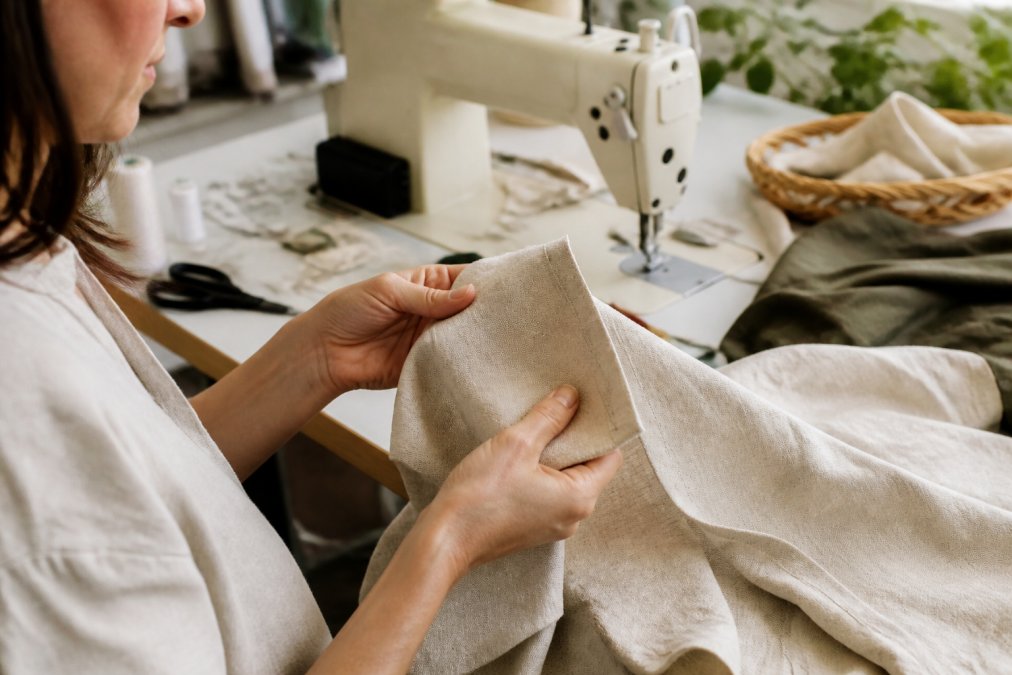
Local manufacturing changes what's possible in construction. Small-batch production allows for heavier fabric weights, reinforced seams, and proper finishing, because there's no pressure to shave cents off every step. The result is a garment that holds its shape after repeated washing.
Natural Fibres and Skilled Craftsmanship
Natural fibres behave differently to synthetics over time. Linen softens with every wash. Wool regulates temperature and resists odour. Organic cotton breathes. These are qualities that improve with age rather than degrade, which is why garment longevity is a design outcome, not an accident.
Skilled craftsmanship matters just as much. A machinist who has sewn the same cut hundreds of times produces a consistent garment. That consistency is what you're paying for when you buy local.
Ethical Clothing Brands Australia: How to Verify the Claims
Anyone can print "ethical" on a label. Verification is what separates a genuine claim from greenwashing, and it takes about ten minutes of checking. The problem is that most shoppers don't know what to check, or what the words on a label actually mean. This section decodes the language so you can verify a claim yourself.
'Designed In' vs 'Made In' vs 'Australian Made'
These three phrases are not interchangeable, and the difference matters:
- 'Designed in Australia', the design work happened here, but the garment could have been manufactured anywhere. This is the weakest claim and the most commonly misread.
- 'Made in Australia', the garment was manufactured here, but the raw materials or components may still be imported. Stronger, but not the full picture.
- 'Australian Made', a licensed logo administered under a certification trade mark scheme. To carry it, goods must meet the scheme's criteria, which include a substantial transformation test and a threshold for local content. It is a real signal, not a decorative mark.
If a brand uses 'designed in' language while implying local manufacturing, that's a red flag. The words are chosen carefully, and the gap between them is where greenwashing lives.
Decoding Certification Labels
Certifications are only useful if you know what each one covers. A brand can be certified at one stage of production and opaque at every other. Common certification types you'll see on clothing labels include:
- Fibre and farming certifications, these cover how the raw material was grown or produced, not how the garment was made.
- Manufacturing and labour certifications, these cover the factory where the garment was cut and sewn, including working conditions and wages.
- Chemical and processing certifications, these cover what was used to dye, finish, or treat the fabric.
- Country-of-origin marks, these cover where the garment was made, not the ethics of how.
A single logo on a swing tag rarely covers all four. Check each claim separately, and check it on the certifying body's own register rather than trusting the brand's summary.
A Repeatable Verification Method
Use this checklist before you buy:
- Does the brand name its certifications, or just use the word "ethical"?
- Can you find the certification on the certifying body's own register?
- Does the brand disclose where its raw materials come from?
- Is the country of manufacture stated clearly, not implied?
- Does the brand explain its supply chain transparency, or avoid the question?
- Are care instructions included, which signals the brand expects the garment to last?
If a brand can't answer these, that's your answer. For broader context on consumer rights and labelling expectations, the ACCC guidance on country of origin claims is worth reading before you spend.
What Good Transparency Looks Like
A brand that is genuinely transparent will typically name its factories, name its fabric mills, publish its certification numbers, and explain what it does not yet know. A brand that is performing transparency will use vague language, lean on a single logo, and redirect questions to a sustainability page that says nothing specific.
The test is simple: can you trace the garment from fibre to finished piece using only what the brand publishes? If yes, the claim is verifiable. If no, treat the marketing as marketing.
The Best Sustainable Fashion for Women Starts with a Capsule Wardrobe
The best sustainable fashion for women is not a trend cycle; it's a small set of pieces that work together across seasons. A capsule wardrobe of 20 to 30 items, each worn regularly, outperforms a wardrobe of 100 items worn occasionally, both financially and environmentally (the EPA).
Build around transeasonal pieces in natural fibres. A linen blouse, a wool layer, a dress that works with boots or sandals. Our Lady Jane Organic 100% Linen Blouse in Coastal Fern(https://thespottedquoll.com.au/products/lady-jane-organic-100-linen-blouse-coastal-fern) is exactly this kind of piece: a classic cut in organic linen, designed to be tucked, layered, or worn loose. It's one of our top-selling cuts, and it's the sort of garment that earns its cost-per-wear within a year.

Environmental Impact and the Circular Economy
Every garment that stays in use longer delays its trip to landfill. That's the core of circular fashion: keep what exists in circulation, repair what breaks, and buy fewer, better pieces. But circularity is not just a philosophy, it's a set of practical pathways you can use at each stage of a garment's life.
Textile waste is a significant contributor to landfill volume, and the apparel industry's environmental impact is driven largely by production volume and disposal rather than by any single material choice (the EPA). Buying local shortens the transport chain as well, which reduces the carbon footprint attached to each garment before it even reaches you. A garment made and sold in the same country travels a fraction of the distance of one that crosses multiple borders before it reaches a rack.
The Four Loops of a Circular Wardrobe
Circular fashion operates through four practical loops, in order of preference:
- Keep and wear, the lowest-impact option is simply wearing what you already own, more often. A garment worn 100 times displaces several cheaper replacements.
- Repair and alter, a rehemmed skirt, a replaced button, or a taken-in waist extends life by years. Most garments fail at seams, buttons, and zips long before the fabric wears out.
- Resell or swap, a well-made garment retains resale value because it still has structure and shape. Fast fashion rarely survives to a second owner.
- Recycle or compost, natural fibres like linen, wool, and organic cotton can be mechanically recycled or, in some cases, composted. Blended synthetics are far harder to process, which is another argument for single-fibre natural garments.
What Happens to Textiles at End of Life
In practice, most textiles that leave a wardrobe in Australia go to charity bins, kerbside collection, or general waste. A portion is sorted for resale, a portion is exported, and a portion goes to landfill. The exact split varies by council and by the condition of the garment, but the pattern is consistent: the better the garment's condition, the more likely it is to find a second life.
That's why care and repair matter so much to the circular narrative. A garment that still holds its shape after five years is a garment that can be resold, handed down, or donated in wearable condition. A garment that has pilled, stretched, or lost its seams after one season is waste the moment it leaves your drawer.
Local Production and the Circular Advantage
Local manufacturing supports circularity in ways that offshore production struggles to match. Small-batch runs mean less dead stock. Closer supply chains can make repair and alteration services more accessible. And when a brand makes its own garments, it can potentially offer take-back, repair, or resale programs without coordinating across multiple countries.
When you choose locally made clothing, you're not just buying a garment, you're buying into a system where the end of the garment's life is part of the design brief, not an afterthought.
How to Care for Your Garments to Extend Their Life
Care is where most people accidentally undo the benefit of buying well. Harsh washing, hot water, and tumble drying break down fibres faster than wearing ever does.
Follow these habits:
- Wash less often, and air garments between wears
- Use cold water and a gentle cycle
- Turn garments inside out to protect the surface
- Dry flat or on a line, away from direct sun for natural fibres
- Store folded rather than hung for knits, to prevent stretching
Treat a well-made garment properly and it will outlast several cheap replacements. That's how cost-per-wear drops even further.
Buying well takes more thought upfront than grabbing a cheap top off a rack, and that's precisely the point. The Spotted Quoll designs and makes timeless women's pieces in Tasmania using natural fibres and exclusive nature-inspired prints, built as a transeasonal capsule wardrobe rather than a seasonal trend. Explore the Wonderland Dress in Sawtooth Banksia(https://thespottedquoll.com.au/products/wonderland-dress-sawtooth-banksia) or the Hooded Organic Wool Cape(https://thespottedquoll.com.au/products/hooded-organic-wool-cape-barn-red) to start building a wardrobe with purpose. Shop now and choose pieces that earn their place.


Frequently Asked Questions
What are the benefits of buying Australian-made clothing?
Buying Australian made clothing supports local jobs and the national economy. It often means higher quality assurance because production happens under Australian labor laws and environmental standards. You also get greater supply chain transparency, allowing you to verify ethical manufacturing and fair wages. Finally, local production reduces the carbon footprint associated with shipping goods across the globe, making it a more sustainable choice for your wardrobe.
How can I verify if a garment is truly Australian-made?
Look for the Australian Made logo, which requires products to be grown or produced in the country. Be wary of vague terms like 'designed in Australia' which do not guarantee local manufacturing. You can also check the brand's website for details on their supply chain transparency. If a brand is proud of its local production, they will usually state exactly where and how the garment was made.
Does Australian-made clothing last longer than fast fashion?
Generally, yes. Australian-made garments often use high-quality materials and skilled craftsmanship, focusing on garment longevity rather than rapid turnover. Fast fashion items are designed for short trends and often use lower-quality synthetic fabrics that pill or tear quickly. While the upfront cost of local clothing is higher, the cost-per-wear is usually lower because the item remains wearable for years.
How does buying local support the national economy?
When you buy locally made goods, more of your money stays in the community. This supports local jobs in manufacturing, design, and retail, and helps small businesses thrive. It also strengthens the domestic textile industry, ensuring that skilled craftsmanship and manufacturing processes are preserved for future generations rather than being outsourced overseas.